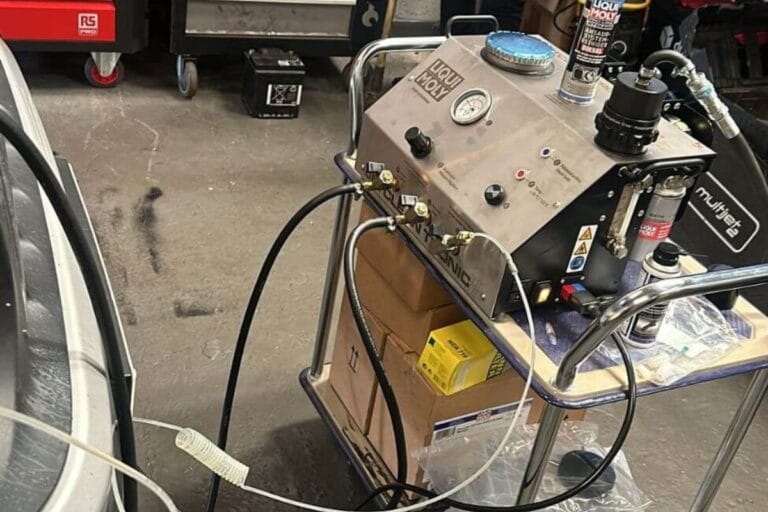

Car problems can leave you stranded or facing costly repairs when you least expect it. Whether it is a glowing check engine light or your car refusing to start on a cold morning, having the right diagnostic checks can make all the difference. Knowing exactly what to inspect and how to interpret warning signs means you can address issues early and save yourself stress and money.
This guide reveals practical vehicle diagnostic checks every driver in Corby should know. You will learn how to decode engine faults, test battery health, spot brake issues and uncover hidden problems before they get worse. Each point is packed with straightforward steps and expert tips you can use to keep your car safe and reliable.
Get ready to discover the checks and insider advice that will empower you to take charge of your vehicle’s wellbeing and catch problems before they turn serious.
Table of Contents
- 1. Engine Fault Code Reading With OBD Scanners
- 2. Battery Health Testing For Reliable Starts
- 3. Brake System Inspections And Diagnostic Checks
- 4. Air Conditioning Performance And Leak Tests
- 5. Gearbox And Transmission Diagnostic Analysis
- 6. Exhaust Emissions Monitoring For Compliance
- 7. Suspension System Fault Detection And Assessment
Quick Summary
| Takeaway | Explanation |
|---|---|
| 1. Use OBD2 scanners for diagnostics | OBD2 scanners convert engine fault codes into actionable insights, allowing timely repairs and avoiding unnecessary costs. |
| 2. Regular battery health testing is essential | Annual battery testing can identify degradation early, helping to prevent breakdowns and ensuring reliable starts, especially in winter. |
| 3. Annual brake system inspections are vital | Comprehensive brake inspections uncover potential issues before they lead to unsafe driving conditions or costly repairs. |
| 4. Check air conditioning system annually | Routine air conditioning diagnostics can detect refrigerant leaks early, maintaining comfort and avoiding expensive repairs during summer. |
| 5. Monitor your vehicle’s emissions regularly | Emissions diagnostics ensure your vehicle meets regulations and avoids fines while contributing to better air quality and vehicle performance. |
1. Engine Fault Code Reading with OBD Scanners
When your check engine light illuminates on the dashboard, it feels like your car just gave you a cryptic puzzle to solve. The reality is far simpler. Your vehicle contains a built in computer system that constantly monitors engine performance, emissions, and transmission function. When something goes wrong, this system generates a diagnostic trouble code and triggers that warning light. An OBD2 scanner is the tool that reads these codes and transforms that vague warning into actionable information.
OBD2 stands for On Board Diagnostics II, and every car manufactured since the mid 1990s has this system installed. The scanner plugs into a standardised 16 pin connector, usually located beneath your steering wheel. Once connected, it communicates with your vehicle’s computer to retrieve any diagnostic trouble codes that have been recorded. These codes start with letters like P (indicating powertrain issues), followed by numbers that pinpoint exactly where the problem exists. For instance, a P0300 code points to random or multiple cylinder misfires, whilst a P0128 code indicates coolant temperature regulation issues. Rather than guessing what needs repair, you now have precise information that helps you avoid expensive unnecessary work and address the actual fault efficiently.
What makes OBD2 scanning particularly valuable for car owners in Corby is that you can identify problems before they become serious. A faulty oxygen sensor might trigger a check engine light but continue functioning for weeks. With a scanner, you catch it early and schedule proper servicing and repairs before performance suffers. Modern diagnostic scanners range from basic code readers to advanced devices offering live data monitoring, which displays real time information from your engine sensors. Some premium models even offer bidirectional control, allowing mechanics to test components directly. You do not need to invest in top tier equipment as a car owner, but understanding how these tools work empowers you to take control of your vehicle’s health.
Pro tip: Once you have read your fault codes and resolved the underlying issue, use your OBD2 scanner to clear the codes, which also switches off the check engine light and completes the diagnostic cycle properly.
2. Battery Health Testing for Reliable Starts
Your car battery is the unsung hero that makes cold morning starts possible. Without a healthy battery, even the most reliable engine struggles to turn over. Battery health testing evaluates the actual condition of your battery rather than just checking if it holds charge. This diagnostic approach reveals whether your battery can deliver the power needed for dependable vehicle operation and helps you avoid unexpected breakdowns that leave you stranded.
Battery diagnostics work by measuring critical parameters including state of charge, state of health, and remaining useful life. Think of state of charge as how full your battery currently is, whilst state of health reveals how much capacity remains compared to when it was new. A battery might read as fully charged but actually be degraded, capable of delivering only 60 percent of its original power output. This is where comprehensive testing becomes invaluable. Professional battery testing uses both passive monitoring during normal vehicle operation and active testing procedures that apply controlled loads to detect hidden degradation. Early fault detection prevents the scenario where your battery fails completely just when you need it most, whether that is on a freezing winter morning or during an important journey. Modern battery management systems integrate sophisticated diagnostics that continuously track performance, supporting the transition to electric and hybrid vehicles where battery reliability directly impacts your driving experience.
For car owners in Corby, regular battery health testing should happen annually, particularly before winter when cold temperatures reduce battery efficiency naturally. A technician can run a proper battery test in minutes, measuring voltage and cold cranking amperage to assess overall health. If testing reveals degradation, you can replace the battery proactively rather than discovering failure unexpectedly. This approach aligns with the principle of predictive maintenance and fault detection technologies that minimise the risk of unexpected failures. Beyond just preventing inconvenience, a healthy battery supports your vehicle’s electrical systems, charging performance, and longevity of the alternator, which works harder when compensating for a weak battery.
Pro tip: Have your battery tested during your regular servicing visits rather than waiting for warning signs, as this allows your technician to monitor degradation trends and recommend replacement at the optimal time before failure occurs.
3. Brake System Inspections and Diagnostic Checks
Your brakes are arguably the most critical safety system on your vehicle. When you press the pedal, you expect immediate, responsive stopping power that keeps you and your passengers safe. Brake system inspections go far beyond a simple visual glance at the pads. A comprehensive diagnostic check examines brake fluid levels and condition, pad thickness, rotor surface integrity, caliper function, and brake lines for leaks or corrosion. This systematic approach identifies potential failures before they compromise your stopping ability and puts you at risk.
The brake system is remarkably complex, with multiple components working together under high pressure. Brake fluid circulates through metal lines and rubber hoses, activating calipers that press friction pads against rotors to create the stopping force you feel. Over time, brake fluid absorbs moisture from the air, which reduces its effectiveness and can cause internal corrosion. Uneven pad wear patterns reveal important diagnostic clues about your vehicle’s health. If the inner pad wears faster than the outer pad, it might indicate a sticky caliper or suspension alignment issues. A thorough diagnostic assessment combines visual inspection with functional testing to spot these problems early. Advanced diagnostics now employ sensor data analysis and pressure monitoring to detect leaks, mechanical wear, and hydraulic failures before they become dangerous. This proactive approach maintains brake efficiency and prevents accidents caused by brake failure.
For car owners in Corby, brake inspections should occur at least annually or whenever you notice changes in braking response. Warning signs include a soft or spongy brake pedal, a grinding noise when braking, or increased stopping distance. A professional technician can measure pad thickness precisely, assess rotor condition with specialised equipment, and test brake fluid quality. Many brake issues develop gradually, so regular brake system inspection checklists ensure nothing gets overlooked. Addressing brake problems promptly prevents expensive repairs down the road and, more importantly, keeps your vehicle safe on the road.
Pro tip: Listen carefully for any changes in your brake feel or unusual sounds during normal driving, as these early warning signals often appear before diagnostic tests reveal significant wear.
4. Air Conditioning Performance and Leak Tests
On a sweltering summer day, you turn on your air conditioning expecting a blast of cool air and instead get lukewarm breeze. This frustrating scenario often stems from refrigerant leaks that silently drain your system’s ability to cool effectively. Air conditioning diagnostics involve checking refrigerant flow, pressure, and temperature to assess overall cooling performance. When cooling power diminishes, leak tests become essential to identify whether refrigerant loss is the culprit and where the escape route might be hiding.
Refrigerant is the lifeblood of your air conditioning system, circulating through compressors, condensers, and evaporators to absorb heat and deliver cold air. Even tiny leaks allow refrigerant to escape over time, gradually reducing system efficiency until cooling becomes noticeably weak. The challenge is that refrigerant leaks are not always visible to the naked eye, especially when they occur in pressurised hoses or sealed components deep within the engine bay. This is where sophisticated leak detection methods become invaluable. Technicians use several approaches including UV dye that fluoresces under special light, electronic leak detectors sensitive to halogen gas traces, and pressure decay tests that measure whether the system maintains pressure over time. Each method has strengths depending on leak size and location. A comprehensive diagnostic approach combines multiple techniques to catch even elusive leaks that might otherwise go undetected.
For car owners in Corby, air conditioning diagnostics should occur annually as part of routine maintenance or whenever you notice reduced cooling. Early detection prevents cascading damage because low refrigerant forces the compressor to work harder, potentially causing component failure and expensive repairs. Once a leak is identified and repaired, the system needs refrigerant recharged to proper levels and pressure. Professional air conditioning service ensures both leak detection and proper system restoration. Ignoring air conditioning problems also means discomfort during warm months and reduced vehicle resale value, as potential buyers expect functioning climate control as a basic standard.
Pro tip: If your air conditioning suddenly stops cooling rather than gradually losing performance, suspect a major leak or compressor failure and have diagnostics performed immediately before component damage compounds the repair costs.
5. Gearbox and Transmission Diagnostic Analysis
Your gearbox is a complex mechanical system that silently handles thousands of gear shifts throughout your vehicle’s lifetime. When transmission problems develop, they announce themselves through shuddering, delayed engagement, or warning lights on your dashboard. Gearbox diagnostic analysis identifies transmission faults before they escalate into catastrophic failures that leave you stranded or facing repair bills exceeding thousands of pounds. Modern diagnostic approaches go beyond traditional visual inspections, employing advanced sensor technology and data analysis to pinpoint exactly what is failing and why.
Transmission systems contain numerous sensors monitoring fluid pressure, temperature, and component wear. When problems emerge, these sensors generate fault codes that reveal the underlying issue. Advanced diagnostic methods now analyse vibration signals and sensor data using sophisticated techniques to detect faults early and classify their severity. Rather than waiting for transmission failure, which typically occurs suddenly and unexpectedly, diagnostic analysis enables predictive maintenance where problems are identified and addressed before they compromise vehicle operation. Your transmission fluid plays a critical role in this process, lubricating countless moving parts and enabling hydraulic pressure that operates the gearbox. Degraded fluid loses its protective properties, accelerating wear and increasing friction between components. Regular automatic gearbox oil service keeps your transmission operating smoothly and helps prevent the fluid contamination that diagnostic tests often reveal as the root cause of shifting problems.
For car owners in Corby, transmission diagnostics become especially important if you notice hesitation during acceleration, grinding noises, or fluid leaks underneath your vehicle. Early detection of transmission issues can mean the difference between a simple fluid change and a complete gearbox rebuild. Modern diagnostic equipment reads transmission fault codes and displays live data showing pressure, temperature, and shift quality parameters. This comprehensive analysis allows technicians to distinguish between simple problems like low fluid levels and complex internal wear requiring major repairs. Addressing transmission problems promptly maintains your vehicle’s performance, fuel efficiency, and resale value. Ignoring warning signs typically results in progressive damage that eventually forces expensive emergency repairs.
Pro tip: Have your transmission fluid checked and analysed during routine servicing, as contamination or degradation revealed through fluid analysis often indicates emerging gearbox problems before they produce noticeable symptoms.
6. Exhaust Emissions Monitoring for Compliance
Your vehicle’s exhaust system is more than just a pipe that directs fumes away from your car. It is a sophisticated emissions control system that captures harmful pollutants before they enter the atmosphere. Exhaust emissions monitoring diagnostics measure what your vehicle is actually releasing into the air and determine whether it meets strict environmental regulations. For car owners in the United Kingdom, understanding emissions monitoring has become increasingly important as regulations tighten and vehicles undergo more rigorous emissions testing.
Modern vehicles contain multiple sensors throughout the exhaust system that continuously monitor pollutants such as nitrogen oxides, carbon monoxide, carbon dioxide, and hydrocarbons. These sensors feed real time data to your vehicle’s onboard computer, which adjusts engine parameters to minimise harmful emissions. When emissions exceed acceptable limits, your diagnostic system triggers a warning light alerting you that something needs attention. The significance of this monitoring extends beyond environmental responsibility. Non compliant vehicles fail roadworthiness tests and may face substantial fines or restrictions on road usage. Advanced real time exhaust monitoring systems enable drivers to receive immediate feedback about their vehicle’s emissions performance, facilitating timely maintenance before problems escalate. Modern diagnostic equipment reads emissions fault codes and displays live pollutant measurements, revealing whether catalytic converters, oxygen sensors, or other emission control components are functioning properly. This comprehensive analysis helps technicians identify the root cause rather than simply replacing expensive components.
For car owners in Corby, emissions monitoring becomes particularly relevant during vehicle maintenance scheduling. Common issues that trigger emissions warnings include faulty oxygen sensors, failing catalytic converters, and clogged particulate filters. Early detection through diagnostics often reveals simple problems like a loose fuel cap or a minor sensor malfunction before they cause lasting damage. Regular servicing keeps emission control systems functioning optimally, preventing the performance degradation that eventually produces visible problems like rough idling or reduced fuel economy. Addressing emissions diagnostics promptly protects your wallet, keeps your vehicle legal on British roads, and contributes to cleaner air quality for your community.
Pro tip: If an emissions warning light appears, have your vehicle scanned for fault codes immediately, as many emission related problems are easier and cheaper to resolve when caught early rather than waiting for performance to deteriorate noticeably.
7. Suspension System Fault Detection and Assessment
When you drive over a pothole and your car bounces excessively or feels unstable, your suspension system is telling you something is wrong. Your suspension does far more than just cushion bumps in the road. It maintains contact between your tyres and the road surface, controls vehicle height, and ensures stable handling during cornering and braking. Suspension system fault detection identifies wear and damage before they compromise safety or create uncomfortable driving experiences that make every journey feel like an obstacle course.
Suspension systems consist of springs, dampers, anti roll bars, and linkages working together to absorb road impacts whilst maintaining stability. When components degrade, the suspension loses its ability to control vehicle motion effectively. Worn springs allow excessive bounce and vehicle sag, whilst failing dampers stop absorbing energy, causing the suspension to oscillate long after hitting bumps. Diagnostic assessment detects these faults by analysing vibration patterns and measuring how the suspension responds to road inputs. Advanced vibration signal analysis techniques combined with sensor data enable technicians to classify suspension faults accurately and evaluate their severity. Rather than guessing which components need replacement, diagnostics reveal exactly what has degraded and by how much. This precision prevents unnecessary repairs whilst ensuring all actual problems get addressed. Tyre pressure also affects suspension performance significantly, as underinflated tyres reduce damping effectiveness and alter suspension geometry. Diagnostic systems assess these variables comprehensively rather than examining components in isolation.
For car owners in Corby, suspension problems often announce themselves through visible signs like uneven tyre wear, vehicle leaning to one side, or a clunking noise when passing over bumps. Early detection through diagnostics can prevent expensive damage to other components. Worn suspension forces your brakes and steering systems to work harder, accelerating their degradation. A vehicle with compromised suspension also becomes unpredictable during emergency manoeuvres, reducing your safety margin on the road. Professional diagnostic assessment combines visual inspection with dynamic testing to measure suspension stiffness, damping characteristics, and component wear. This thorough approach identifies problems that simple visual checks would miss, such as internal damper failure or spring weakness that do not yet show external signs.
Pro tip: If you notice your vehicle bouncing excessively after hitting bumps or sitting lower on one side, have suspension diagnostics performed promptly, as these early warning signs often indicate problems that worsen rapidly if left unaddressed.
Below is a comprehensive table summarising the main points and critical details discussed throughout the article about vehicle diagnostics and maintenance.
Take Control of Your Vehicle with Expert Diagnostic Services in Corby
Understanding critical vehicle diagnostics such as engine fault codes, battery health, brakes, air conditioning, gearbox performance, emissions, and suspension issues empowers you to maintain your car’s reliability and safety. If you have ever faced the frustration of unexplained warning lights or unexpected breakdowns, you know how important it is to identify problems early and avoid costly repairs. At Avgarage, we specialise in providing comprehensive diagnostics combined with expert servicing to address these exact challenges.
Dont wait until a minor fault becomes a major issue. Benefit from our team of certified mechanics with over 10 years experience who use advanced diagnostic tools and high-quality parts to keep your vehicle running smoothly. Whether you need an engine fault code reading, air conditioning service, or automatic gearbox oil service we have you covered. Visit Avgarage today to book your appointment online and enjoy peace of mind knowing your car is in trusted hands.
Frequently Asked Questions
What is an OBD2 scanner and how does it work?
An OBD2 scanner is a diagnostic tool that reads trouble codes generated by your vehicle’s onboard computer. To use it, simply connect the scanner to the standardised port under your steering wheel, and it will communicate with your vehicle to retrieve and display any diagnostic trouble codes.
How can I test my car battery’s health?
You can test your car battery’s health by having a professional evaluate its state of charge, state of health, and remaining useful life. Schedule a battery health test during your next servicing visit to ensure reliable starts, especially before winter when cold weather can impact battery efficiency.
How often should I have my brakes inspected?
It is recommended to have your brakes inspected at least once a year or whenever you notice changes in braking response. Pay attention to warning signs like a spongy brake pedal or grinding noises, and have a complete inspection performed promptly to maintain your vehicle’s safety.
What are the symptoms of a failing air conditioning system?
Common symptoms of a failing air conditioning system include weak or lukewarm air flow, unusual noises when the system is running, and sudden loss of cooling. If you experience these issues, have your system diagnosed immediately to identify leaks or other problems before they lead to costly repairs.
How can I detect transmission problems early?
You can detect transmission problems early by monitoring for symptoms like hesitation during acceleration, grinding noises, or warning lights on your dashboard. Have your transmission fluid checked and analysed during routine servicing to identify potential issues before they escalate into expensive repairs.
Why is exhaust emissions monitoring important for my vehicle?
Exhaust emissions monitoring is crucial as it ensures your vehicle complies with environmental regulations and helps identify issues that may lead to poor performance or fines. Schedule regular emissions diagnostics to catch problems early, ensuring your vehicle remains roadworthy and environmentally responsible.