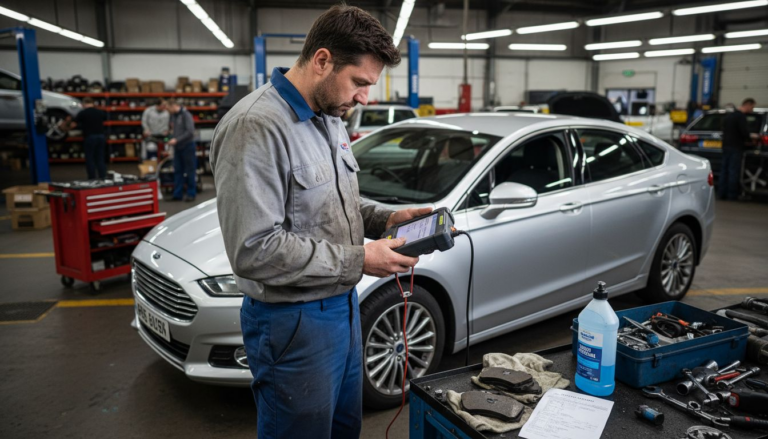

Facing an unexpected repair bill can make any Corby car owner uneasy, especially when you thought your warranty had you covered. Understanding what your warranty actually includes can mean the difference between a covered fix and a stressful expense. This guide breaks down the key differences between covered repairs, routine maintenance, and common exclusions, helping you make informed decisions while keeping your vehicle protected and your costs predictable.
Table of Contents
- Warranty Coverage Explained For Car Owners
- Types Of Warranties In The UK Motor Industry
- What Car Repairs Are Covered Or Excluded
- Making A Warranty Claim: Process And Requirements
- Your Legal Rights And Common Pitfalls
Key Takeaways
| Point | Details |
|---|---|
| Understanding Warranty Types | Familiarise yourself with various warranties such as manufacturer, extended, and dealer options to make informed choices based on your vehicle’s needs. |
| Know What’s Covered | Identify covered repairs, primarily related to manufacturing defects, and avoid relying on warranty for routine maintenance or consumable items. |
| Documentation is Essential | Maintain detailed service records and receipts to support your claims and demonstrate adherence to warranty conditions. |
| Know Your Rights | Leverage legal protections like the Magnuson-Moss Warranty Act to avoid being pressured into service provider choices that could void your warranty. |
Warranty Coverage Explained For Car Owners
A vehicle warranty is protection that covers the cost of parts and labour if mechanical or electrical failures occur in your car. When you buy a new vehicle, the manufacturer typically includes a factory warranty as standard. This protects you from unexpected repair bills during the early years of ownership, giving you peace of mind whilst you settle into your new car.
Factory warranties come in several forms, each covering different aspects of your vehicle. Bumper-to-bumper coverage protects nearly everything except maintenance items like tyres and brake pads. Powertrain warranties focus specifically on the engine, gearbox, and drivetrain—the components that make your car move. You’ll also find corrosion warranties protecting against rust, emissions warranties covering pollution control systems, and for electric vehicles, battery protection warranties that safeguard the battery pack.
Most warranties last between three and seven years or cover a set mileage limit, whichever comes first. Some manufacturers push this further, offering protection extending to ten years on certain components. What’s important to understand is what your warranty actually covers. Routine maintenance doesn’t count—servicing, oil changes, and worn brake pads fall on you. Only manufacturing defects and unexpected failures trigger warranty claims.
If you purchase a used car, the manufacturer’s warranty may transfer to you, provided the coverage hasn’t expired. This is a significant advantage when buying used. You can also purchase extended warranties to prolong coverage beyond what the factory provides, though this requires careful consideration of actual value versus cost.
Here’s the practical reality for Corby car owners: knowing your warranty details prevents costly surprises. Read your warranty documentation thoroughly. When something fails, contact your dealership immediately rather than attempting independent repairs that might void coverage. Keep detailed service records, as these are essential if you ever need to make a claim.
Professional advice Request a full warranty summary from your dealership when you take ownership, highlighting coverage periods and exclusions so you understand exactly what protection you have.
Types Of Warranties In The UK Motor Industry
The UK motor industry offers several distinct warranty options, each designed to protect you in different ways. Understanding which type suits your situation helps you make informed decisions about your vehicle’s coverage. Whether you’re buying new or used, the right warranty can save thousands in unexpected repair costs.
Manufacturer warranties form the foundation of protection for new car buyers. These typically last three years but can extend to five or seven years depending on the make and model. Manufacturers provide bumper-to-bumper coverage on new vehicles, protecting against defects in materials and workmanship. The catch is that coverage varies significantly between brands, so comparing warranty terms matters when choosing your next car.

Extended warranties offer additional protection beyond the manufacturer’s initial coverage period. You purchase these separately, either at the dealership or from third-party providers. They can significantly extend your protection, sometimes covering your vehicle for up to ten years total. However, you need to weigh the cost against the actual risk of major repairs occurring.
Dealer warranties are another option in the UK market. These warranties, offered by the selling dealer on used vehicles, can provide peace of mind when purchasing a second-hand car. Coverage terms and length vary considerably between dealers, so ask detailed questions about what’s included. Common UK warranty types include manufacturer, extended, and dealer options, each with distinct advantages and limitations.
Mechanical breakdown insurance provides a different approach altogether. Rather than a traditional warranty, this insurance covers the cost of repairs if your car breaks down due to mechanical failure. It’s particularly useful for older vehicles where the original warranty has expired completely.
For Corby car owners, the choice between warranty types depends on your vehicle’s age, mileage, and how long you plan to keep it. New car buyers should carefully review manufacturer terms. Used car buyers should consider extended warranties if the original coverage is nearly expired. Budget-conscious owners might opt for mechanical breakdown insurance instead.
The main warranty types offer distinct forms of protection for car owners:
| Warranty Type | Typical Duration | Main Benefits | Who Should Consider |
|---|---|---|---|
| Manufacturer | 3-7 years | Comprehensive defect coverage | New car buyers |
| Extended | Additional 3-5 years | Covers costly repairs post-factory warranty | Owners keeping cars longer |
| Dealer | Typically 6-24 months | Extra cover for used cars | Used car buyers |
| Mechanical Breakdown Insurance | Annual or rolling | Flexible repair cost protection | Owners of older vehicles |
Professional advice Compare warranty terms across multiple providers before purchasing, as prices and coverage can differ dramatically, potentially saving you hundreds of pounds.
What Car Repairs Are Covered Or Excluded
Not every repair your car needs will fall under warranty coverage. Understanding what is and isn’t covered prevents frustration when you need work done. The difference between a covered repair and an excluded one can mean the difference between a free fix and a costly bill.
Covered repairs typically involve manufacturing defects in major components. Your warranty protects the engine, transmission, electrical systems, and drivetrain when they fail due to faulty parts or poor workmanship. If a sensor fails unexpectedly or an engine valve develops a defect, the warranty handles the cost of parts and labour. These are genuine mechanical failures, not wear over time.
Excluded items represent the bulk of what warranties don’t cover. Tyres, brake pads, windscreen wipers, batteries, and clutches are all consumable items that naturally wear out. Your warranty assumes you’ll replace these as part of normal vehicle maintenance. Oil changes, air filter replacements, and coolant flushes fall outside coverage because they’re preventative maintenance, not repairs from defects.
Environmental damage and neglect are completely excluded from all warranties. Warranty coverage excludes damage caused by abuse, improper maintenance, or environmental factors like rust from salt exposure. If you’ve skipped servicing and the engine fails as a result, the warranty won’t cover it. Corrosion damage from environmental abuse is also excluded, even on vehicles with corrosion warranties.
Damage from accidents, modifications, and aftermarket parts also voids coverage in most cases. If you’ve fitted non-standard parts or made unapproved modifications, warranty claims become problematic. Similarly, damage from accidents isn’t a manufacturing defect, so it falls outside warranty protection entirely.
For Corby car owners, the key is distinguishing between repairs and maintenance. Keep all service records showing you’ve maintained your vehicle properly. When something fails, check your warranty documentation before visiting an independent garage. Some repairs require authorised dealer work to remain covered.
Here is a quick overview of commonly covered and excluded items for most UK car warranties:
| Covered By Warranty | Typically Excluded | Reason for Exclusion |
|---|---|---|
| Engine components | Tyres | Wear and tear item |
| Gearbox & transmission | Brake pads | Routine maintenance |
| Electrical system faults | Windscreen wipers | Consumable replacement |
| Drivetrain defects | Oil changes | Preventative service |
| Factory battery failure | Accident damage | Not a manufacturing fault |
Professional advice Keep receipts for all maintenance and servicing, as proving proper vehicle care is essential when making warranty claims on repairs.
Making A Warranty Claim: Process And Requirements
When something goes wrong with your vehicle, knowing how to file a warranty claim properly ensures you get the coverage you’re entitled to. The process is straightforward if you follow the right steps and gather the necessary documentation beforehand. Getting it wrong can result in claim denial, leaving you with an unexpected repair bill.
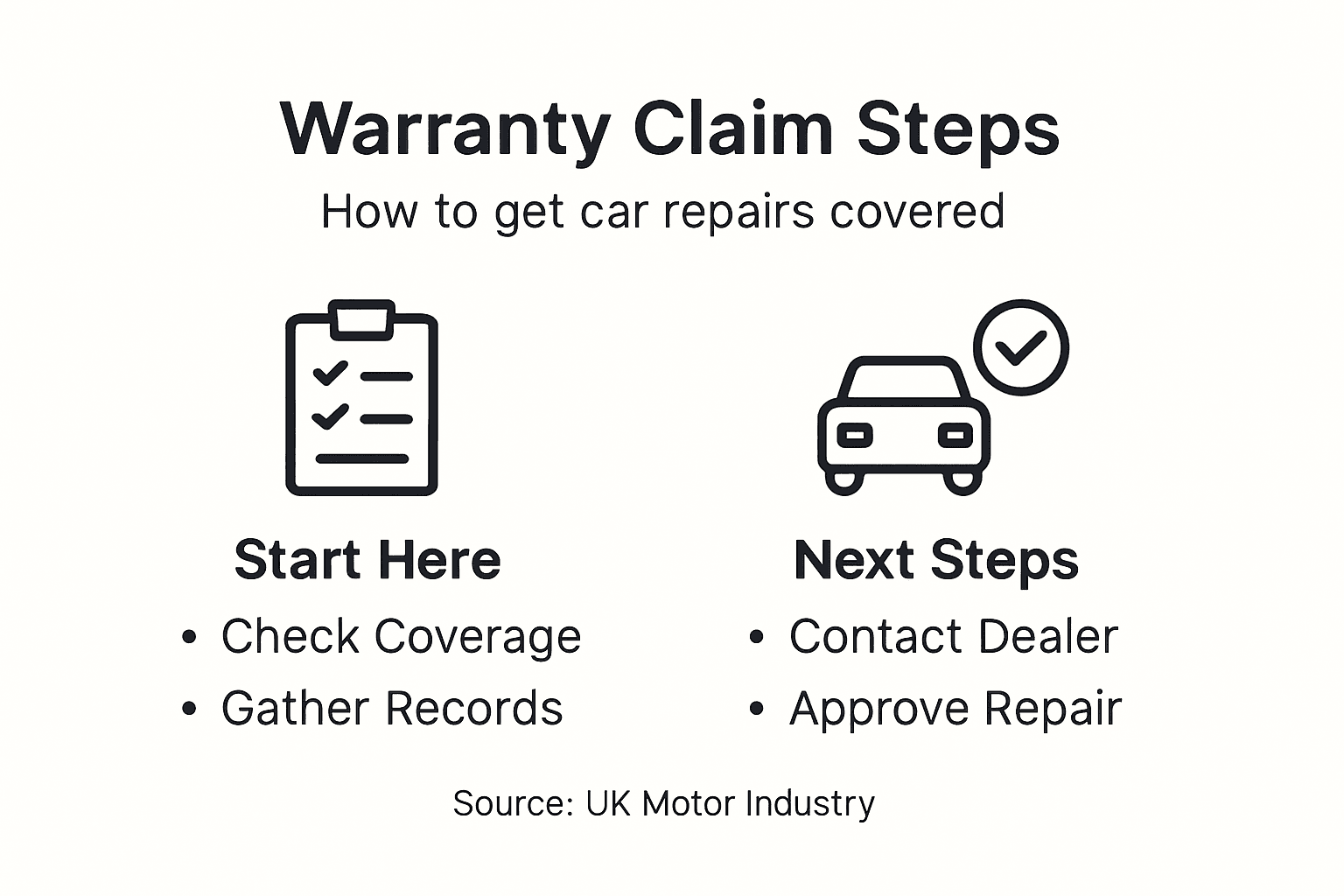
Start by identifying the actual problem. Contact your dealership or authorised service centre as soon as you notice an issue that might be covered. Don’t attempt repairs yourself or visit an independent garage without first checking your warranty documentation. The sooner you report the problem, the sooner the claim process begins.
Documentation is absolutely critical. Gather all service records, maintenance receipts, and proof that you’ve looked after your vehicle properly. Your warranty requires that you’ve maintained the car according to manufacturer guidelines. Proper documentation supports warranty claims, demonstrating compliance with warranty terms and conditions. Keep receipts from any servicing, whether done at a dealership or an independent garage approved for your vehicle.
The dealership will examine your vehicle to verify the defect exists and is covered under warranty. They’ll assess whether the damage resulted from a manufacturing fault or from abuse and neglect. This verification step protects both you and the manufacturer by ensuring only legitimate claims are processed.
Once approved, the dealership handles the repair at no cost to you. They’ll use original equipment manufacturer parts or approved alternatives, ensuring quality and warranty validity. If your claim is denied, ask for a detailed explanation in writing. You have the right to dispute the decision and seek clarification on why coverage was refused.
For Corby vehicle owners, maintaining detailed records throughout your car’s life makes claiming straightforward. Don’t rely on memory when support tickets are raised. Keep every receipt and service document in an organised file or digital folder.
Professional advice Report any suspected defect to your dealership immediately with a clear description of symptoms, as delays can complicate the verification and approval process.
Your Legal Rights And Common Pitfalls
You have more legal protection as a car owner than many people realise. Understanding your rights prevents dealers from taking advantage of warranty loopholes or unfair practices. Many common pitfalls stem from misunderstanding what manufacturers can and cannot demand from you.
The Magnuson-Moss Warranty Act is your primary legal protection in warranty matters. This legislation prohibits manufacturers from requiring you to use specific service providers or parts to maintain warranty validity. The Magnuson-Moss Warranty Act ensures you can have your vehicle serviced anywhere without voiding coverage, provided the work meets manufacturer standards. This means you’re not locked into expensive dealership servicing if you choose to use an independent garage.
A common pitfall is believing you must service your car exclusively at the dealership. This misconception costs vehicle owners thousands in unnecessary servicing fees. As long as your chosen garage uses appropriate parts and performs work correctly, your warranty remains valid. Keep documentation proving the work was done properly, using quality parts.
Another frequent mistake is failing to maintain records. Dealers sometimes deny claims by arguing you haven’t followed maintenance schedules, but without documentation, you cannot prove otherwise. Every service receipt, every repair invoice, and every maintenance record strengthens your position if a dispute arises.
Misunderstanding warranty terms represents a third major pitfall. Many owners assume coverage is broader than it actually is. Read your warranty documents carefully before a problem occurs. If terms are unclear, ask the dealership to explain in writing what is and isn’t covered.
Finally, some dealers employ unfair practices like pressuring you to use their parts or claiming independent repairs voided your warranty without evidence. If you experience misleading dealer practices, document everything and consider filing complaints with consumer protection authorities. Your rights exist to protect you from such behaviour.
Professional advice Keep all service documentation in one place and take photographs of warranty paperwork, as having this readily available strengthens any claim disputes significantly.
Protect Your Car and Your Wallet with Expert Warranty-Aware Services
Understanding what your warranty covers can save you from unexpected repair costs and stress. At Avgarage, we recognise the challenges many Corby car owners face when navigating warranty claims and vehicle maintenance. Whether it is identifying covered repairs, maintaining precise service records, or ensuring authorised work that keeps your warranty intact, our team of certified mechanics is here to help. We use only OEM or high-quality aftermarket parts and provide transparent servicing that aligns with your warranty terms.
Take control of your car’s reliability today with Avgarage’s comprehensive automotive solutions. Visit our website to book expert servicing or repairs that protect your warranty and extend your vehicle’s life. Learn more about how our professional team supports your car’s warranty coverage at Avgarage and secure peace of mind by choosing trusted technicians who understand warranty complexities. Do not wait until an unexpected breakdown — act now to keep your car running smoothly and avoid costly surprises.
Frequently Asked Questions
What is covered by a vehicle warranty?
A vehicle warranty typically covers manufacturing defects in major components such as the engine, transmission, and electrical systems. It protects against failures caused by faulty parts or workmanship, but does not cover routine maintenance like oil changes or wear-and-tear items like tyres and brake pads.
How do I make a warranty claim for my car?
To make a warranty claim, first identify the issue and contact your dealership or authorised service centre. Gather all necessary documentation, including service records and receipts to show that you’ve maintained your car according to warranty guidelines. The dealership will then assess the issue and determine if it falls under warranty cover.
What should I do if my warranty claim is denied?
If your warranty claim is denied, ask the dealership for a detailed written explanation. You have the right to dispute the denial and should request clarification on why coverage was refused. Keeping thorough records of your vehicle’s maintenance can support your case in this situation.
Are there any common pitfalls with car warranties?
Yes, common pitfalls include assuming that you must get your car serviced only at the dealership, not maintaining proper records of service and repairs, and misunderstanding what is covered under your warranty. Being aware of these issues can help you avoid potential problems when making a claim.