



Suddenly seeing a warning light on your dashboard can leave you unsure about what’s really happening under the bonnet. For car owners in Corby, accurate diagnostics are the key to quick, cost-effective repairs and ongoing reliability. Modern vehicles monitor themselves constantly using onboard diagnostic systems, allowing mechanics to pinpoint faults with precision. This article explains how diagnostics make maintenance smarter and highlights the real money-saving benefits.
Table of Contents
- What Vehicle Diagnostics Means in Auto Repair
- Types of Diagnostic Tools and Tests
- How the Diagnostic Process Works
- Benefits for Car Owners and Vehicle Health
- Common Misconceptions and Cost Factors
Key Takeaways
| Point | Details |
|---|---|
| Importance of Diagnostics | Vehicle diagnostics saves time and money by accurately identifying issues instead of relying on guesswork. |
| Early Detection Benefits | Early detection through diagnostics can prevent minor issues from escalating into costly repairs. |
| Understanding Diagnostic Tools | Different diagnostic tools vary in functionality and cost; professional equipment offers superior accuracy and capabilities. |
| Professional Expertise Matters | Trained mechanics interpret diagnostic data effectively, ensuring appropriate repairs and preventing misdiagnoses. |
What Vehicle Diagnostics Means in Auto Repair
Vehicle diagnostics is the process of identifying what’s wrong with your car using specialised equipment and expertise. Rather than guessing at problems, modern diagnostics pinpoint exact issues with precision, saving you both time and money.
Think of diagnostics as your car’s health check. Just as doctors use tests to find what’s ailing you, mechanics use diagnostic tools to understand what’s happening under your bonnet. Your vehicle continuously monitors itself through onboard diagnostic systems, checking engine performance, emissions, transmission, brakes, and dozens of other critical components.
How Modern Diagnostics Works
Every car manufactured since 1996 has an onboard computer called an Engine Control Unit (ECU). This computer constantly runs checks on your vehicle’s systems and records any problems it detects. When something goes wrong—whether it’s a sensor failure, emission issue, or engine misfire—the system stores a fault code.
Your mechanic connects a diagnostic scanner to a standardised port (usually under your dashboard) to read these codes. The scanner communicates with your ECU and retrieves stored fault codes, live data, and system information.
Here’s what diagnostic scanning reveals:
- Fault codes that pinpoint specific problems
- Real-time data showing how systems are currently performing
- Historical codes from past issues your car has experienced
- System status across engine, transmission, brakes, and emissions
Without diagnostics, mechanics would rely on guesswork. They might replace expensive parts that aren’t actually broken. Diagnostics eliminates this waste.
Why Diagnostics Matters for Corby Vehicle Owners
On-board diagnostic systems have transformed how we repair cars. Instead of hours of troubleshooting, a five-minute diagnostic scan can identify the root cause of your problem.
Consider this real-world scenario: your check engine light comes on. Without diagnostics, a mechanic might suspect a catalytic converter issue and charge you £800 to replace it. Diagnostics reveals the actual problem is a loose fuel cap or a faulty oxygen sensor costing just £40 to fix.
Proper diagnostics can save you hundreds of pounds by preventing unnecessary parts replacement and identifying genuine issues first time.
At Avgarage, our experienced technicians use advanced diagnostic equipment alongside vehicle diagnostics assessment methods to ensure accurate identification of your car’s problems. This means you only pay for repairs your vehicle actually needs.
Diagnostics also catches small problems before they become expensive catastrophes. A failing sensor detected early costs far less than an engine failure caused by ignoring warning signs.
Pro tip: Bring your vehicle for a diagnostic scan as soon as warning lights appear—early detection prevents smaller issues from developing into costly repairs that could leave you stranded.
Types of Diagnostic Tools and Tests
Diagnostic tools come in different forms, each suited to specific repair situations. Understanding what’s available helps you appreciate what your mechanic uses when diagnosing your vehicle.
The most common diagnostic devices connect to your car’s OBD-II port and retrieve fault codes and sensor data. Modern tools range from basic code readers to sophisticated systems that can reprogram your vehicle’s software.
Primary Types of Diagnostic Equipment
Handheld scan tools are the workhorses of most repair shops. These portable devices plug directly into your OBD-II port and display fault codes, live sensor readings, and system status instantly. A quality handheld scanner costs between £200 and £500, though professional-grade versions exceed £1,000.
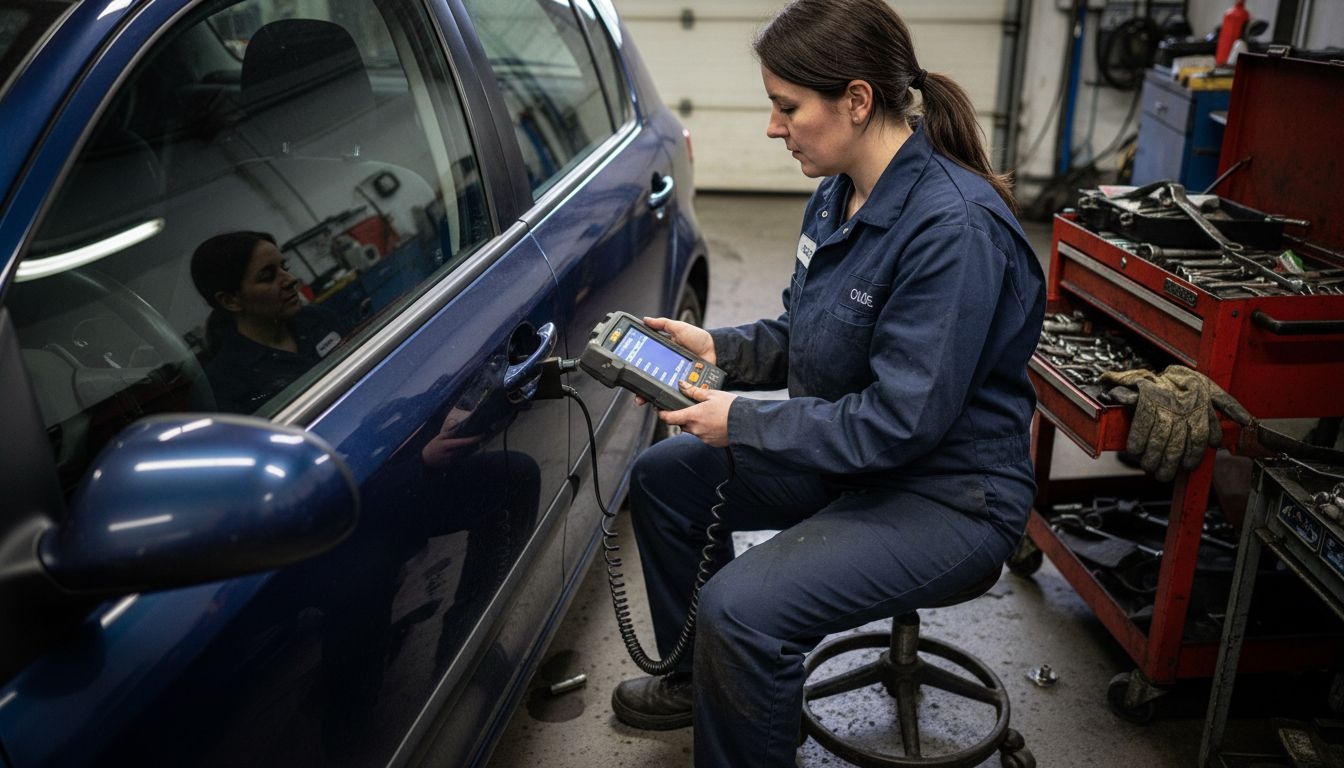
PC-based diagnostic systems offer more advanced functionality. A laptop or desktop computer connected via a specialised adapter provides deeper system access than handheld tools. Mechanics use these when investigations require detailed data analysis or software updates.
Mobile diagnostic applications have emerged as practical alternatives. Using a Bluetooth adapter connected to smartphones, these apps retrieve basic fault codes and live data. They’re affordable and convenient for quick checks, though they lack the power of professional systems.
Here’s what each tool category offers:
Here’s how the main types of diagnostic tools compare:
| Tool Type | Typical Use Case | Key Advantages | Cost Range |
|---|---|---|---|
| Handheld Scanner | Everyday fault finding | Fast readings, highly portable | £200–£1,000+ |
| PC-Based System | In-depth analysis | Detailed reports, software updating | £500–£2,000+ |
| Mobile Application | Quick basic checks | Low cost, easy for beginners | £20–£100 |
- Handheld scanners: Portable, fast, sufficient for most common repairs
- PC-based systems: Advanced diagnostics, software updates, detailed analysis
- Mobile apps: Budget-friendly, convenient, limited functionality
Beyond Basic Code Reading
Modern automotive diagnostic standards encompass far more than simply reading fault codes. Professional diagnostic equipment now performs:
- Actuator testing to verify component response
- Real-time sensor monitoring showing live performance data
- Software reprogramming for vehicle updates and recalibration
- Multi-system scanning across engine, transmission, and safety systems
At Avgarage, our technicians employ industry-standard diagnostic equipment meeting ISO and SAE standards. This ensures compatibility with all vehicle makes and models, whether your car is a common British domestic vehicle or an imported specialist model.
Professional diagnostic equipment costs thousands of pounds, which is why visiting a qualified repair centre provides better value than purchasing basic consumer tools.
The difference between a £50 basic code reader and a £2,000 professional system becomes apparent when diagnosing complex issues. Professional equipment accesses protected systems, performs advanced tests, and provides manufacturer-specific diagnostic protocols unavailable to consumer tools.
Pro tip: When booking a diagnostic service, ask your mechanic what equipment they’ll use and whether they follow manufacturer diagnostic procedures—this ensures you’re getting thorough, accurate diagnostics rather than surface-level code reading.
How the Diagnostic Process Works
The diagnostic process follows a structured sequence designed to pinpoint vehicle problems accurately. Understanding these steps helps you appreciate what happens when you bring your car to Avgarage for a diagnostic check.
When you arrive with a problem—whether a warning light or performance issue—your mechanic begins by connecting diagnostic equipment to your vehicle’s OBD-II port. This standardised connection point sits beneath your steering column and communicates directly with your car’s onboard computer.
The Step-by-Step Diagnostic Sequence
The process unfolds in a logical order:
- Connect the diagnostic scanner to the OBD-II port and initialise the diagnostic session
- Retrieve stored fault codes that your vehicle’s computer has recorded
- Review live sensor data showing real-time performance readings
- Analyse the information to identify root causes rather than symptoms
- Perform targeted tests on specific systems based on findings
- Document findings and recommend appropriate repairs
Your mechanic reads diagnostic trouble codes stored in your vehicle’s ECU and interprets what they mean. A code like P0303 indicates a specific misfire condition, whilst P0171 points to fuel system problems. These standardised codes enable consistent diagnosis across different vehicles and mechanics.
Reading and Interpreting Data
Fault codes represent only the starting point. Professional technicians examine live sensor data to understand what’s actually happening. An oxygen sensor reading, fuel pressure measurement, or ignition timing value reveals system behaviour that codes alone cannot show.
Diagnostic modes enable access to specific vehicle functions and data streams through standardised communication protocols. Your mechanic activates these modes to monitor sensors, activate components, and gather precise information.
Once diagnosis is complete, your mechanic may clear fault codes and retest the vehicle to confirm repairs were successful. Some issues require road testing to ensure the vehicle performs correctly under real driving conditions.
A comprehensive diagnostic takes 30 to 60 minutes depending on complexity, allowing technicians to identify problems accurately before ordering parts or beginning repairs.
This thorough approach prevents costly mistakes. Rather than replacing components blindly, your mechanic knows exactly what needs fixing and why.
Pro tip: Request a full diagnostic report showing fault codes, live data readings, and recommended repairs—this transparency helps you understand exactly what’s wrong with your vehicle and why specific fixes are necessary.
Benefits for Car Owners and Vehicle Health
Diagnostics transforms vehicle ownership from guesswork into informed decision-making. When you understand what diagnostics does for your car, you gain control over maintenance, costs, and safety.
The benefits extend far beyond simply identifying problems. Diagnostics protects your investment, prevents catastrophic failures, and gives you peace of mind knowing exactly what your vehicle needs.
Catching Problems Early Saves Money
The most valuable benefit of diagnostics is early detection. When a small fault becomes apparent through diagnostic scanning, you address it before escalation. A failing oxygen sensor caught early costs £40 to replace—ignored, it causes catalytic converter damage costing £800.
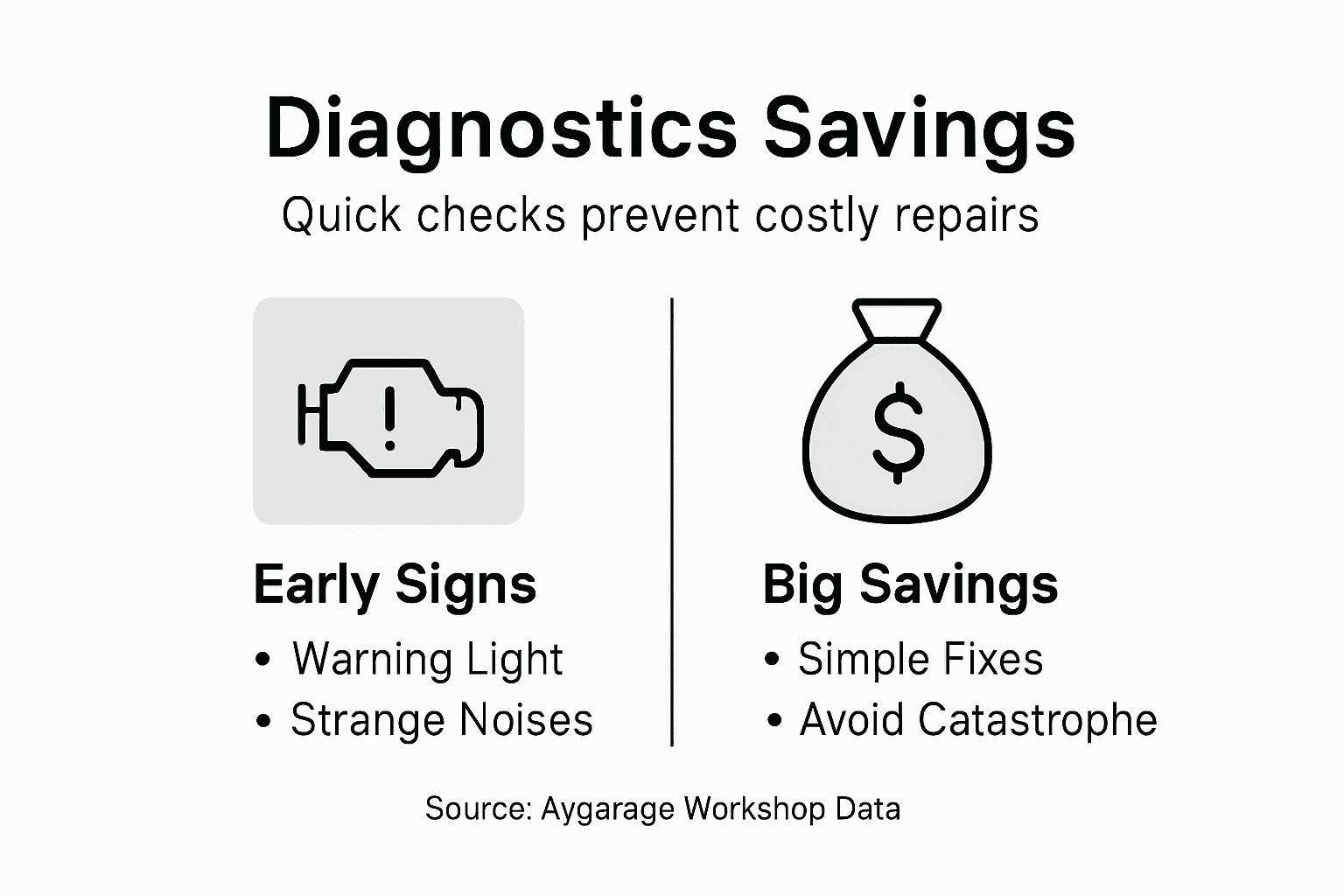
Early detection through onboard diagnostic systems prevents further damage to your vehicle’s critical components. This preventative approach transforms expensive emergencies into manageable maintenance tasks.
Consider these real savings scenarios:
- Engine misfire detected early: £50–£150 repair
- Same misfire ignored until check engine light blinks: £500–£1,200 repair
- Transmission slip caught diagnostically: £200–£400 fluid and filter service
- Same transmission slip ignored: £2,000–£4,000 overhaul or replacement
Diagnostics essentially pays for itself through prevention.
The following table summarises how early diagnostics can impact repair costs:
| Issue | Repair Cost with Early Detection | Cost if Ignored | Main Consequence |
|---|---|---|---|
| Engine Misfire | £50–£150 | £500–£1,200 | Further engine damage |
| Oxygen Sensor | £40 | £800 | Catalytic converter replacement |
| Transmission Slip | £200–£400 | £2,000–£4,000 | Full gearbox overhaul or replacement |
Improved Reliability and Safety
A vehicle that’s been properly diagnosed and repaired operates more reliably. You reduce the risk of unexpected breakdowns that leave you stranded on motorways or in unsafe situations. For Corby commuters relying on vehicles for daily travel, reliability means never missing work or appointments due to vehicle failure.
Diagnostics monitoring helps maintain vehicle health and improve safety throughout your car’s lifespan. Systems continuously monitor your brakes, airbags, steering, and engine—alerting you to problems before they become dangerous.
You gain confidence that your vehicle is roadworthy and safe for you and your passengers.
Enhanced Performance and Fuel Efficiency
A properly diagnosed and serviced vehicle performs better. Fuel efficiency improves when sensors work correctly and the engine operates at optimal settings. Performance diagnostics reveal why your car feels sluggish or consumes excessive fuel.
These benefits compound over time:
- Better acceleration and responsiveness
- Improved fuel economy reducing petrol costs
- Smoother, quieter operation
- Longer engine life through preventative maintenance
Diagnostics eliminates wasteful repairs and ensures every pound spent on maintenance directly addresses genuine vehicle needs, not guessed problems.
Regular diagnostic checks during servicing catch emerging issues before they affect performance. This proactive approach keeps your vehicle in peak condition.
Pro tip: Schedule diagnostic scans during routine servicing appointments—this identifies developing problems early and helps your mechanic prioritise repairs based on importance rather than guesswork.
Common Misconceptions and Cost Factors
Many vehicle owners hold incorrect beliefs about diagnostics that prevent them from seeking professional help. Understanding the reality behind these misconceptions could save you thousands of pounds and unexpected breakdowns.
Diagnostics gets misunderstood more than most automotive services. Let’s address the myths and explain what you actually pay for.
Myth: A Check Engine Light Always Means Expensive Repairs
This misconception creates unnecessary panic. Many issues detected by OBD-II systems can be minor and inexpensive to fix, yet owners assume the worst and delay getting help.
Reality check: a check engine light can indicate anything from a loose fuel cap to serious engine damage. Only diagnostics reveals which category your problem falls into. A loose cap costs zero pounds. A genuine fault might cost £50–£500 depending on what it is.
The worst decision is ignoring the light. Minor issues genuinely do escalate into catastrophic problems when left unaddressed.
Myth: Diagnostic Scanning Is Just Simple Fault Reading
Many owners believe diagnostics simply reads one code and identifies one problem. Modern diagnostic systems offer detailed real-time data and complex diagnostic trouble codes, revealing much more than surface-level information.
Professional diagnostics involves:
- Reading multiple stored and pending fault codes
- Analysing live sensor data streams
- Testing individual components under controlled conditions
- Cross-referencing codes to identify root causes
- Distinguishing symptoms from actual problems
This complexity is why professional diagnostics costs more than a basic scan tool but delivers vastly superior accuracy.
Understanding Diagnostic Service Costs
Diagnostic fees vary significantly based on vehicle complexity and problem severity. A straightforward scan on a common model might cost £40–£60. Complex vehicles or multi-system issues can exceed £150–£200.
However, consider this: a £100 diagnostic fee that prevents a £2,000 misdiagnosis represents exceptional value. You’re paying for expertise that prevents costly mistakes.
Cost factors include:
- Vehicle make and model (specialist imports cost more)
- Problem complexity (simple versus multi-system issues)
- Labour time (some vehicles require extended diagnosis)
- Software access (manufacturer-specific protocols)
Diagnostic costs appear expensive only when compared against the cost of repairs they prevent—a proper diagnosis typically saves far more than it costs.
At Avgarage, we’re transparent about diagnostic pricing. You know exactly what you’re paying for and why, without surprise charges.
Why Professional Diagnostics Is Worth the Investment
Basic scan tools available online cost £30–£50 but lack interpretation skills. They read codes; they don’t understand context. A professional mechanic combines diagnostic equipment with years of experience and technical knowledge.
Your mechanic interprets what the data means, considers your vehicle’s history, and identifies root causes rather than just symptoms.
Pro tip: Ask your mechanic for a diagnostic report before authorising repairs—this shows you exactly what was found and why specific repairs are recommended, helping you understand the value you’re receiving.
Ensure Your Vehicle’s Health with Expert Diagnostic Services at Avgarage
Vehicle diagnostics is crucial for accurately identifying the root causes of your car troubles and avoiding costly, unnecessary repairs. If you want to save both time and money while protecting your vehicle from further damage, professional diagnostic services are indispensable. At Avgarage in Corby, our knowledgeable technicians use advanced diagnostic equipment to deliver precise assessments, helping you tackle issues early and maintain your vehicle’s performance and safety.

Don’t let vague warning lights or mysterious engine issues disrupt your daily routine. Take control by booking a comprehensive diagnostic check now and experience reliable, transparent service using high-quality parts and expert care. Visit Avgarage today to schedule your appointment and ensure your vehicle receives trusted, thorough diagnostics that save you from expensive repairs later.
Frequently Asked Questions
What does vehicle diagnostics involve?
Vehicle diagnostics is the process of identifying problems with your car using specialised equipment. It reads fault codes stored in your vehicle’s onboard computer to determine specific issues, allowing for precise repairs instead of guesswork.
How can diagnostics save me money on auto repairs?
Diagnostics identify the root cause of problems rather than replacing parts blindly. This prevents unnecessary repairs and reduces repair costs by addressing issues early before they escalate into more significant, expensive problems.
What types of diagnostic tools are commonly used in auto repair?
Common diagnostic tools include handheld scan tools, which provide quick fault code readings, and PC-based systems that allow for in-depth analysis. Mobile applications also offer basic diagnostics but lack the sophistication of professional tools.
How long does a typical diagnostic check take?
A comprehensive diagnostic check usually takes between 30 to 60 minutes, depending on the complexity of the issues being investigated. This allows technicians to accurately identify problems before performing repairs.