



Older vehicles in Corby can start to lose their spark over time, leading to sluggish performance and rising fuel costs. Regular engine tune-ups are more than a routine check—they help your car run smoother, last longer, and save you money at the pump. By addressing critical components such as spark plugs, filters, and electronic controls, a well-executed tune-up restores lost power and improves fuel efficiency, making it a smart investment for any British car owner.
Table of Contents
- What Is an Engine Tune-Up?
- Key Components Checked and Replaced
- How a Tune-Up Improves Performance
- Typical Costs and What Affects Price
- Common Mistakes and How to Avoid Them
Key Takeaways
| Point | Details |
|---|---|
| Engine Tune-Up Importance | A tune-up optimises engine performance and extends the vehicle’s lifespan through systematic inspection and maintenance of key components. |
| Modern Tune-Up Methods | Contemporary vehicles rely on automated diagnostics and computerised adjustments, enhancing precision in engine tuning compared to traditional manual methods. |
| Regular Maintenance Schedule | Scheduling a professional tune-up every 30,000 miles is recommended to maintain peak performance and prevent unexpected breakdowns. |
| Cost Factors to Consider | The cost of a tune-up varies based on vehicle make, age, complexity of service, parts quality, and local labour rates. |
What Is an Engine Tune-Up?
An engine tune-up is a comprehensive maintenance process designed to restore and optimise the performance of your vehicle’s internal combustion engine. By systematically addressing key engine components, a tune-up ensures your car operates at peak efficiency, preventing potential mechanical issues and extending the vehicle’s operational lifespan.
Traditionally, an engine tune-up involved manual adjustments to critical systems, but modern vehicles have transformed this process through advanced electronic technologies. Today’s tune-ups typically include:
- Comprehensive inspection of ignition systems
- Checking and replacing spark plugs
- Evaluating fuel injection performance
- Assessing air and fuel filters
- Examining engine sensors and electronic control units
Modern automotive engineering has significantly streamlined these maintenance procedures. Where mechanics once manually adjusted carburettors and idle speeds, contemporary vehicles now rely on sophisticated computer systems that automatically calibrate engine performance. However, periodic professional inspections remain crucial to maintaining optimal engine function.

Here is a summary of traditional versus modern engine tune-up approaches:
| Feature | Traditional Tune-Up | Modern Tune-Up |
|---|---|---|
| Adjustment Method | Manual tuning of parts | Computerised, automated tuning |
| Key Technologies | Carburettors, distributors | ECUs, advanced sensors |
| Diagnostic Tools | Visual/manual inspection | Electronic analysis tools |
| Frequency of Service | More frequent adjustments | Longer intervals between checks |
| Accuracy | Mechanic skill dependent | High precision via computers |
Electronic diagnostics play a pivotal role in contemporary tune-ups. Mechanics now use advanced computerised tools to diagnose and rectify engine faults with unprecedented precision, identifying potential issues before they escalate into costly repairs.
A well-executed tune-up can improve fuel efficiency by up to 4% and restore lost engine performance.
Pro tip: Schedule a professional engine tune-up every 30,000 miles or as recommended by your vehicle manufacturer to maintain peak performance and prevent unexpected breakdowns.
Key Components Checked and Replaced
A comprehensive engine tune-up involves meticulously examining and replacing several critical components to ensure optimal vehicle performance. Essential engine maintenance procedures focus on key systems that directly impact the engine’s efficiency, reliability, and overall operational health.
During a typical tune-up, mechanics systematically inspect and potentially replace the following crucial components:
- Spark plugs: Check for wear, proper gap, and electrical conductivity
- Ignition system components: Evaluate distributor cap, rotor, and ignition wires
- Filters: Inspect and replace air and fuel filters
- Belts and hoses: Check for cracks, wear, and proper tension
- Engine sensors: Test and calibrate electronic sensors
- Emission control parts: Ensure compliance with environmental standards
Modern vehicles rely increasingly on sophisticated electronic systems. Engine Control Unit (ECU) calibration has become a critical aspect of tune-ups, allowing mechanics to fine-tune engine parameters with unprecedented precision. This process involves advanced diagnostic tools that can identify potential issues before they develop into more significant mechanical problems.
The inspection process goes beyond simple part replacement. Technicians perform comprehensive assessments of the engine block, pistons, cylinders, and valves to detect any signs of wear, damage, or potential future failures. Each component is carefully examined to ensure it meets the manufacturer’s specifications and contributes to the overall performance and longevity of the vehicle.
Proactive maintenance can prevent up to 70% of unexpected engine failures and significantly extend your vehicle’s operational lifespan.
Pro tip: Request a detailed diagnostic report after your tune-up to understand the specific condition of each engine component and potential future maintenance needs.
How a Tune-Up Improves Performance
A comprehensive engine tune-up delivers transformative improvements to your vehicle’s overall performance by optimising critical systems and mechanical interactions. Internal combustion engine efficiency depends on precise calibration of multiple interconnected components that work together to generate power and maintain smooth operation.
The performance improvements from a professional tune-up manifest in several key areas:
- Fuel Efficiency: Reduced fuel consumption by optimising air-fuel mixtures
- Power Output: Enhanced horsepower and acceleration capabilities
- Smooth Acceleration: Minimised engine hesitation and improved throttle response
- Emission Reduction: Decreased pollutant emissions through complete fuel combustion
- Engine Longevity: Reduced internal wear and mechanical stress
Electronic systems play a crucial role in modern performance enhancement. Engine tuning processes now leverage sophisticated computer-controlled management systems that can precisely adjust ignition timing, fuel delivery, and other critical parameters with remarkable accuracy.
Technicians focus on calibrating multiple systems to ensure optimal performance. This includes fine-tuning the ignition system, cleaning fuel injectors, replacing worn components, and recalibrating electronic sensors to restore the engine’s original manufactured specifications. The result is a vehicle that responds more dynamically, consumes fuel more efficiently, and experiences reduced mechanical strain.
Proper engine maintenance can improve fuel efficiency by up to 4% and restore lost performance potential.
Pro tip: Schedule your tune-up during seasonal transitions to address potential performance issues before they become more significant mechanical problems.
Typical Costs and What Affects Price
The cost of an engine tune-up varies significantly, influenced by multiple factors that can impact the overall investment in your vehicle’s maintenance. Engine tuning costs depend on a complex interplay of vehicle specifications, service complexity, and regional pricing variations.
Several key elements contribute to the total tune-up expense:
- Vehicle Make and Model: Luxury and high-performance vehicles typically require more expensive parts and specialised labour
- Age of Vehicle: Older vehicles may need more extensive repairs and component replacements
- Service Complexity: Basic tune-ups differ substantially from comprehensive performance optimisation
- Labour Rates: Local mechanic pricing varies across different automotive service centres
- Parts Quality: Original manufacturer parts cost more than aftermarket alternatives
Diagnostic procedures play a crucial role in determining the overall cost. Engine overhaul procedures involve detailed inspections that can reveal additional maintenance requirements, potentially increasing the initial service estimate.
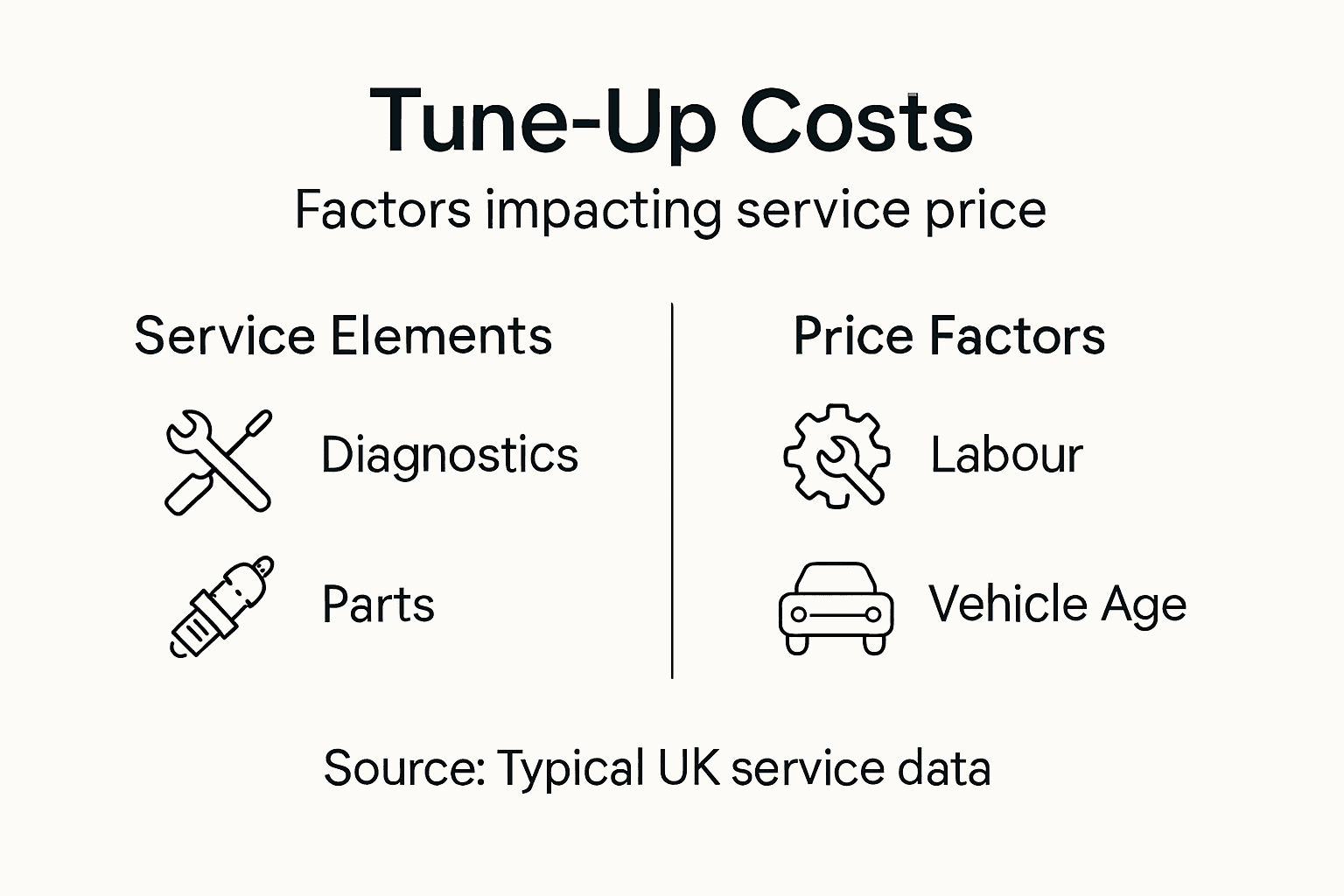
Typical tune-up costs in the UK generally range from £100 to £400, depending on the vehicle’s specific needs. Budget-friendly options might start around £80 for basic services on smaller cars, while complex tune-ups for high-end or performance vehicles can exceed £500. Professional mechanics recommend obtaining detailed quotes that break down parts and labour costs to understand the full scope of the proposed maintenance.
The following table provides a quick reference for cost factors affecting engine tune-ups in the UK:
| Cost Factor | Description | Typical Impact on Price |
|---|---|---|
| Vehicle Type | Luxury or standard model | Higher for luxury or performance |
| Age of Vehicle | Newer vs. older engine | Older may require more repairs |
| Service Complexity | Basic checks or full optimisation | Comprehensive costs significantly more |
| Parts Quality | OEM vs. aftermarket components | OEM parts increase overall cost |
| Labour Rates | Local mechanic vs. dealership | Dealerships usually charge more |
A comprehensive tune-up represents an investment in your vehicle’s long-term performance and reliability.
Pro tip: Request a written estimate that itemises all proposed services and parts to avoid unexpected additional charges during your vehicle’s tune-up.
Common Mistakes and How to Avoid Them
Engine tune-ups require precision and expertise, with numerous potential pitfalls that can compromise your vehicle’s performance and longevity. Common engine tune-up mistakes can lead to significant mechanical issues if not addressed carefully and systematically.
The most frequent errors vehicle owners and inexperienced mechanics encounter include:
- Incorrect Part Selection: Using incompatible or low-quality replacement components
- Improper Diagnostic Procedures: Failing to use correct diagnostic tools and techniques
- Ignoring Manufacturer Specifications: Deviating from recommended service guidelines
- Incomplete Component Inspection: Overlooking critical engine system elements
- Neglecting Electronic Calibration: Skipping crucial electronic system adjustments
Diagnostic precision is paramount in avoiding maintenance mistakes. Engine tune-up procedures demand meticulous attention to detail and a comprehensive understanding of vehicle-specific requirements.
Many errors stem from attempting to cut corners or save money by using substandard parts or skipping essential diagnostic steps. Professional mechanics emphasise the importance of following manufacturer guidelines, using high-quality replacement components, and performing thorough system checks. This approach prevents potential damage and ensures optimal engine performance, ultimately saving vehicle owners significant expense in long-term repairs.
Cutting corners during a tune-up can lead to costly repairs that far exceed the initial maintenance expense.
Pro tip: Always request a detailed diagnostic report and ask your mechanic to explain each recommended service to ensure you understand the necessary maintenance procedures.
Maintain Peak Engine Performance with Expert Tune-Ups at Avgarage
If you have noticed sluggish acceleration or rising fuel costs, your vehicle could be due for a professional engine tune-up. As highlighted in our article “Engine Tune-Up Boost Performance and Efficiency,” thorough inspection and calibration of key components like spark plugs ignition systems and electronic sensors are essential for restoring your engine’s full potential while preventing costly future repairs. At Avgarage we understand these challenges and specialise in comprehensive vehicle maintenance that addresses both traditional mechanical checks and advanced electronic diagnostics to keep your engine running smoothly.

Take control of your vehicle’s performance today by booking a service with our certified technicians who use only OEM or high-quality aftermarket parts. Enjoy reliable diagnostics and precise tuning with the convenience of online appointment booking. Visit Avgarage now to discover how our expert engine tune-up services can save you money keep emissions down and improve your driving experience. Don’t wait until performance issues escalate schedule your tune-up and experience peace of mind on the road.
Frequently Asked Questions
What is an engine tune-up?
An engine tune-up is a maintenance process aimed at restoring and optimising the performance of a vehicle’s internal combustion engine by inspecting and adjusting key components.
How often should I schedule an engine tune-up?
It is generally recommended to schedule a professional engine tune-up every 30,000 miles or as advised by your vehicle manufacturer to maintain optimal performance and prevent issues.
What key components are inspected during a tune-up?
During a tune-up, mechanics typically check and may replace spark plugs, ignition system components, filters, belts, hoses, engine sensors, and emission control parts.
How does a tune-up improve vehicle performance?
A tune-up can enhance fuel efficiency, power output, and throttle response while reducing emissions, ultimately extending the engine’s longevity and improving overall vehicle performance.