



Changing gearbox oil often feels like one of those jobs that can wait, but neglecting it risks costly repairs for any Corby car owner. Gearbox oil is more than just a fluid; it reduces friction, absorbs heat, and forms a protective film under high pressure, keeping transmissions smooth and long lasting. Whether you prefer DIY or trust a local professional, understanding the process will help you protect your car and avoid unnecessary breakdowns.
Table of Contents
- What Is A Gearbox Oil Change?
- Types Of Gearbox Oil And Their Roles
- When And Why Gearbox Oil Needs Replacing
- Step-By-Step Gearbox Oil Change Process
- Risks Of Skipping Gearbox Oil Changes
- DIY Versus Professional Gearbox Oil Service
Key Takeaways
| Point | Details |
|---|---|
| Importance of Regular Gearbox Oil Changes | Routine gearbox oil changes prevent significant mechanical failures and maintain transmission efficiency. |
| Types of Gearbox Oils | Choosing the right gearbox oil based on vehicle type and driving conditions is essential for optimal performance. |
| Signs of Oil Deterioration | Indicators like difficulty shifting gears and burnt oil smell suggest oil replacement is necessary to avoid damage. |
| DIY vs Professional Service | Weigh the benefits of DIY maintenance against professional services; expertise can prevent costly errors. |
What Is a Gearbox Oil Change?
A gearbox oil change is a critical maintenance procedure that involves replacing the transmission fluid in your vehicle’s gear system. This specialised service ensures that your car’s transmission operates smoothly and efficiently by removing old, degraded lubricant and replacing it with fresh oil.
Gearbox oil performs several essential functions within a vehicle’s transmission system:
- Reduces friction between moving gear components
- Dissipates heat generated during transmission operation
- Prevents metal-to-metal contact and wear
- Protects against corrosion and mechanical damage
- Maintains optimal transmission performance
The oil is specifically designed to withstand high pressures and temperatures, creating a protective lubricating film between mechanical parts. Unlike regular engine oil, transmission fluid must handle more complex mechanical interactions and maintain its protective qualities under extreme conditions.
Vehicle manufacturers recommend specific intervals for gearbox oil changes based on mileage, driving conditions, and transmission type. Manual transmissions typically require less frequent changes compared to automatic transmissions, which experience more intense mechanical stress.
Pro tip: Check your vehicle’s owner manual for precise gearbox oil change recommendations specific to your car model and driving conditions.
Types of Gearbox Oil and Their Roles
Gearbox oils are not a one-size-fits-all solution, with multiple types designed to meet specific automotive transmission requirements. Gearbox oils primarily come in three distinct categories: mineral, synthetic, and semi-synthetic, each offering unique performance characteristics for different vehicular needs.
The primary types of gearbox oils include:
- Mineral Oils: Derived from crude oil, best suited for standard temperature conditions
- Synthetic Oils: Engineered for extreme temperature and pressure environments
- Semi-Synthetic Oils: A balanced blend offering moderate performance at competitive prices
Each oil type serves critical functions in maintaining transmission health:
- Reduces mechanical friction
- Dissipates generated heat
- Prevents corrosion and wear
- Cleans internal transmission components
- Maintains optimal gear system performance
Moreover, specialised gear oils like Rust and Oxidation (R&O), Compounded, and Extreme Pressure (EP) oils cater to specific mechanical requirements. Automotive engineers carefully select transmission fluids based on viscosity, thermal stability, and the specific operational demands of different transmission systems.
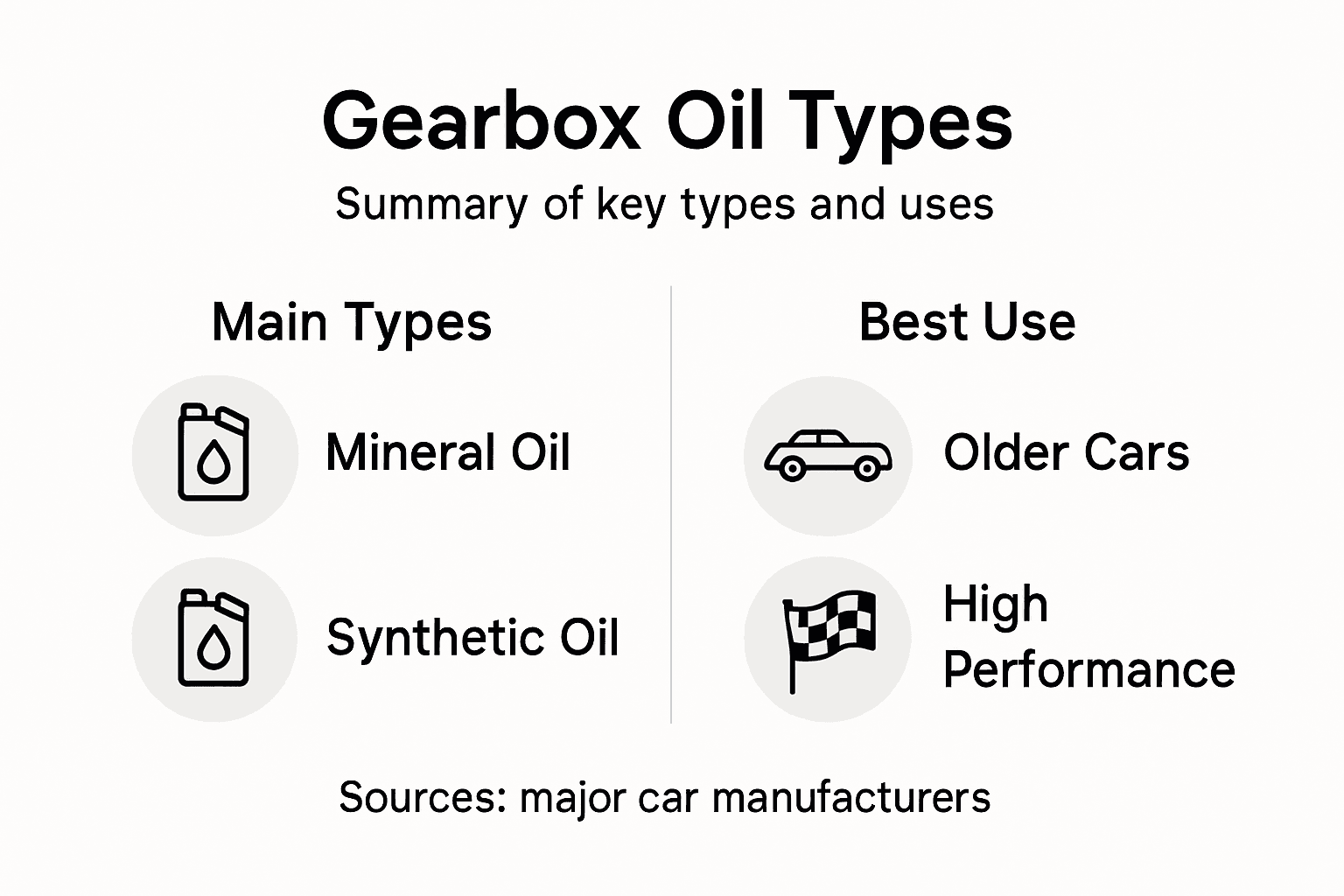
Here is a comparison of the main gearbox oil types and their best-use scenarios:
| Oil Type | Ideal Temperature Range | Best Application | Relative Cost |
|---|---|---|---|
| Mineral | Standard temperatures | Everyday commuting | Lowest |
| Synthetic | Extreme heat and high pressure | Performance and heavy loads | Highest |
| Semi-Synthetic | Moderate temperatures and pressures | Balanced driving conditions | Midrange |
Pro tip: Always consult your vehicle manufacturer’s recommendations to select the most appropriate gearbox oil for your specific transmission type and driving conditions.
When and Why Gearbox Oil Needs Replacing
Gearbox oil is not eternal. Regular replacement prevents transmission damage by maintaining critical lubrication and protection for your vehicle’s most complex mechanical system. Automotive experts recommend changing gearbox oil at specific intervals to ensure optimal performance and prevent costly mechanical failures.
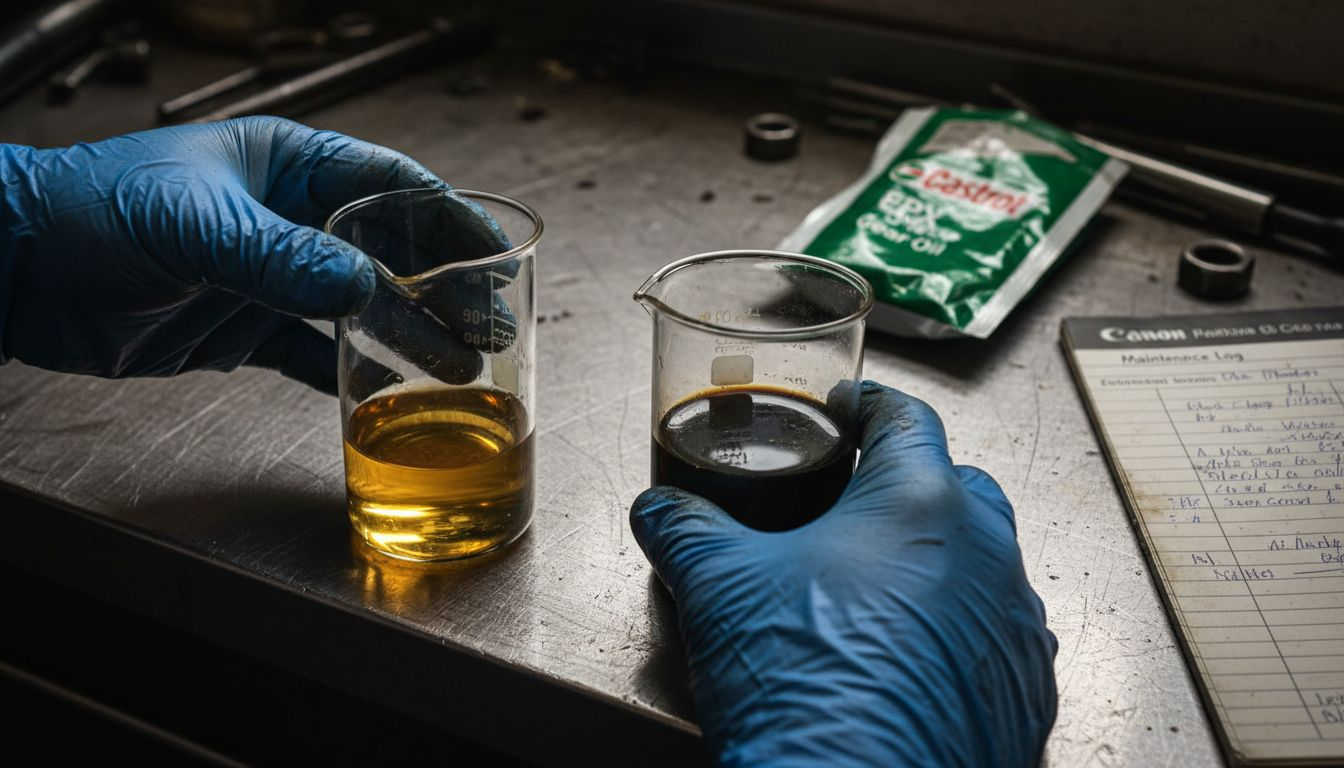
Key indicators that your gearbox oil requires replacement include:
The following table summarises signs of gearbox oil deterioration and their likely consequences:
| Indicator | Possible Cause | Potential Impact |
|---|---|---|
| Difficulty shifting gears | Low or degraded oil | Gear wear, shifting problems |
| Grinding or whining noises | Insufficient lubrication | Increased internal damage |
| Burnt oil smell | Overheated transmission | Accelerated component failure |
| Dark or dirty oil | Contamination, old fluid | Reduced oil effectiveness |
- Difficulty shifting gears
- Unusual grinding or whining noises
- Visible oil leaks
- Dark or contaminated oil appearance
- Transmission fluid that smells burnt
Typical replacement intervals vary depending on several factors:
- Vehicle manufacturer recommendations
- Transmission type (manual or automatic)
- Driving conditions and environment
- Total kilometers driven
- Quality of existing gearbox oil
Most manufacturers suggest changing gearbox oil every 60,000 to 100,000 kilometres. However, harsh driving conditions like frequent stop-and-go traffic, mountainous terrain, or towing heavy loads can accelerate oil degradation, potentially requiring more frequent changes.
Contaminated gearbox oil contains microscopic metal particles that progressively damage transmission components, making timely oil changes crucial for long-term vehicle health.
Pro tip: Keep a detailed service record to track your gearbox oil change history and anticipate future maintenance needs.
Step-by-Step Gearbox Oil Change Process
Changing gearbox oil requires careful preparation and precise execution to maintain your vehicle’s transmission system. This comprehensive process involves several critical steps that ensure optimal lubrication and prevent potential mechanical damage.
Essential preparation steps include:
- Parking the vehicle on a flat, level surface
- Engaging the parking brake
- Gathering necessary tools and equipment
- Wearing protective gloves and eyewear
- Placing a large drain pan underneath the transmission
The detailed gearbox oil change procedure involves:
- Locate the transmission drain plug
- Position the drain pan correctly
- Carefully remove the drain plug
- Allow complete drainage of old oil
- Replace the oil filter (if applicable)
- Clean and reinstall the drain plug with a new gasket
- Add fresh manufacturer-recommended gearbox oil
- Check oil level using dipstick or fill cap
Critical safety considerations during the oil change process require maintaining a clean workspace and ensuring proper disposal of used transmission fluid. Contaminated oil contains microscopic metal particles that can cause significant mechanical wear if not handled correctly.
Precision matters: Always use the exact oil type and quantity specified by your vehicle manufacturer to prevent potential transmission damage.
Pro tip: Consider recording the oil change details in your vehicle’s service log to track maintenance history and anticipate future service needs.
Risks of Skipping Gearbox Oil Changes
Gearbox failure often originates from neglected lubrication, presenting serious consequences for vehicle performance and mechanical integrity. Skipping routine gearbox oil changes can transform a minor maintenance task into a potentially catastrophic and expensive repair scenario.
Critical risks associated with neglecting gearbox oil maintenance include:
- Accelerated mechanical wear
- Increased friction between transmission components
- Excessive heat buildup
- Premature gear and bearing failure
- Reduced overall transmission efficiency
- Potential complete transmission breakdown
The progressive damage caused by inadequate lubrication occurs through several mechanisms:
- Metal-to-metal contact increases friction
- Contaminants accumulate in degraded oil
- Lubricant’s protective properties deteriorate
- Internal transmission components experience unmitigated stress
- Microscopic metal particles cause additional mechanical damage
Vehicle owners who ignore manufacturer-recommended oil change intervals risk exponentially higher repair costs. A simple, affordable maintenance procedure can prevent thousands of pounds in potential transmission replacements.
Transmission repairs can cost up to ten times more than routine oil changes, making preventative maintenance a financially prudent decision.
Pro tip: Set calendar reminders or mileage tracking for your next gearbox oil change to ensure consistent, timely maintenance.
DIY Versus Professional Gearbox Oil Service
Vehicle owners face a critical decision when considering gearbox oil changes: tackle the task independently or seek professional expertise. Each approach offers distinct advantages and potential drawbacks that can significantly impact your vehicle’s transmission health.
Key considerations for DIY gearbox oil service include:
- Lower immediate cost
- Personal control over maintenance process
- Opportunity to learn vehicle mechanics
- Flexible scheduling
- Potential for mistakes without proper knowledge
Professional service advantages encompass:
- Expert mechanical knowledge
- Comprehensive transmission inspection
- Correct fluid selection and disposal
- Advanced diagnostic capabilities
- Reduced risk of potential damage
- Warranty-backed service
The decision ultimately depends on several personal factors such as mechanical skill, available time, tools, and comfort level with automotive maintenance. Inexperienced vehicle owners might risk costly mistakes by attempting complex transmission services without proper understanding.
Professional technicians can detect subtle transmission issues that untrained eyes might easily miss, potentially saving thousands in future repair costs.
Pro tip: If unsure about your mechanical abilities, consider observing a professional service first to understand the intricate process before attempting a DIY approach.
Keep Your Gearbox Running Smoothly with Expert Care from Avgarage
The detailed guide on gearbox oil changes highlights how critical fresh, high-quality lubricant is to preventing premature gear wear and costly transmission failures. If you have noticed difficulty shifting gears or strange noises, these are clear signs that your gearbox oil needs replacing to avoid internal damage and ensure lasting transmission health. At Avgarage, our certified technicians in Corby understand the importance of choosing the correct oil type for your vehicle’s transmission and performing meticulous oil changes that restore optimal performance.
Do not wait until gearbox issues escalate into expensive repairs. Book your gearbox oil change service today with Avgarage through our easy online system. Benefit from over 10 years of expertise, OEM-quality parts, and transparent pricing by visiting Avgarage. Take control of your vehicle’s health now and enjoy smooth, reliable driving. Learn more about our routine servicing and repairs to keep every part of your car in top condition.
Frequently Asked Questions
What is a gearbox oil change, and why is it important?
A gearbox oil change is a maintenance procedure that involves replacing the old transmission fluid in your vehicle’s gearbox with fresh oil. It’s important because it helps reduce friction, dissipates heat, prevents corrosion, and maintains optimal transmission performance, ensuring the longevity and efficiency of your vehicle.
How often should I change my gearbox oil?
The recommended interval for changing gearbox oil typically ranges from every 60,000 to 100,000 kilometres. However, this may vary based on driving conditions, the type of transmission (manual or automatic), and the manufacturer’s guidelines found in your vehicle’s owner manual.
What are the signs that my gearbox oil needs replacing?
Signs that your gearbox oil may need replacing include difficulty shifting gears, unusual grinding or whining noises, visible oil leaks, dark or contaminated oil appearance, and a burnt smell. These indicators suggest that the oil has degraded and may lead to transmission damage if not addressed promptly.
What types of gearbox oil are available, and how do they differ?
There are three primary types of gearbox oil: mineral oils, synthetic oils, and semi-synthetic oils. Mineral oils are derived from crude oil and are best for standard conditions; synthetic oils are engineered for extreme conditions; and semi-synthetic oils offer a blend of both, suitable for moderate driving conditions. Each type serves different performance needs and should match your vehicle’s requirements.