

Unexpected car trouble in Corby can leave even the most careful vehicle owner facing hefty bills. Knowing what your warranty does—and does not—cover is more than financial peace of mind, especially when common misconceptions often lead to disappointment. This guide shines a spotlight on the real meaning of a car warranty, clears up confusion around coverage, and empowers you to make smart decisions about your repair costs and protection in the United Kingdom.
Table of Contents
- Car Warranty Meaning And Misconceptions
- Main Types Of Automotive Warranties In The UK
- What Repairs And Services Are Typically Covered
- Common Exclusions And Invalidating Actions
- Making A Claim And Understanding Your Rights
- Financial Impact Of Warranties And Alternatives
Key Takeaways
| Point | Details |
|---|---|
| Understanding Warranty Types | Car warranties vary by type, including Manufacturer’s, Extended, Powertrain, Comprehensive, and Electrical System warranties, each with specific coverage and limitations. |
| Misconceptions About Coverage | Owners often believe warranties cover all repairs, but they typically exclude routine maintenance, wear-and-tear, and accidental damage. |
| Importance of Documentation | Keeping thorough service records and understanding warranty agreements is essential to ensure coverage and facilitate claims. |
| Financial Considerations | Vehicle owners should evaluate the costs and potential savings of warranties against repair expenses to make informed financial decisions. |
Car warranty meaning and misconceptions
A car warranty is a crucial protective agreement that helps vehicle owners manage unexpected repair expenses. These contracts promise to cover specific mechanical and electrical repairs within predetermined conditions and timeframes. Unlike general assumptions, warranties are not blanket protection for every potential vehicle issue.
Automotive warranties typically encompass several distinct categories:
- Factory warranties: Provided by vehicle manufacturers for new vehicles
- Powertrain warranties: Coverage for essential engine and transmission components
- Corrosion warranties: Protection against body rust and structural deterioration
- Extended warranties: Additional coverage purchased beyond original manufacturer terms
Many car owners misunderstand warranty provisions, believing they represent comprehensive repair insurance. In reality, automotive warranties have specific limitations that exclude routine maintenance and wear-and-tear damages. Understanding these nuanced coverage details is essential for managing realistic repair expectations.
Common misconceptions about warranties include assumptions that they cover:
- All mechanical failures
- Regular maintenance services
- Damage from accidents
- Modifications to the original vehicle
Warranty coverage fundamentally protects against manufacturing defects and unexpected mechanical failures, not predictable maintenance or intentional vehicle alterations. Consumers should carefully review their specific warranty documentation to understand exact terms and conditions.
Pro tip: Always request a detailed written explanation of warranty coverage before purchasing a vehicle or extended protection plan.
Main types of automotive warranties in the UK
In the United Kingdom, automotive warranties represent critical financial protections for vehicle owners, offering comprehensive coverage against unexpected mechanical and electrical failures. Car warranty roles extend beyond simple repair coverage and provide vehicle owners with critical financial safeguards and peace of mind during ownership.
The primary automotive warranty types available in the UK include:
- Manufacturer’s warranty: Standard protection provided by vehicle manufacturers
- Extended warranty: Additional coverage purchased after original manufacturer’s warranty expires
- Powertrain warranty: Specific protection for engine and transmission components
- Comprehensive warranty: Broad coverage encompassing multiple vehicle systems
- Electrical system warranty: Protection for complex electronic components
British vehicle manufacturers and dealerships typically structure warranties with specific duration and mileage limitations. Most standard manufacturer warranties in the United Kingdom range between three to seven years, with mileage caps typically set around 60,000 to 100,000 miles. These warranties fundamentally protect against manufacturing defects and unexpected mechanical failures.
The complexity of warranty coverage demands careful examination of individual contract terms. Consumers should meticulously review documentation to understand:
- Exact components covered
- Duration of protection
- Specific exclusions
- Maintenance requirements
- Potential repair claim processes
Warranty coverage varies significantly between manufacturers and individual vehicle models. Some luxury automotive brands offer more comprehensive protection, while budget-friendly options might provide more limited guarantees.
Here’s a summary comparing the main types of automotive warranties in the UK:
| Warranty Type | Coverage Focus | Typical Duration | Notable Limitation |
|---|---|---|---|
| Manufacturer’s Warranty | Factory defects | 3-7 years, 60,000-100,000 miles | Excludes wear and tear |
| Extended Warranty | Extended mechanical coverage | Variable, often 1-5 years | Does not cover all parts |
| Powertrain Warranty | Engine and transmission | 3-5 years, mileage cap | Excludes electrical systems |
| Comprehensive Warranty | Multiple systems | Often 5+ years | Higher cost, fewer exclusions |
| Electrical System Warranty | Electronic components | Varies by brand | May exclude major mechanical |
Pro tip: Always request a comprehensive written breakdown of warranty terms before finalising your vehicle purchase or extended warranty agreement.
What repairs and services are typically covered
Automotive warranties provide critical protection for vehicle owners, covering a specific range of mechanical and electrical repairs. Automotive safety recalls and defect repairs represent a fundamental aspect of warranty protection, ensuring vehicles meet essential safety and performance standards.
Typically, automotive warranties cover the following key repair categories:
- Powertrain components: Engine, transmission, and drive system repairs
- Electrical system failures: Complex electronic control unit and wiring issues
- Mechanical system breakdowns: Critical mechanical component replacements
- Manufacturer safety-related defects: Structural and safety system repairs
- Manufacturing quality issues: Repairs arising from factory-related manufacturing flaws
Warranty coverage distinguishes between different types of repairs, creating clear boundaries between what is and is not included. Manufacturers generally exclude certain services and damage types, such as:
- Regular maintenance services
- Wear and tear components
- Accidental damage
- Cosmetic imperfections
- Modifications made after vehicle purchase
The scope of warranty coverage varies significantly between manufacturers, with luxury brands often providing more comprehensive protection. Most standard warranties focus on mechanical and electrical system integrity, protecting consumers from unexpected and potentially expensive repair costs.
Consumers should carefully review their specific warranty documentation, paying close attention to:
- Exact repair categories covered
- Duration of protection
- Specific exclusion clauses
- Maintenance requirements
- Claim submission processes
Pro tip: Retain all service records and maintenance documentation to support potential warranty repair claims.
Common exclusions and invalidating actions
Navigating automotive warranty coverage requires a comprehensive understanding of potential actions that can inadvertently void protection. Auto warranty exclusions and invalidation risks highlight critical areas vehicle owners must carefully manage to maintain their warranty’s validity.
Key actions that typically invalidate automotive warranties include:
- Neglecting scheduled manufacturer maintenance
- Using non-approved replacement parts
- Performing unauthorised modifications
- Failing to document service history
- Engaging unqualified mechanics for repairs
Specific warranty invalidation triggers encompass a wide range of potential scenarios. Manufacturers establish stringent guidelines to protect themselves from covering damages resulting from owner negligence or inappropriate vehicle treatment. These exclusions often centre around:
- Accidental damage
- Improper vehicle usage
- Deliberate mechanical alterations
- Environmental exposure beyond normal conditions
- Racing or competitive driving activities
Most automotive warranties explicitly exclude certain types of damage and component failures:
- Normal wear and tear components
- Cosmetic deterioration
- Damage from accidents
- Performance modifications
- Commercial or professional vehicle usage
Consumers must understand that warranty protection is a contractual agreement requiring active maintenance and responsible vehicle ownership. Each manufacturer establishes unique criteria for maintaining warranty coverage, making careful documentation and adherence to guidelines paramount.
Pro tip: Maintain a comprehensive service record and always use manufacturer-recommended parts and service centres to preserve your warranty protection.
Making a claim and understanding your rights
Navigation of automotive warranty claims requires strategic knowledge and careful documentation. Consumer warranty claim rights provide critical protections for vehicle owners seeking legitimate repair coverage.
The typical warranty claim process involves several essential steps:
- Documenting the specific mechanical issue
- Gathering comprehensive service records
- Identifying the precise warranty coverage
- Contacting the manufacturer or authorised dealer
- Presenting detailed evidence of the mechanical failure
Consumers possess specific legal rights when pursuing warranty claims, including:
- Right to comprehensive repair for covered components
- Right to seek alternative dispute resolution
- Right to request detailed explanation of claim denial
- Right to challenge improper warranty rejections
- Right to consult consumer protection agencies
Warranty claim documentation represents the most critical element in successfully resolving repair issues. Vehicle owners must maintain meticulous records, including:
- Original purchase documentation
- Service and maintenance records
- Detailed descriptions of mechanical issues
- Photographs of mechanical failures
- Professional diagnostic reports
Most manufacturers require specific procedural steps when submitting warranty claims. These typically involve direct communication with authorised service centres, providing comprehensive mechanical failure documentation, and following manufacturer-specified claim submission protocols.
Pro tip: Create a dedicated digital and physical file for all vehicle maintenance documents to streamline potential warranty claim processes.
Financial impact of warranties and alternatives
Automotive warranties represent a critical financial risk management strategy for vehicle owners, offering protection against potentially expensive unexpected repair costs. Understanding the economic implications of warranty coverage requires careful analysis of both direct and indirect financial considerations.
Key financial considerations for automotive warranties include:
- Upfront warranty purchase costs
- Potential repair expense savings
- Long-term vehicle maintenance expenditure
- Depreciation impact on vehicle value
- Insurance and protection cost comparisons
The financial alternatives to manufacturer warranties typically encompass:
- Self-funded repair savings accounts
- Extended warranty programmes
- Mechanical breakdown insurance
- Manufacturer-specific service plans
- Independent automotive repair insurance
Warranty cost analysis reveals significant variations in financial protection strategies. Vehicle owners must evaluate the potential repair expenses against warranty pricing, considering factors such as vehicle age, manufacturer reliability, and individual driving patterns.
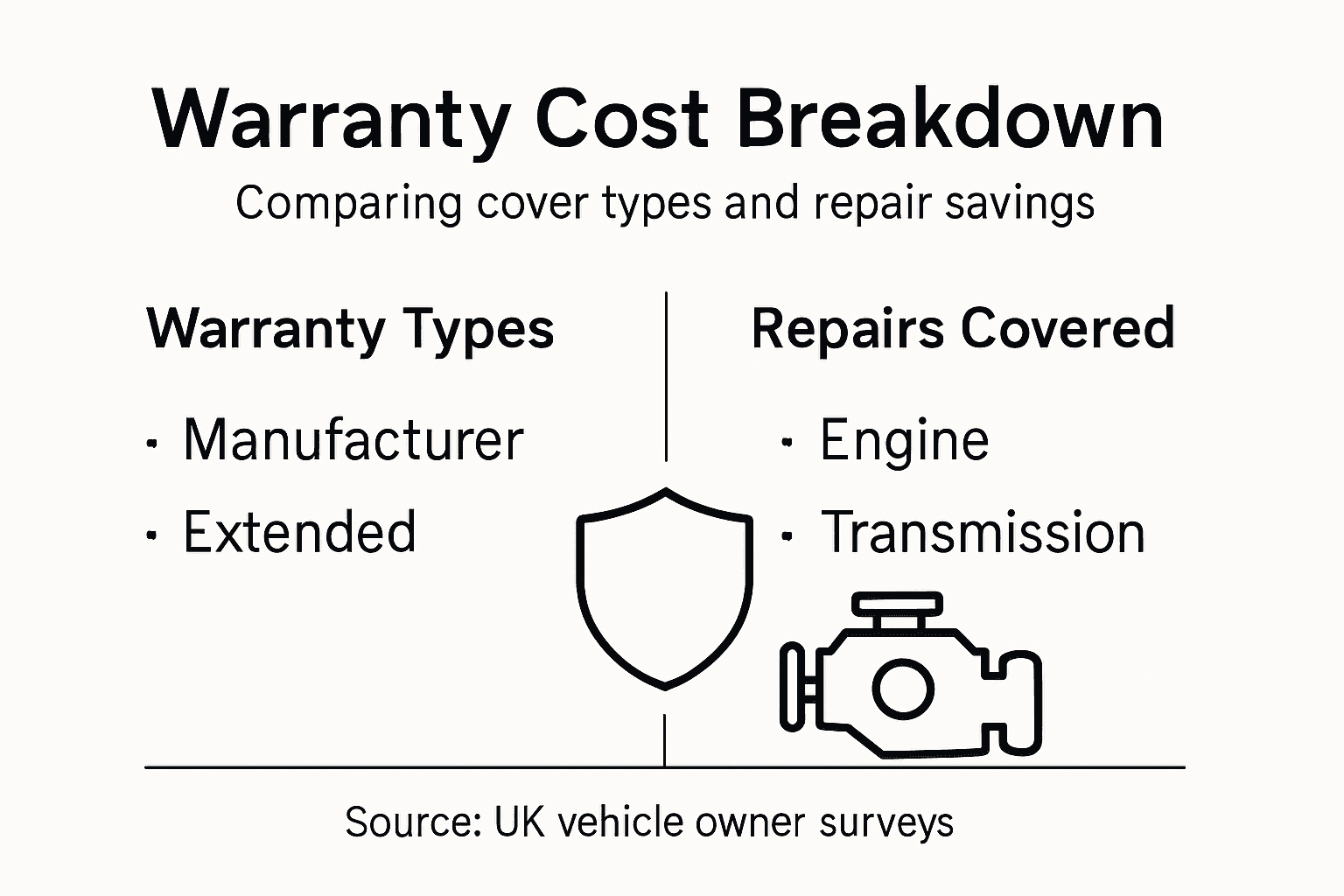
Most warranty options present a complex financial trade-off between predictable ongoing costs and potential catastrophic repair expenses. The decision requires balancing personal risk tolerance, vehicle reliability, and individual financial capacity.
Consider these financial factors when deciding between warranty options and alternatives:
| Factor | Manufacturer Warranty | Extended Warranty | Self-Funded Repairs |
|---|---|---|---|
| Upfront Cost | Included in new purchase | Extra, flat or annual | No initial cost, ongoing saving |
| Predictability of Expenses | High | Moderate | Low, but variable risk |
| Depreciation Impact | Preserves value | May improve resale | No direct effect |
| Maximum Cost Exposure | Capped by contract | Capped by contract | Potentially unlimited |
Effective warranty selection involves calculating potential repair costs against protection expenses, not just choosing the cheapest option.
Pro tip: Calculate your potential annual repair costs and compare them against warranty prices to determine the most cost-effective protection strategy.
Protect Your Vehicle and Wallet with Expert Automotive Care
Understanding automotive warranties can be confusing, especially when it comes to what repairs are covered and how to avoid invalidating your protection. This article highlights the importance of identifying warranty coverage limits and maintaining your vehicle properly to prevent costly out-of-pocket expenses. Whether it is powertrain repairs, electrical system failures or manufacturer safety-related fixes, knowing when and how to claim your warranty is crucial to safeguard against unexpected repair bills.
Ensure your vehicle remains in top condition and your warranty stays valid by relying on Avgarage’s comprehensive vehicle maintenance and repair services. Our certified technicians with over 10 years of experience specialise in routine servicing, diagnostics and genuine part replacements that meet manufacturer standards. Avoid risking warranty voidance due to neglect or improper repairs by booking your next service through our easy online system at Avgarage. Act now to protect your investment and enjoy peace of mind knowing your car receives professional care tailored to your warranty needs.
Frequently Asked Questions
What is an automotive warranty?
An automotive warranty is a protective agreement that covers specific mechanical and electrical repairs, helping vehicle owners manage unexpected repair costs. It does not cover every potential issue but typically includes protections against manufacturing defects.
What types of repairs are typically covered by an automotive warranty?
Automotive warranties generally cover repair categories such as powertrain components (engine and transmission issues), electrical system failures, manufacturer safety-related defects, and manufacturing quality issues. Regular maintenance and accidental damage are typically excluded.
What actions can void my automotive warranty?
Warranties may be voided if you neglect scheduled maintenance, use non-approved replacement parts, modify the vehicle without authorisation, or fail to document service history. Each manufacturer has specific guidelines to maintain warranty coverage.
How do I make a warranty claim?
To make a warranty claim, document the mechanical issue, gather service records, identify your warranty coverage, contact the manufacturer or authorized dealer, and provide detailed evidence of the problem. Maintaining comprehensive records is crucial for a successful claim.