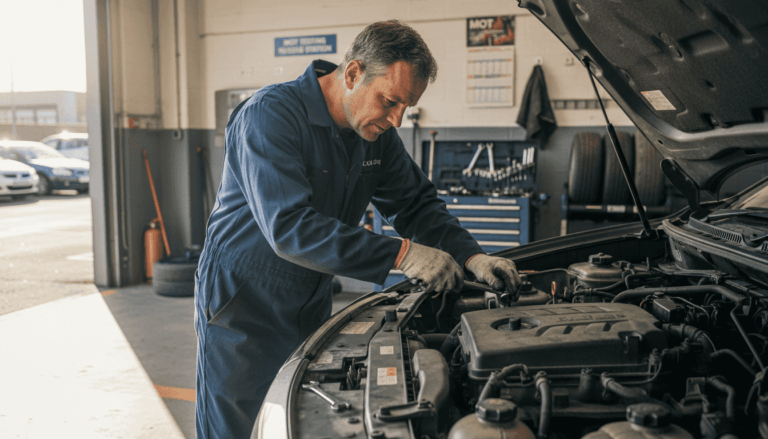


Struggling with sluggish gear changes or worried about long-term transmission wear is a common concern for many car owners in Corby. Tackling a gearbox oil change yourself not only saves money but also helps keep your vehicle running smoothly. With clear, step-by-step guidance and advice on gathering the right tools, you can achieve better performance and extend your car’s lifespan. Discover how a well-prepared DIY approach makes this essential maintenance task far simpler than you might expect.
Table of Contents
- Step 1: Gather Necessary Tools And Materials
- Step 2: Secure Vehicle And Access Gearbox
- Step 3: Drain Old Gearbox Oil Safely
- Step 4: Refit Drain Plug And Replace Filter
- Step 5: Refill Gearbox With Correct Oil
- Step 6: Test Drive And Check Oil Level
Quick Summary
| Key Point | Explanation |
|---|---|
| 1. Gather essential tools first | Collect all necessary tools and materials before starting to prevent interruptions during the gearbox oil change process. |
| 2. Ensure vehicle safety before maintenance | Secure your vehicle with proper jacks and chocks to create a safe working environment and prevent accidents. |
| 3. Drain old oil methodically | Use careful techniques to effectively drain your old gearbox oil and inspect it for any unusual signs, ensuring environmental safety. |
| 4. Refit drain plug carefully | Clean and inspect the drain plug before refitting it, ensuring it is tightened to the manufacturer’s specifications to avoid leaks. |
| 5. Conduct a thorough test drive | After servicing, test drive your vehicle to check for smooth gear shifting and any unusual noises, confirming successful maintenance. |
Step 1: Gather necessary tools and materials
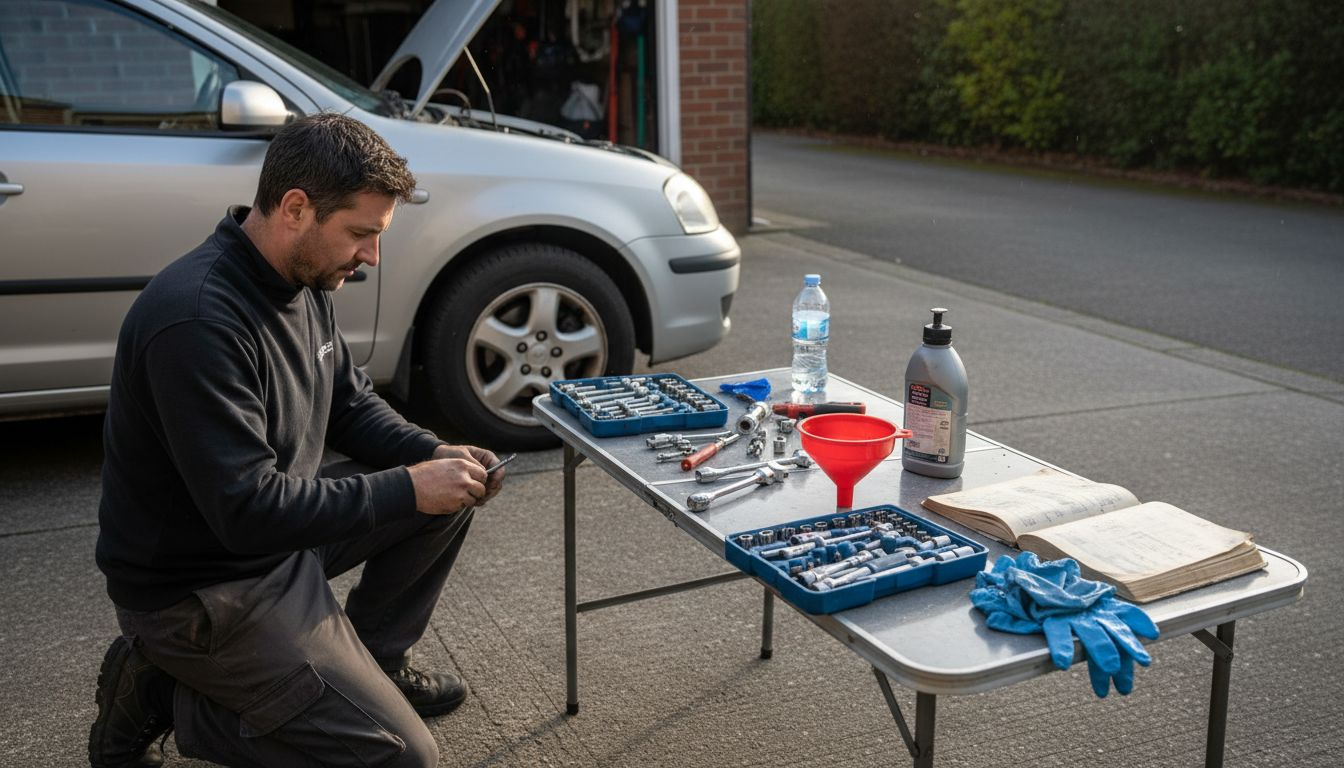
Changing your vehicle’s gearbox oil requires careful preparation and the right equipment to ensure a smooth and successful maintenance process. Before you begin, assembling all required tools and materials will help you complete the job efficiently and prevent unnecessary interruptions.
To get started, you’ll need a comprehensive set of tools, including:
- Socket set with appropriate sizes for drain plug removal
- Fluid drain pan to catch old transmission fluid
- Funnel with a narrow spout for clean refilling
- Replacement gearbox oil matching your vehicle’s specifications
- Wrench set for loosening components
- Safety gloves and protective eyewear
- Shop rags for cleaning spills and surfaces
Professional mechanics recommend gathering essential transmission maintenance tools beforehand to streamline the process. Having everything within reach prevents frustrating delays and ensures you can work methodically.
Preparation is half the battle in automotive maintenance – having the right tools makes the job significantly easier.
Practitioner’s Advice: Consider laying out all tools and materials on a clean, flat surface before beginning to create an organised workspace and reduce potential mistakes.
Step 2: Secure vehicle and access gearbox
Before diving into gearbox maintenance, creating a safe and stable working environment is crucial for both your safety and the success of the oil change procedure. Safely elevating and stabilising your vehicle requires careful preparation and attention to detail.
Follow these essential steps to secure your vehicle:
- Park on a flat, level surface with firm ground
- Engage the parking brake completely
- Place wheel chocks on both sides of the wheels to prevent rolling
- Use a car jack to lift the vehicle at the manufacturer’s recommended lifting points
- Support the vehicle with sturdy jack stands positioned securely under designated support areas
When accessing the gearbox, ensure you have ample workspace and proper lighting. Most vehicles require accessing the transmission from underneath, so wearing comfortable clothing and using a mechanic’s creeper can make the process more comfortable.
Safety is paramount – never work underneath a vehicle supported only by a jack.
Expert Advice: Invest in a good quality hydraulic floor jack and matching jack stands rated for your vehicle’s weight to ensure maximum safety during maintenance.
Step 3: Drain old gearbox oil safely
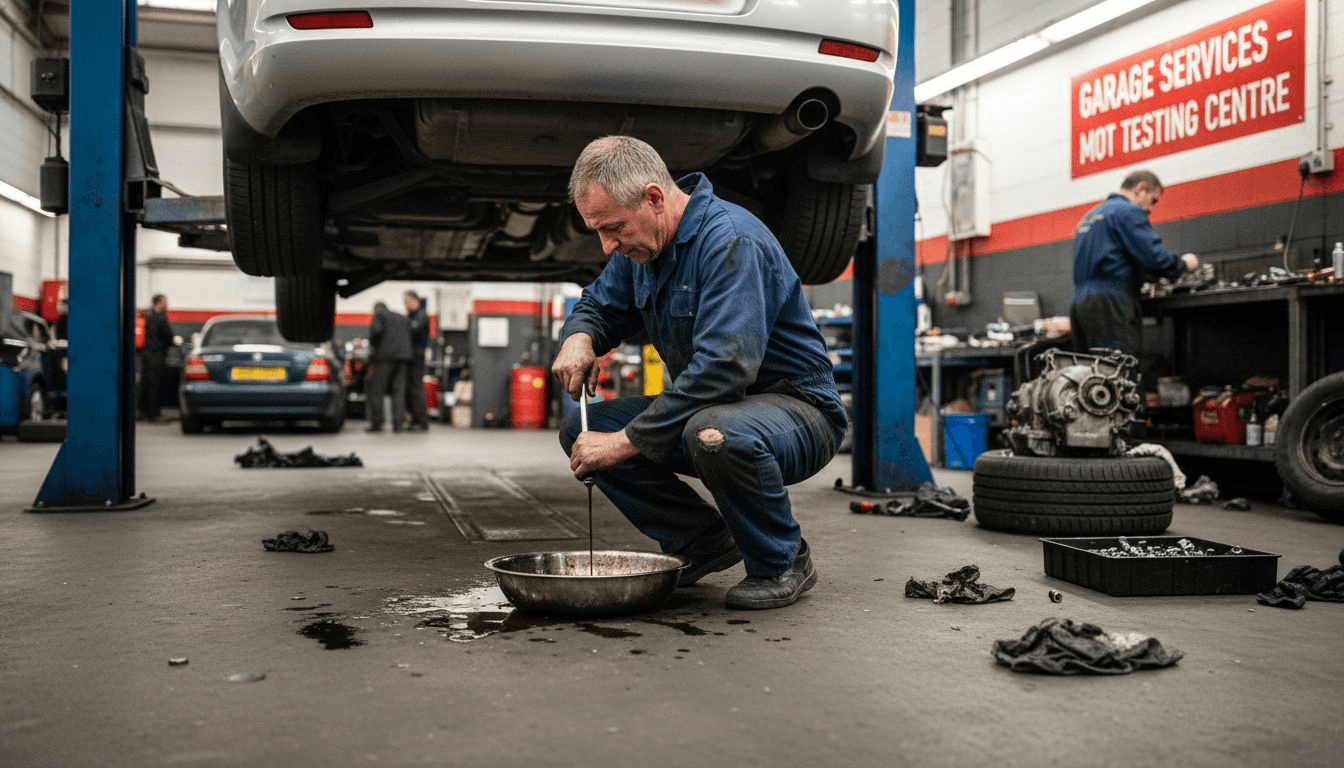
Draining the old gearbox oil is a critical step in maintaining your vehicle’s transmission system. Proper oil drainage techniques require precision and careful attention to prevent potential mess and environmental contamination.
To drain the gearbox oil effectively, follow these detailed steps:
- Position a large drain pan directly beneath the gearbox drain plug
- Wear protective gloves to prevent oil contact with skin
- Use the correct socket or wrench to loosen the drain plug
- Slowly unscrew the plug, allowing oil to flow smoothly into the catch pan
- Inspect the drained oil for any unusual colour, consistency, or metal particles
When removing the drain plug, be prepared for a steady stream of used oil. Work slowly and methodically, keeping your workspace clean and organised. The colour and condition of the drained oil can provide valuable insights into your transmission’s overall health.
Careful oil inspection can reveal early signs of potential transmission problems before they become serious.
Practitioner’s Advice: Always keep clean rags nearby and wear clothes you don’t mind getting slightly dirty during the oil drainage process.
For quick reference, here are signs of gearbox oil problems and their possible implications:
| Oil Condition | Potential Cause | Impact on Transmission |
|---|---|---|
| Metallic particles present | Internal gearbox wear | Possible component damage |
| Dark, burnt smell | Overheated oil | Reduced lubrication, faster wear |
| Milky or cloudy appearance | Water contamination | Risk of rust, severe damage |
| Unusual thickness | Oil degradation or mixing issues | Poor shifting, increased friction |
Step 4: Refit drain plug and replace filter
After draining the old gearbox oil, refitting the drain plug and replacing the filter are crucial steps to ensure your transmission’s long-term performance. Proper gearbox maintenance techniques require meticulous attention to detail and precision.
Follow these key steps for refitting and replacement:
- Clean the drain plug thoroughly to remove any old debris
- Inspect the drain plug washer for signs of wear or damage
- Apply a thin layer of thread sealant if recommended by your vehicle manufacturer
- Replace the transmission filter if your gearbox model requires it
- Carefully align and hand-tighten the drain plug before final torquing
When reinstalling the drain plug, use a torque wrench to achieve the manufacturer’s specified tightness. Over-tightening can damage the threads or cause seal compression, while under-tightening might lead to oil leaks.
Precision in refitting components prevents costly transmission damage and ensures optimal vehicle performance.
Expert Advice: Always consult your vehicle’s specific manual for exact torque specifications and filter replacement recommendations.
Step 5: Refill gearbox with correct oil
Refilling your gearbox with the precise type and quantity of oil is essential for maintaining optimal transmission performance. Correct gearbox oil selection requires careful attention to your vehicle manufacturer’s specifications.
To ensure a proper refill, follow these critical steps:
- Consult your vehicle’s manual for exact oil type and quantity
- Select the recommended gearbox oil grade specific to your transmission
- Use a clean funnel to prevent contamination
- Pour oil slowly to avoid air bubbles and overfilling
- Check oil level using the manufacturer’s recommended method
Depending on your vehicle model, you might need to use a fluid pump or fill through the dipstick tube. Some transmissions require specific filling techniques, so patience and precision are key to preventing potential damage.
Using the incorrect oil type can cause significant transmission wear and reduce your vehicle’s performance.
Practitioner’s Advice: Warm the gearbox slightly before filling to help the oil flow more smoothly and distribute evenly throughout the transmission.
Step 6: Test drive and check oil level
The final stage of gearbox oil maintenance involves confirming the effectiveness of your service through a careful test drive and subsequent oil level verification. Comprehensive gearbox maintenance techniques require a systematic approach to ensure optimal performance.
Follow these essential post-service steps:
- Start the vehicle and allow it to idle briefly
- Perform a short test drive of 10-15 minutes
- Listen carefully for any unusual transmission sounds
- Check gear shifting smoothness and responsiveness
- Park on a completely level surface
- Recheck oil level using manufacturer’s recommended method
During the test drive, pay close attention to how the transmission behaves. Smooth gear changes, absence of grinding noises, and consistent performance indicate a successful oil change. Any unusual sounds or shifting difficulties might suggest additional investigation is needed.
A thorough test drive reveals more about transmission health than static inspections ever could.
Expert Advice: Always keep your vehicle’s service manual nearby during the test drive to cross-reference any unexpected transmission behaviours.
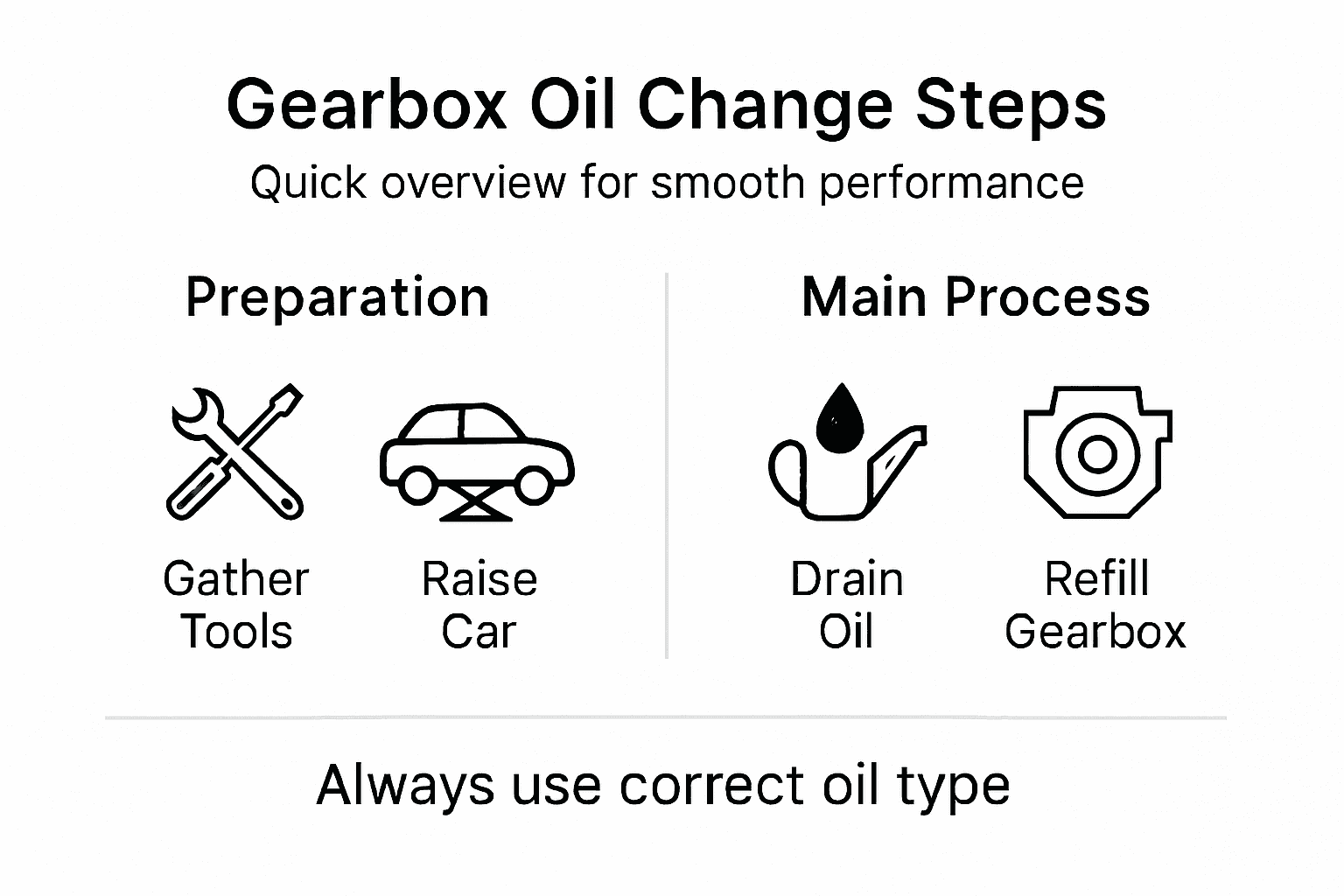
Here’s a summary of gearbox oil maintenance steps and their critical objectives:
| Step | Main Objective | Common Mistake to Avoid |
|---|---|---|
| Assemble tools and materials | Ensure efficient workflow | Forgetting safety gear |
| Secure vehicle and access | Maintain safe working conditions | Relying only on car jack |
| Drain old gearbox oil | Remove contaminated fluid | Spilling or polluting environment |
| Refit plug and replace filter | Prevent leaks and wear | Over-tightening plug |
| Refill with correct oil | Restore optimal transmission | Using wrong oil grade |
| Test drive and check oil level | Verify performance and fluid level | Skipping post-service inspection |
Ensure Smooth Gearbox Performance with Expert Help at Avgarage
Changing gearbox oil involves precise steps such as safely draining old oil, refitting plugs correctly, and choosing the exact oil grade for your vehicle to avoid costly damage or poor performance. If you find the process challenging or worry about using the wrong oil or damaging components, Avgarage in Corby offers professional gearbox oil changes carried out by certified mechanics with over 10 years of experience. Our technicians use only OEM or high-quality aftermarket parts to safeguard your transmission’s longevity and ensure optimal shifting smoothness.

Don’t risk gearbox wear or fluid contamination by attempting oil replacement alone. Book your service with Avgarage today for reliable, quick, and thorough gearbox oil maintenance. Experience peace of mind that comes from expert care and take advantage of our convenient online booking at Avgarage. Learn more about our vehicle maintenance and repair services designed to keep your car running smoothly.
Frequently Asked Questions
How do I gather the necessary tools for changing gearbox oil?
To change gearbox oil, collect a socket set, a fluid drain pan, a funnel, replacement oil, a wrench set, safety gloves, and shop rags. Assemble all your tools beforehand to ensure a smooth oil change process.
What steps should I follow to safely drain old gearbox oil?
To drain old gearbox oil, position a large drain pan under the gearbox, wear protective gloves, and loosen the drain plug with the appropriate tool. Ensure to allow the oil to flow smoothly into the pan and inspect the drained oil for unusual characteristics.
How can I ensure a proper refill of the gearbox oil?
Consult your vehicle’s manual for the correct oil type and quantity, then use a clean funnel to refill it slowly and prevent air bubbles. Check the oil level using the manufacturer’s recommended method after filling to ensure proper lubrication.
What should I do after refilling the gearbox oil?
After refilling the gearbox oil, start the vehicle and allow it to idle briefly before performing a short test drive. Listen for any unusual sounds during the drive and verify the oil level afterwards to confirm successful maintenance.
How can I identify signs of gearbox oil problems?
Look for metallic particles, a burnt smell, or a cloudy appearance in the drained oil as these can indicate potential gearbox issues. Inspecting the oil carefully can help catch problems early, reducing the risk of serious transmission damage.