


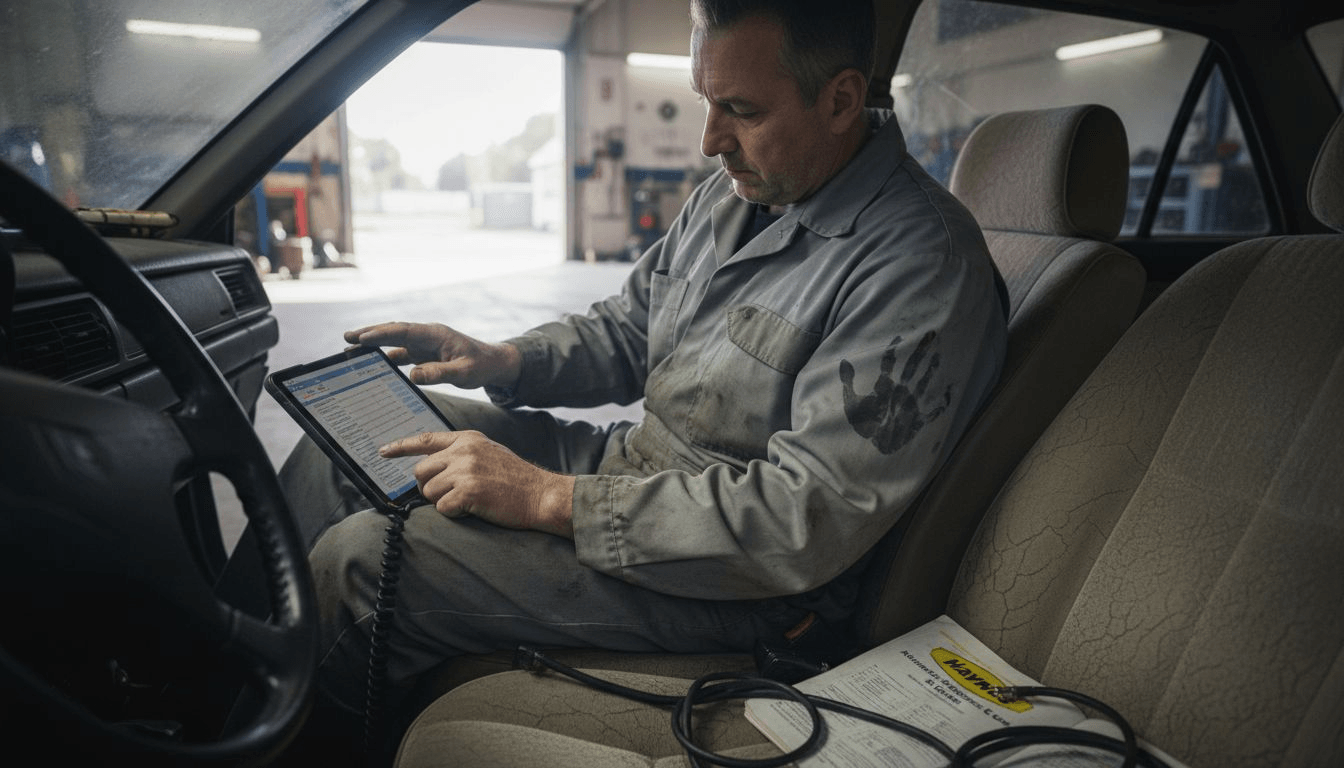
Car owners in Corby know that a strange dashboard light or unusual noise can quickly turn confidence into concern. Relying on outdated guesswork or basic error readers often leaves mechanical issues unsolved, risking both performance and costly repairs. Today, modern diagnostic tools harness intelligent diagnostic technologies using advanced neural networks to uncover hidden faults with precision, helping you protect your investment and extend vehicle lifespan. This overview explains exactly how contemporary diagnostics can keep your car running smoothly for years to come.
Table of Contents
- Car Diagnostics Tools Defined And Debunked
- Types Of Automotive Diagnostic Devices Compared
- How Diagnostics Tools Identify Vehicle Faults
- Impact On Repair Precision And Speed
- Cost, Risks, And Common User Mistakes
Key Takeaways
| Point | Details |
|---|---|
| Advancements in Diagnostic Tools | Modern car diagnostic tools utilise AI and machine learning for comprehensive vehicle performance analysis, enabling proactive maintenance and early problem detection. |
| Types of Diagnostic Devices | Diagnostic devices range from basic OBD-II scanners to professional-grade systems, each serving different user needs and technical expertise levels. |
| Impact on Repair Processes | Advanced diagnostic technologies significantly improve repair precision and speed, minimising guesswork and enhancing first-time repair success rates. |
| Investment and Usage Risks | Users must be aware of the comprehensive costs and risks associated with diagnostic tools, including misdiagnosis and technology obsolescence, and should invest in proper training and updates. |
Car Diagnostics Tools Defined and Debunked
Car diagnostic tools represent sophisticated technological solutions designed to monitor, analyse, and interpret vehicle performance data with remarkable precision. These advanced systems have transformed automotive maintenance from guesswork into a data-driven science, enabling vehicle owners and mechanics to understand complex mechanical and electrical systems quickly and accurately.
Modern car diagnostic tools have evolved significantly, moving far beyond simple error code readers. Sophisticated AI-driven diagnostic systems now utilise machine learning algorithms to provide comprehensive insights into vehicle health. These tools can:
- Detect subtle performance irregularities before they become major issues
- Provide real-time monitoring of critical vehicle systems
- Generate detailed reports about potential mechanical vulnerabilities
- Compare current vehicle performance against manufacturer specifications
- Predict potential future maintenance requirements
Traditionally, diagnostic tools were limited to basic on-board diagnostics (OBD) systems that could only report basic error codes. However, contemporary tools have dramatically expanded their capabilities. Intelligent diagnostic technologies now integrate neural networks and deep learning algorithms, allowing for more nuanced and precise fault detection across multiple vehicle subsystems.
Vehicle diagnostics fundamentally serve three critical purposes:
- Early Problem Detection
- Performance Optimisation
- Preventative Maintenance Planning
By leveraging advanced fault diagnosis methods, these tools can identify potential issues that might remain undetected through traditional inspection techniques. The technology enables a proactive approach to vehicle maintenance, shifting from reactive repairs to strategic performance management.
Pro tip: Invest in a high-quality diagnostic tool that offers comprehensive system scanning and continuous performance monitoring for your specific vehicle make and model.
Types of Automotive Diagnostic Devices Compared
Automotive diagnostic devices have transformed dramatically, offering vehicle owners and mechanics a diverse range of technological solutions for monitoring and analysing vehicle performance. Diagnostic tools span multiple complexity levels, ranging from basic code readers to advanced professional-grade systems that provide comprehensive vehicle health insights.
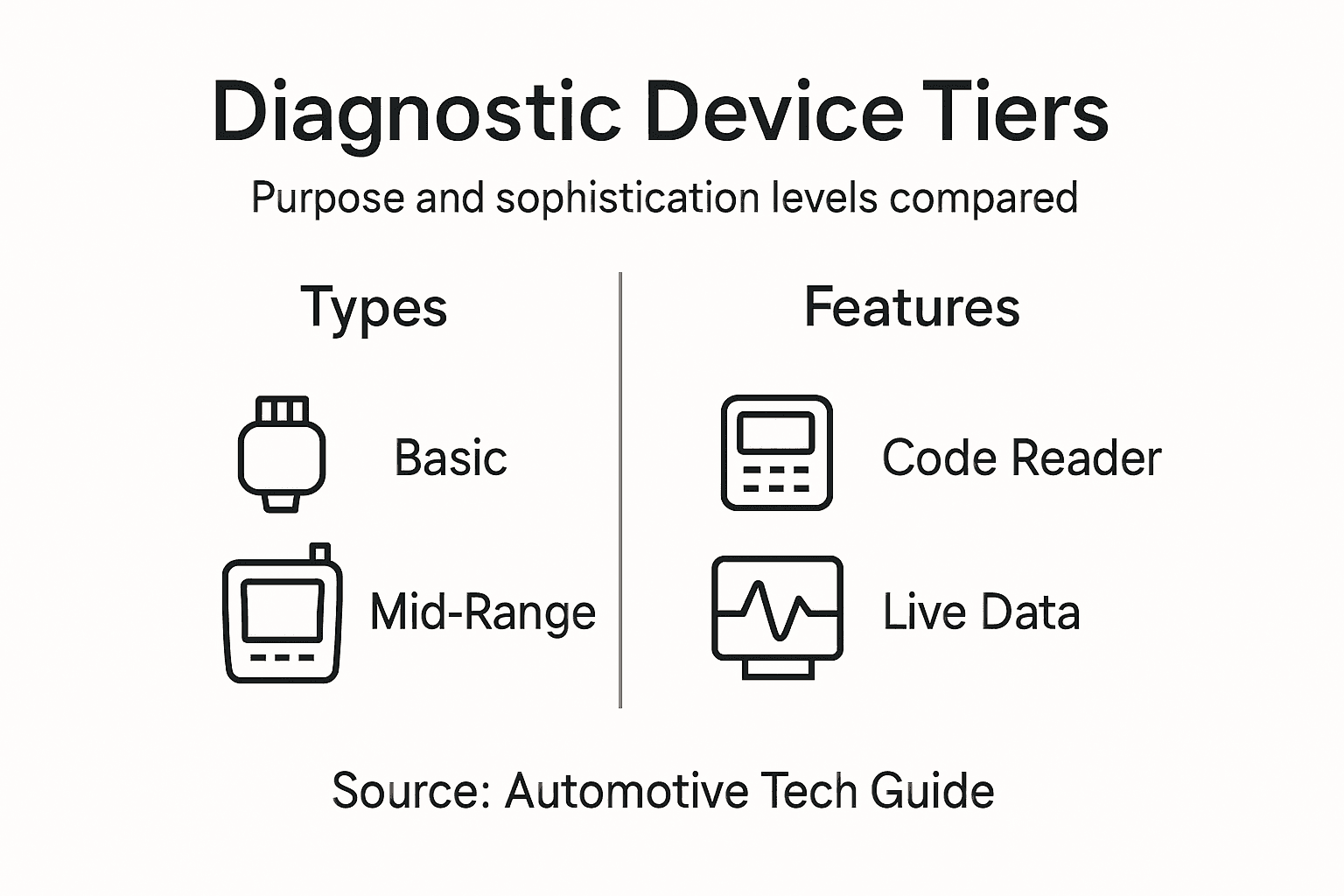
These devices can be broadly categorised into three primary tiers:
- Basic OBD-II Scanners: Entry-level devices that read and clear error codes
- Mid-Range Diagnostic Tools: Provide live data streaming and more detailed system analysis
- Professional-Grade Diagnostic Systems: Offer advanced bi-directional control and manufacturer-specific diagnostics
Each category of diagnostic device serves a distinct purpose, catering to different user requirements and technical expertise levels. Basic OBD-II scanners represent the most accessible option, typically costing under £50 and offering simple error code reading capabilities. These devices plug directly into a vehicle’s diagnostic port and provide fundamental insights into potential mechanical issues.
Mid-range diagnostic tools represent a significant upgrade, offering more sophisticated diagnostic capabilities that include real-time data monitoring, graphing, and more detailed system analysis. These devices often cost between £100-£300 and provide more comprehensive vehicle health information, enabling users to track performance metrics and identify potential problems before they escalate.
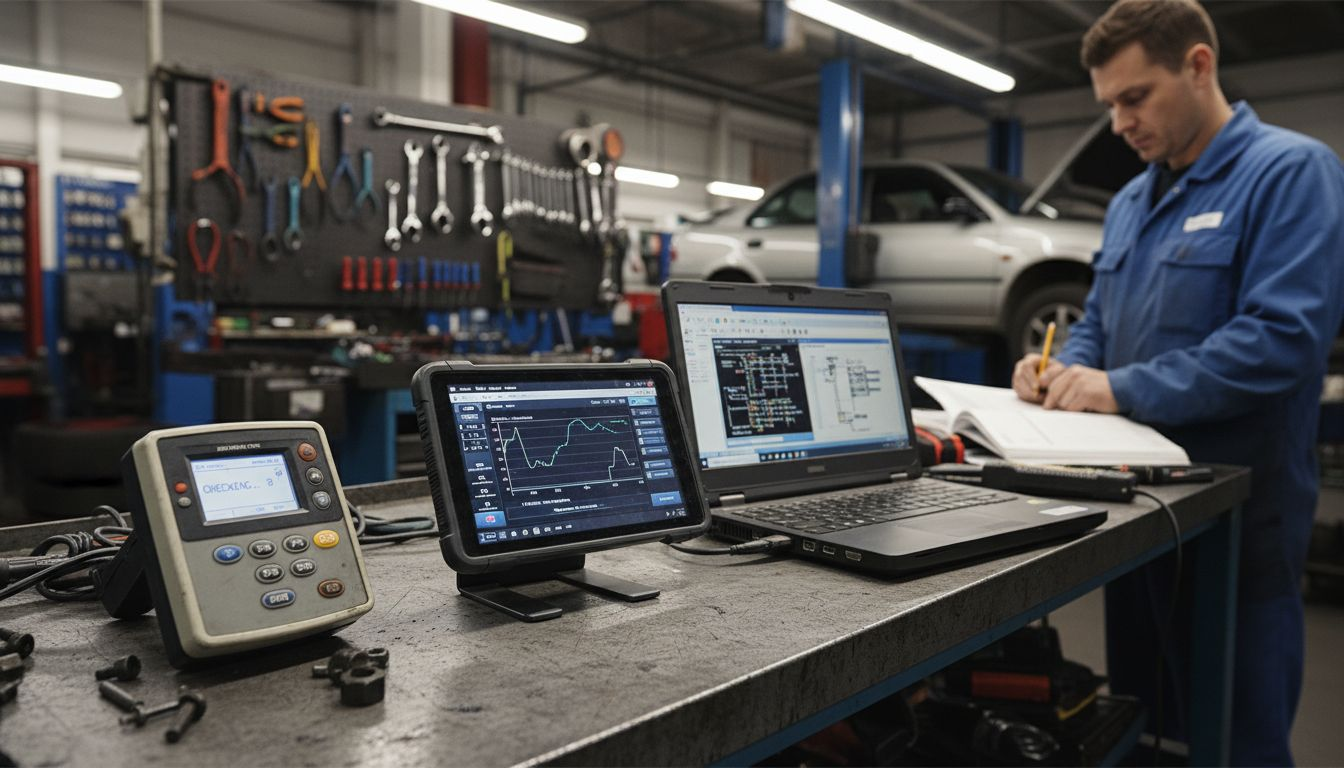
Professional-grade diagnostic systems represent the pinnacle of automotive diagnostic technology. These advanced tools, often used by professional mechanics and automotive technicians, can cost several thousand pounds and offer extraordinary capabilities such as:
Here is a side-by-side comparison of automotive diagnostic device tiers and their typical users:
| Device Tier | Typical User | Core Capability | Investment Range |
|---|---|---|---|
| Basic OBD-II Scanner | DIY enthusiasts | Reads and clears error codes | Under £50 |
| Mid-Range Diagnostic Tool | Advanced hobbyists | Real-time data and analysis | £100–£300 |
| Professional-Grade System | Mechanics/Technicians | Advanced system control and reports | £500–£5,000+ |
- Comprehensive system-wide diagnostics
- Manufacturer-specific protocol support
- Advanced bi-directional control testing
- Software update capabilities
- Detailed performance analysis and reporting
Diagnostic devices differ significantly in their technological sophistication, with each tier offering incrementally more advanced features and deeper system insights. The choice of diagnostic tool depends entirely on individual requirements, technical expertise, and budget constraints.
Pro tip: Select a diagnostic tool that matches your technical skills and vehicle complexity, ensuring you can effectively interpret and act upon the diagnostic information.
How Diagnostics Tools Identify Vehicle Faults
Automotive diagnostic tools employ a sophisticated, systematic approach to identifying vehicle faults, transforming what was once a complex guessing game into a precise scientific process. Diagnostic technicians follow a structured methodology that combines technological insight with methodical troubleshooting techniques to pinpoint exactly what might be malfunctioning in a vehicle.
The fault identification process typically involves several critical stages:
- Initial customer complaint verification
- Visual vehicle inspection
- Electronic diagnostic trouble code (DTC) retrieval
- Live data stream analysis
- Targeted system testing
- Root cause identification
Electronic Diagnostic Scanning represents the primary method for modern fault detection. When a diagnostic tool connects to a vehicle’s onboard computer system, it retrieves specific error codes that indicate potential issues within various vehicle subsystems. These codes provide crucial initial insights, highlighting which specific components or systems require further investigation.
Advanced diagnostic procedures go beyond simple code reading, involving comprehensive data analysis and systematic testing. Professional diagnostic tools can perform several advanced functions:
- Monitor real-time sensor data
- Conduct electrical system tests
- Perform actuator performance evaluations
- Compare current readings against manufacturer specifications
- Generate detailed diagnostic reports
Precise fault identification requires more than just reading error codes. Skilled technicians interpret diagnostic information contextually, understanding how different vehicle systems interact and potentially influence each other. This holistic approach ensures that underlying issues are not just masked but comprehensively resolved.
Diagnostic tools transform vehicle maintenance from reactive repairs to proactive performance management.
Complex Vehicle Systems Demand Sophisticated Diagnostics. Modern vehicles contain intricate networks of electronic control units (ECUs) that communicate complex data. Diagnostic tools must interpret these multilayered communication systems, translating raw data into meaningful insights about vehicle performance and potential mechanical vulnerabilities.
Pro tip: Always keep your vehicle’s diagnostic tool updated with the latest software to ensure accurate fault detection across different vehicle makes and models.
Impact on Repair Precision and Speed
Advanced automotive diagnostic technologies have fundamentally transformed vehicle repair processes, dramatically improving both precision and speed of mechanical interventions. Modern diagnostic tools represent a quantum leap from traditional troubleshooting methods, enabling mechanics to identify and resolve vehicle issues with unprecedented accuracy and efficiency.
The impact of advanced diagnostic technologies can be categorised into several critical performance improvements:
- Reduced diagnostic time from hours to minutes
- Elimination of guesswork in fault identification
- Increased first-time repair success rates
- Minimised unnecessary part replacements
- Enhanced predictive maintenance capabilities
Diagnostic Precision has become increasingly sophisticated, with tools now capable of performing complex system analyses that were previously impossible. When a vehicle experiences a mechanical issue, these advanced diagnostic devices can:
- Pinpoint exact fault locations within milliseconds
- Generate comprehensive system performance reports
- Compare current vehicle metrics against manufacturer specifications
- Predict potential future mechanical failures
- Recommend most efficient repair strategies
Comprehensive system scanning has revolutionised automotive repair workflows. Modern diagnostic tools integrate machine learning algorithms that continuously improve their fault detection capabilities, learning from vast databases of vehicle performance data and mechanical failure patterns.
Precision diagnostics transform vehicle maintenance from reactive intervention to proactive performance management.
Machine Learning Integration represents the next frontier in diagnostic technologies. These intelligent systems can now analyse complex vehicle data streams, identifying subtle performance anomalies that traditional diagnostic methods would completely miss. By processing multiple sensor inputs simultaneously, they provide mechanics with unprecedented insights into vehicle health.
Pro tip: Invest in diagnostic tools with regular software updates to ensure maximum fault detection accuracy across different vehicle models and technological generations.
Cost, Risks, and Common User Mistakes
Vehicle diagnostic systems involve substantial financial considerations that extend far beyond the initial tool purchase. Automotive professionals and vehicle owners must carefully evaluate the comprehensive economic landscape of diagnostic technologies, understanding that these investments encompass not just hardware costs, but ongoing training, maintenance, and potential operational risks.
The primary financial and operational risks associated with diagnostic tools include:
- High initial equipment investment
- Recurring software update expenses
- Specialised technician training requirements
- Potential misdiagnosis costs
- Technology obsolescence risks
Diagnostic Tool Investment Strategies demand a nuanced approach. Professional-grade diagnostic devices can range from £500 to £5,000, with additional annual maintenance and update costs. Budget-conscious users must carefully assess their specific diagnostic needs, balancing tool capabilities against actual usage requirements.
Common diagnostic tool usage mistakes can significantly undermine diagnostic accuracy and reliability. Users frequently encounter challenges such as:
Below is a summary of common mistakes and their consequences when using diagnostic tools:
| Common Mistake | Potential Consequence | Prevention Tip |
|---|---|---|
| Improper tool connection | Failed or inaccurate scans | Follow user guide |
| Misinterpreting codes | Incorrect repairs undertaken | Research code meaning |
| Using incompatible tools | Incomplete diagnostics | Check vehicle compatibility |
| Skipping software updates | Outdated fault detection | Enable auto-updates |
| Overlooking system interaction | Hidden faults missed | Review related subsystems |
- Improper tool connection procedures
- Misinterpreting diagnostic trouble codes
- Using incompatible diagnostic devices
- Neglecting regular software updates
- Failing to understand complex diagnostic data
Proper diagnostic tool usage requires continuous learning and technical skill development.
Mitigation Strategies are crucial for minimising financial and operational risks. Automotive professionals should invest in comprehensive training programmes, maintain rigorous update schedules, and develop a deep understanding of diagnostic tool capabilities and limitations. Regular calibration, software updates, and ongoing technical education can dramatically reduce potential misdiagnosis risks.
Pro tip: Consider purchasing diagnostic tools with manufacturer support and comprehensive training resources to maximise your investment and diagnostic accuracy.
Take Control of Your Vehicle’s Health with Expert Diagnostics
Car diagnostic tools are essential for detecting hidden faults early and maximising vehicle performance. The article highlights common challenges such as misinterpreting error codes and outdated software that can lead to inaccurate repairs and costly mistakes. At Avgarage, we understand these pain points and offer professional diagnostic services that go beyond basic code reading. Our certified mechanics use advanced diagnostic technology to provide precise fault identification and proactive maintenance planning, ensuring your car runs efficiently and reliably.

Don’t let unknown vehicle issues slow you down. Experience the benefit of expert diagnostics and comprehensive servicing with our team in Corby. Book an appointment easily through our website and take the first step towards smarter, faster, and more accurate vehicle care today at Avgarage. Discover more about our full range of vehicle maintenance and repair services and unlock your car’s full potential now.
Frequently Asked Questions
What are car diagnostic tools?
Car diagnostic tools are advanced technological devices that monitor, analyse, and interpret vehicle performance data, helping identify potential issues in mechanical and electrical systems.
How do diagnostic tools help in maintaining car performance?
Diagnostic tools help maintain car performance by detecting subtle irregularities, providing real-time monitoring, and enabling preventative maintenance planning, which can prevent major issues and optimise vehicle performance.
What types of car diagnostic devices are available?
There are three main types of car diagnostic devices: Basic OBD-II scanners for simple error code reading, mid-range diagnostic tools for detailed analysis and live data streaming, and professional-grade systems for comprehensive diagnostics and advanced system control.
What common mistakes should I avoid when using a diagnostic tool?
Common mistakes include improper tool connection, misinterpreting diagnostic codes, using incompatible tools, neglecting software updates, and overlooking the interaction between different vehicle systems. Avoiding these pitfalls is essential for accurate diagnostics.