

Every car owner in Corby knows the stress when unexpected repairs disrupt daily plans and budgets. Reliable vehicle maintenance keeps your vehicle running safely and smoothly, reducing the risk of costly breakdowns and helping it meet strict United Kingdom standards. This guide breaks down core concepts like preventative care, inspections, and scheduled servicing, showing how expert attention and quality parts support operational safety and protect your investment for years to come.
Table of Contents
- Vehicle Maintenance Core Definition And Concepts
- Types Of Maintenance: Scheduled And Ad Hoc
- Key Features: Inspection, Repairs, And Servicing
- Legal Requirements And Safety Standards UK
- Common Misconceptions About Vehicle Maintenance
- Financial Implications And Avoiding Costly Mistakes
Key Takeaways
| Point | Details |
|---|---|
| Importance of Preventative Maintenance | Proactive vehicle maintenance prevents costly repairs and ensures optimal performance throughout the vehicle’s operational lifecycle. |
| Legal Compliance | Adhering to stringent UK safety standards and maintaining comprehensive records is essential for every vehicle owner. |
| Financial Implications | Routine maintenance can significantly reduce long-term ownership costs and improve vehicle resale value. |
| Myths and Misconceptions | Vehicle owners should dispel common myths about maintenance, recognising the value of professional expertise over outdated beliefs. |
Vehicle maintenance core definition and concepts
Vehicle maintenance represents a systematic approach to preserving the operational integrity, safety, and performance of motor vehicles through planned inspections, repairs, and preventative interventions. At its core, this practice ensures that every critical component functions optimally throughout the vehicle’s operational lifecycle.
The fundamental concept of vehicle maintenance encompasses several key dimensions:
- Preventative care targeting potential mechanical issues before they escalate
- Safety inspections verifying critical systems remain compliant with regulatory standards
- Performance optimization ensuring maximum vehicle efficiency and reliability
- Cost management by reducing unexpected repair expenses through proactive interventions
Regulatory frameworks, such as those outlined in systematic vehicle inspection protocols, mandate comprehensive maintenance strategies. These regulations require systematic examination of critical vehicle components including frames, suspension systems, axles, wheels, and steering mechanisms to maintain operational safety.
Professional maintenance integrates multiple strategic considerations, from understanding mechanical wear patterns to anticipating potential system failures. Maintenance planning involves comprehensive operational support that considers reliability, fault analysis, and organisational responsibilities for maintaining equipment readiness.
Pro tip: Keep a detailed maintenance log documenting every service, inspection, and repair to track your vehicle’s health and anticipate potential future maintenance requirements.
Types of maintenance: scheduled and ad hoc
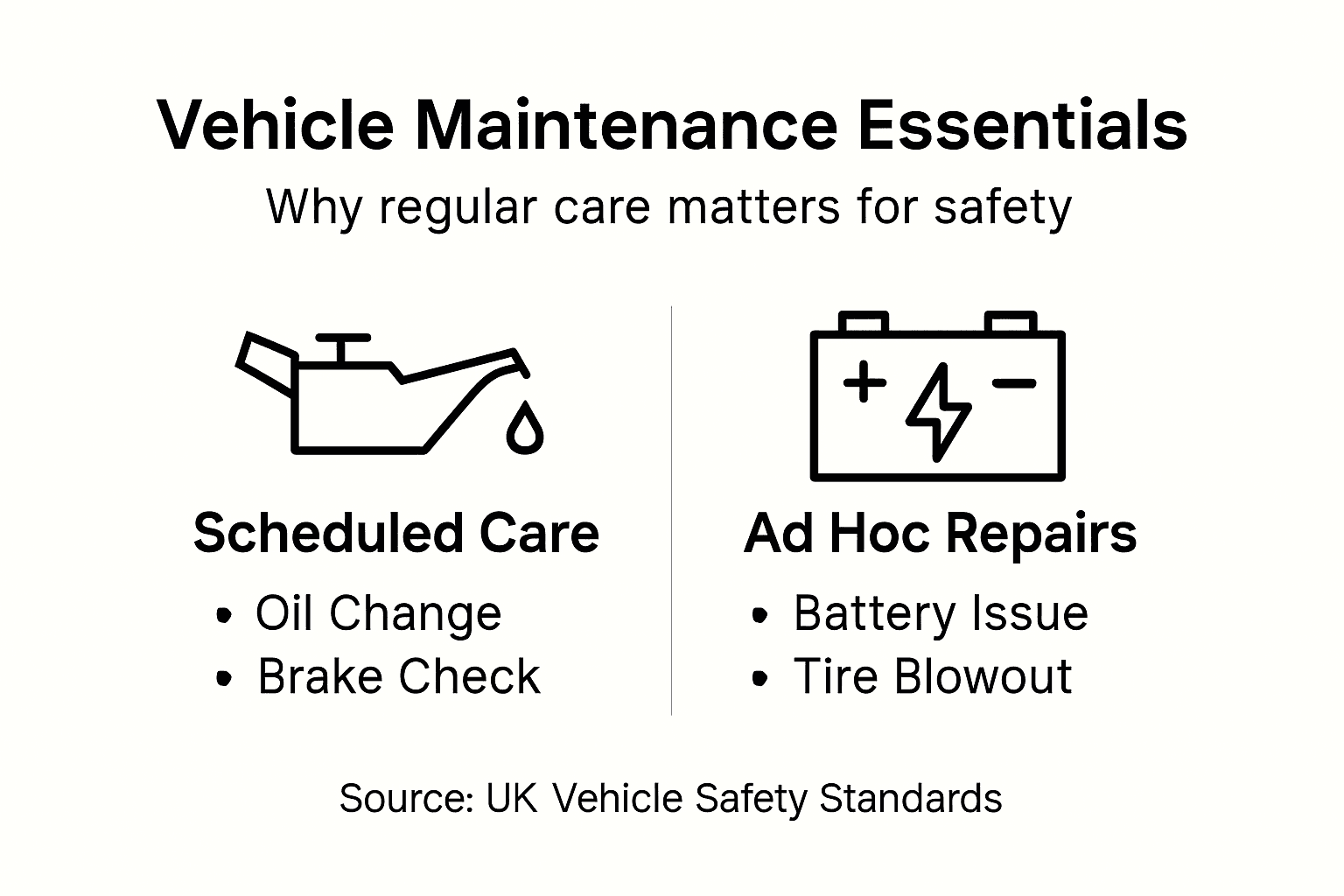
Vehicle maintenance can be broadly categorised into two primary approaches: scheduled maintenance and ad hoc maintenance. These complementary strategies ensure comprehensive vehicle care and optimal performance throughout a vehicle’s operational lifecycle.
Scheduled Maintenance involves planned, proactive interventions designed to prevent potential mechanical issues before they occur. This approach includes:
- Regular service intervals recommended by manufacturers
- Preventive inspections at predetermined mileage or time-based milestones
- Systematic replacement of wear-and-tear components
- Comprehensive system checks to identify potential future problems
Maintenance activities encompass systematic vehicle inspections mandated by regulatory frameworks to ensure ongoing safety and operational reliability. These scheduled checks help vehicle owners anticipate and mitigate potential mechanical failures before they become costly repairs.
In contrast, ad hoc maintenance represents reactive interventions addressing unexpected mechanical issues as they arise. Reactive maintenance strategies focus on immediate repairs triggered by sudden breakdowns, warning indicators, or performance anomalies. This approach typically involves:
- Emergency repairs responding to unexpected mechanical failures
- Diagnostic investigations of sudden performance issues
- Immediate component replacements necessitated by unexpected wear
- Addressing safety-critical faults that require immediate attention
Pro tip: Maintain a detailed service history documenting both scheduled and ad hoc maintenance activities to track your vehicle’s health and anticipate potential future repair requirements.
Here is a comparison of scheduled and ad hoc maintenance approaches:
| Aspect | Scheduled Maintenance | Ad Hoc Maintenance |
|---|---|---|
| Intervention Nature | Proactive, pre-planned | Reactive, need-based |
| Primary Objective | Prevent issues before they occur | Quickly resolve unexpected problems |
| Cost Predictability | Generally easier to budget | Often unplanned and potentially costly |
| Impact on Reliability | Enhances long-term reliability | Can lead to downtime and inconsistencies |
| Typical Example | Routine servicing every 12,000 miles | Repair after sudden breakdown |
Key features: inspection, repairs, and servicing
Vehicle maintenance encompasses three critical components that collectively ensure optimal vehicle performance and safety: inspection, repairs, and servicing. These interconnected features form a comprehensive approach to maintaining a vehicle’s operational integrity and longevity.
Inspections represent the foundational diagnostic process, involving systematic evaluation of critical vehicle components. This meticulous examination focuses on identifying potential issues before they escalate into significant mechanical problems. Key inspection elements include:
- Comprehensive assessment of brake systems
- Detailed evaluation of suspension components
- Thorough examination of electrical systems
- Precise measurement of tyre tread and condition
- Systematic review of engine performance indicators
Repairs address specific mechanical issues identified during inspections or emerging from unexpected vehicle performance anomalies. These interventions are crucial for maintaining vehicle safety and preventing potential catastrophic failures.

Maintenance task analysis involves detailed strategic planning that encompasses the precise resources, personnel skills, and technical expertise required for effective repairs. This approach ensures that each maintenance intervention is conducted with maximum efficiency and precision.
Servicing represents the proactive maintenance strategy that involves routine procedures designed to preserve and enhance vehicle performance. This includes:
- Regular oil and filter changes
- Lubrication of critical mechanical components
- Replacement of wear-and-tear parts
- Calibration of vehicle systems
- Comprehensive performance diagnostics
Effective vehicle maintenance is not just about fixing problems – it’s about preventing them before they occur.
Pro tip: Schedule comprehensive vehicle inspections at least twice annually, regardless of mileage, to catch potential issues early and maintain your vehicle’s optimal performance.
Legal requirements and safety standards UK
The United Kingdom maintains stringent legal requirements and safety standards for vehicle maintenance, designed to ensure road safety, protect public health, and maintain high operational standards across all vehicle categories. These regulations form a comprehensive framework that governs how vehicles must be maintained and operated within British territories.
UK legal mandates for vehicle roadworthiness are enforced through multiple legislative channels, including Road Traffic Acts and Health and Safety regulations. The primary oversight is conducted by the Driver and Vehicle Standards Agency (DVSA), which ensures strict compliance with national safety protocols.
The legal requirements encompass several critical areas of vehicle maintenance:
- Mandatory annual vehicle safety inspections
- Comprehensive documentation of maintenance records
- Specific standards for commercial and passenger vehicles
- Precise guidelines for addressing mechanical defects
- Environmental compliance and emissions standards
Detailed vehicle inspection protocols categorise vehicle deficiencies into specific levels of severity:
- Minor defects requiring future attention
- Major defects necessitating immediate repair
- Dangerous deficiencies that render the vehicle unroadworthy
Legal compliance is not optional – it’s a fundamental responsibility for every vehicle owner in the United Kingdom.
Commercial vehicle operators face particularly rigorous requirements, with additional obligations to maintain comprehensive quality management systems that demonstrate proactive safety management and continuous vehicle monitoring.
Pro tip: Maintain a detailed maintenance log with timestamped service records to ensure you can demonstrate continuous compliance with UK vehicle safety regulations.
Common misconceptions about vehicle maintenance
Vehicle maintenance is surrounded by numerous myths and misconceptions that can potentially compromise vehicle safety, performance, and longevity. Understanding and dispelling these widespread misunderstandings is crucial for responsible vehicle ownership and optimal mechanical care.
Vehicle maintenance misconceptions often stem from a lack of technical knowledge and outdated beliefs about automotive care. Many vehicle owners mistakenly believe that maintenance is only necessary when problems become apparent, which can lead to more significant and costly repairs in the future.
Common misconceptions include:
- Believing maintenance is only required when the vehicle shows signs of malfunction
- Assuming all mechanics provide identical service quality
- Thinking modern vehicles need less frequent maintenance
- Believing diagnostic tools can replace skilled technician expertise
- Expecting expensive repairs are always indicative of poor maintenance
Recall management is another area riddled with misunderstandings. Vehicle recall protocols are often misinterpreted, with many owners believing recalls are rare or exclusively government-mandated. In reality, manufacturers frequently initiate voluntary recalls to address potential safety concerns.
Not all maintenance advice is created equal – professional expertise trumps internet forums and well-meaning but uninformed suggestions.
Diagnostic Technologies and Maintenance
Modern vehicles incorporate sophisticated computer systems, leading to another prevalent misconception that advanced diagnostic tools can solve all mechanical issues independently. However, these tools are most effective when interpreted by skilled technicians who understand complex automotive systems.
Pro tip: Always consult professional technicians and maintain your vehicle’s service manual, treating online advice as supplementary information rather than definitive guidance.
Financial implications and avoiding costly mistakes
Vehicle maintenance represents a critical financial consideration that extends far beyond simple repair costs. Proactive maintenance can significantly impact long-term vehicle ownership expenses, potentially saving vehicle owners substantial amounts of money by preventing expensive mechanical failures.
Vehicle maintenance cost strategies demonstrate that maintenance expenses vary dramatically across different vehicle brands and ages. Luxury and European models typically incur higher repair costs, making strategic maintenance planning even more crucial for budget-conscious vehicle owners.
Key financial considerations in vehicle maintenance include:
- Preventing catastrophic mechanical failures
- Extending vehicle operational lifespan
- Maintaining optimal vehicle performance
- Reducing unexpected repair expenses
- Preserving vehicle resale value
Infrastructure maintenance economics reveal that underfunding vehicle maintenance leads to dramatically increased long-term expenses. Proactive interventions can prevent severe mechanical failures, ultimately reducing overall ownership costs and minimising economic inefficiencies.
Neglecting routine maintenance is like paying for expensive repairs with interest – the longer you wait, the more it will cost you.
The financial implications of maintenance extend beyond immediate repair costs. Vehicle owners must consider:
The table below summarises financial risks of neglecting vehicle maintenance:
| Financial Risk | Short-Term Effect | Long-Term Effect |
|---|---|---|
| Skipped Inspections | Higher chance of sudden failure | Major breakdowns and higher expenses |
| Delayed Repairs | Reduced performance | Loss of resale value |
| Poor Record-Keeping | Warranty claim difficulties | Legal non-compliance costs |
| Infrequent Servicing | Increased fuel consumption | Shortened vehicle lifespan |
- Potential loss of vehicle value through poor maintenance
- Increased fuel consumption with poorly maintained vehicles
- Higher insurance premiums resulting from mechanical neglect
- Reduced vehicle reliability and performance
- Potential safety risks associated with deferred maintenance
Pro tip: Create a dedicated vehicle maintenance savings fund, allocating a small monthly amount to cover routine services and unexpected repairs, ensuring financial preparedness for your vehicle’s ongoing care.
Keep Your Vehicle Running Safely and Efficiently with Expert Maintenance
Maintaining your vehicle’s health is essential to avoid unexpected breakdowns and costly repairs as highlighted by the importance of scheduled inspections, repairs, and servicing discussed in the article. The challenge many vehicle owners face is staying ahead of mechanical issues while meeting legal requirements and managing costs effectively. At Avgarage, we understand these concerns and provide professional automotive solutions tailored to keep your vehicle performing at its best. Our team of certified mechanics in Corby specialises in routine servicing, diagnostics, and repairs using only OEM or high-quality aftermarket parts to ensure longevity and safety.
Take control of your vehicle’s maintenance today by entrusting it to experts who prioritise quality and transparency. Whether you need a comprehensive service package, gearbox oil change, or engine carbon cleaning, Avgarage offers convenient online booking and customer-focused care to give you peace of mind on the road. Do not wait for problems to arise — visit Avgarage now to schedule your next service and experience reliable vehicle maintenance that truly makes a difference.
Frequently Asked Questions
What is vehicle maintenance?
Vehicle maintenance is a systematic approach to preserving the operational integrity, safety, and performance of motor vehicles through planned inspections, repairs, and preventative interventions.
Why is regular vehicle maintenance important?
Regular vehicle maintenance is essential to prevent mechanical issues, ensure safety, maintain optimal performance, and manage repair costs effectively.
What are the main types of vehicle maintenance?
The two primary types of vehicle maintenance are scheduled maintenance, which involves planned, proactive interventions, and ad hoc maintenance, which addresses unexpected mechanical issues as they arise.
What are the key components of vehicle maintenance?
Key components of vehicle maintenance include inspections, repairs, and servicing, all of which contribute to optimal vehicle performance and longevity.