


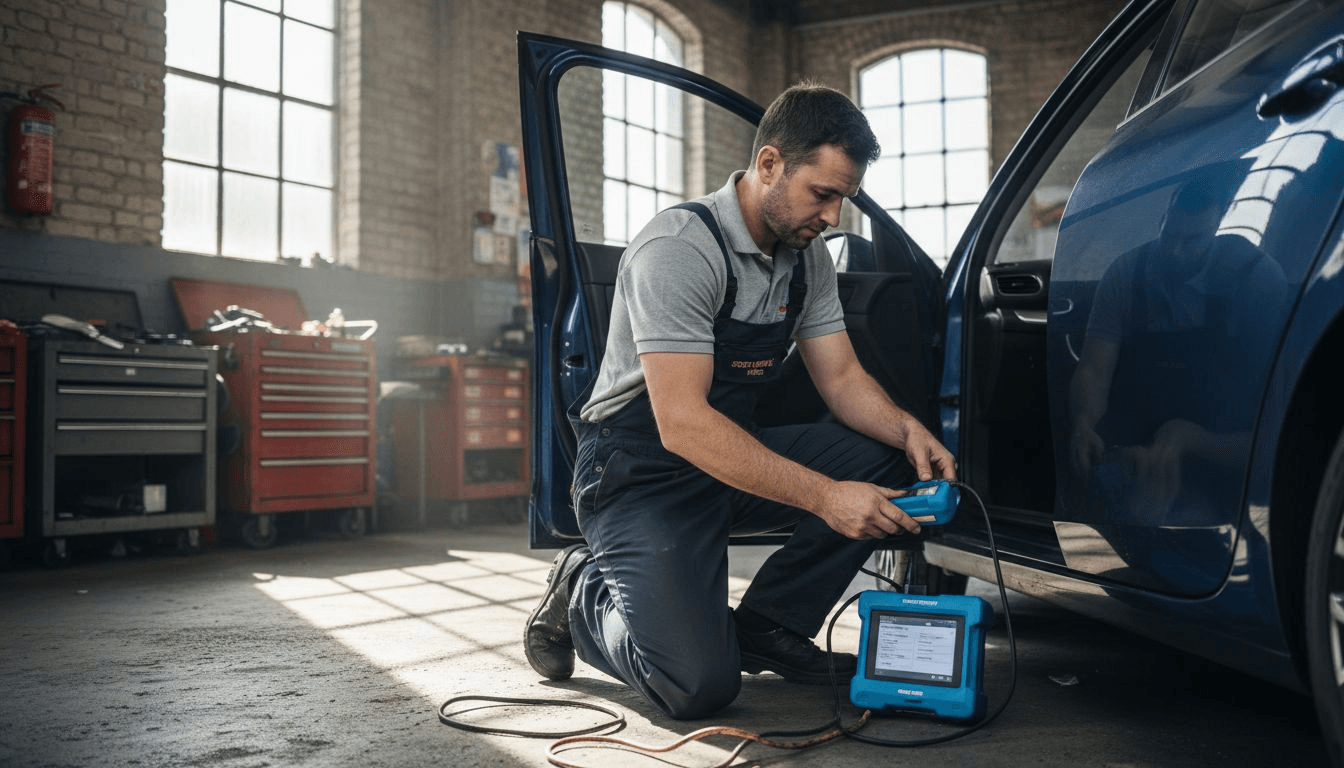
Car trouble often starts with a strange noise or an unexpected warning light. For car owners in Corby, reliable diagnostics mean more than ticking a box at the garage—they offer peace of mind by uncovering hidden faults before they turn into costly breakdowns. Modern vehicle diagnostics use advanced tools for electronic fault detection, real-time system checks, and emissions monitoring, making it easier for anyone to get clear, accurate answers about their car’s health.
Table of Contents
- What Counts As Vehicle Diagnostics Today
- Types Of Diagnostic Systems And Tools
- How A Diagnostic Test Is Carried Out
- Major Benefits For Car Owners And Safety
- Costs, Misconceptions, And When To Book
Key Takeaways
| Point | Details |
|---|---|
| Advanced Diagnostic Tools | Modern vehicle diagnostics utilise sophisticated tools and software to monitor various subsystems, allowing for early detection of potential issues. |
| Types of Diagnostic Systems | OBD-II, UDS, and DoIP represent key diagnostic systems that enhance vehicle performance assessments compared to traditional methods. |
| Importance of Regular Checks | Scheduling diagnostic tests every 12,000 miles or annually is essential for catching problems early and maintaining vehicle safety. |
| Cost Considerations | Diagnostic testing typically ranges from £50 to £150, with early detection potentially saving significant future repair costs. |
What Counts as Vehicle Diagnostics Today
Vehicle diagnostics represents a sophisticated technological approach to understanding and monitoring a vehicle’s complex electronic systems. Modern automotive diagnostics go far beyond simple mechanical checks, utilising advanced computerised systems to identify potential issues before they become serious problems. Electronic fault detection now involves comprehensive monitoring of multiple vehicle subsystems through specialised diagnostic tools and software.
Today’s vehicle diagnostics encompasses several critical components:
- Electronic Control Unit (ECU) scanning
- Sensor performance analysis
- Error code interpretation
- Real-time system monitoring
- Predictive maintenance tracking
These diagnostic processes involve sophisticated communication protocols that allow specialised equipment to interface directly with a vehicle’s onboard computer systems. Technicians can now retrieve detailed information about engine performance, transmission health, emissions systems, and electrical components with remarkable precision.
Electronic Diagnostic Methods have revolutionised how automotive professionals identify and resolve vehicle issues. Emissions inspection technologies now enable precise tracking of environmental compliance, helping reduce pollution while ensuring vehicle safety and optimal performance.
Pro tip: Always request a comprehensive diagnostic scan during routine maintenance to catch potential issues before they become expensive repairs.
Types of Diagnostic Systems and Tools
Vehicle diagnostic systems have evolved dramatically, transforming how automotive professionals understand and manage vehicle health. On-board diagnostic systems represent the cornerstone of modern vehicle monitoring technologies, enabling comprehensive electronic assessments that go beyond traditional mechanical inspections.
The primary diagnostic systems and tools used in contemporary automotive service include:
- OBD-II (On-Board Diagnostics): The standard protocol for vehicle self-diagnostics
- Unified Diagnostic Services (UDS): Advanced communication protocol for complex electronic systems
- Diagnostics over Internet Protocol (DoIP): Enables sophisticated digital vehicle communication
- Handheld diagnostic scanners
- Professional computer-based diagnostic platforms
- Manufacturer-specific diagnostic software
These systems provide technicians with remarkable insights into vehicle performance. Diagnostic tools now enable bidirectional communication, allowing technicians to not only read error codes but also perform live sensor data analysis, conduct system tests, and even programme vehicle components.
Diagnostic Communication Protocols have become increasingly sophisticated, supporting real-time data exchange between vehicles and diagnostic equipment. Modern systems can instantly translate complex electronic signals into comprehensible information, helping identify potential issues before they escalate into significant mechanical problems.
Here is a comparison of modern vehicle diagnostic systems:
| Diagnostic System | Primary Use | Level of Detail | Typical User |
|---|---|---|---|
| OBD-II | Standard fault detection | Basic error codes | General garages |
| UDS | Advanced electronic control | Deep subsystem analysis | Specialist technicians |
| DoIP | Fast digital communication | Real-time data exchange | Dealerships & experts |
Pro tip: Invest in a professional-grade diagnostic scanner that supports multiple vehicle makes and provides comprehensive system coverage.
How a Diagnostic Test Is Carried Out
A comprehensive diagnostic test represents a systematic approach to evaluating a vehicle’s overall health and performance. Vehicle inspection procedures involve multiple stages of assessment designed to identify potential mechanical, electrical, and environmental issues before they escalate into significant problems.
The typical diagnostic test process includes several critical steps:
- Initial visual vehicle inspection
- Connection of diagnostic scanning equipment
- Electronic system scanning
- Error code retrieval and interpretation
- Live data stream analysis
- Performance and emissions testing
- Comprehensive system report generation
Electronic Diagnostic Scanning begins when a technician connects a specialised diagnostic tool to the vehicle’s onboard computer system. This connection allows for direct communication with various electronic control units, enabling real-time monitoring and comprehensive system evaluation. The diagnostic tool retrieves detailed information about the vehicle’s performance, highlighting any anomalies or potential areas of concern.

During the test, technicians analyse multiple vehicle systems, including engine management, transmission performance, emissions control, and electrical components. The diagnostic process provides a holistic assessment of the vehicle’s current condition, helping to predict and prevent potential mechanical failures before they become costly repairs.
Pro tip: Request a complete diagnostic printout after each test to maintain a detailed record of your vehicle’s health and performance history.
Major Benefits for Car Owners and Safety
Vehicle diagnostics have revolutionised automotive maintenance by providing car owners with unprecedented insights into their vehicle’s health and performance. Vehicle safety technologies offer comprehensive protection through early detection and prevention of potential mechanical issues that could compromise driver and passenger safety.
The major benefits of advanced diagnostic systems include:
- Early identification of potential mechanical failures
- Prevention of unexpected breakdowns
- Reduction of long-term repair costs
- Enhanced vehicle performance monitoring
- Improved fuel efficiency
- Proactive maintenance scheduling
- Comprehensive safety system checks
Emission Control Systems play a crucial role in modern vehicle diagnostics. On-board diagnostic technologies not only monitor vehicle performance but also contribute significantly to environmental protection by ensuring emission systems function optimally and alerting drivers to potential issues through malfunction indicator lights.
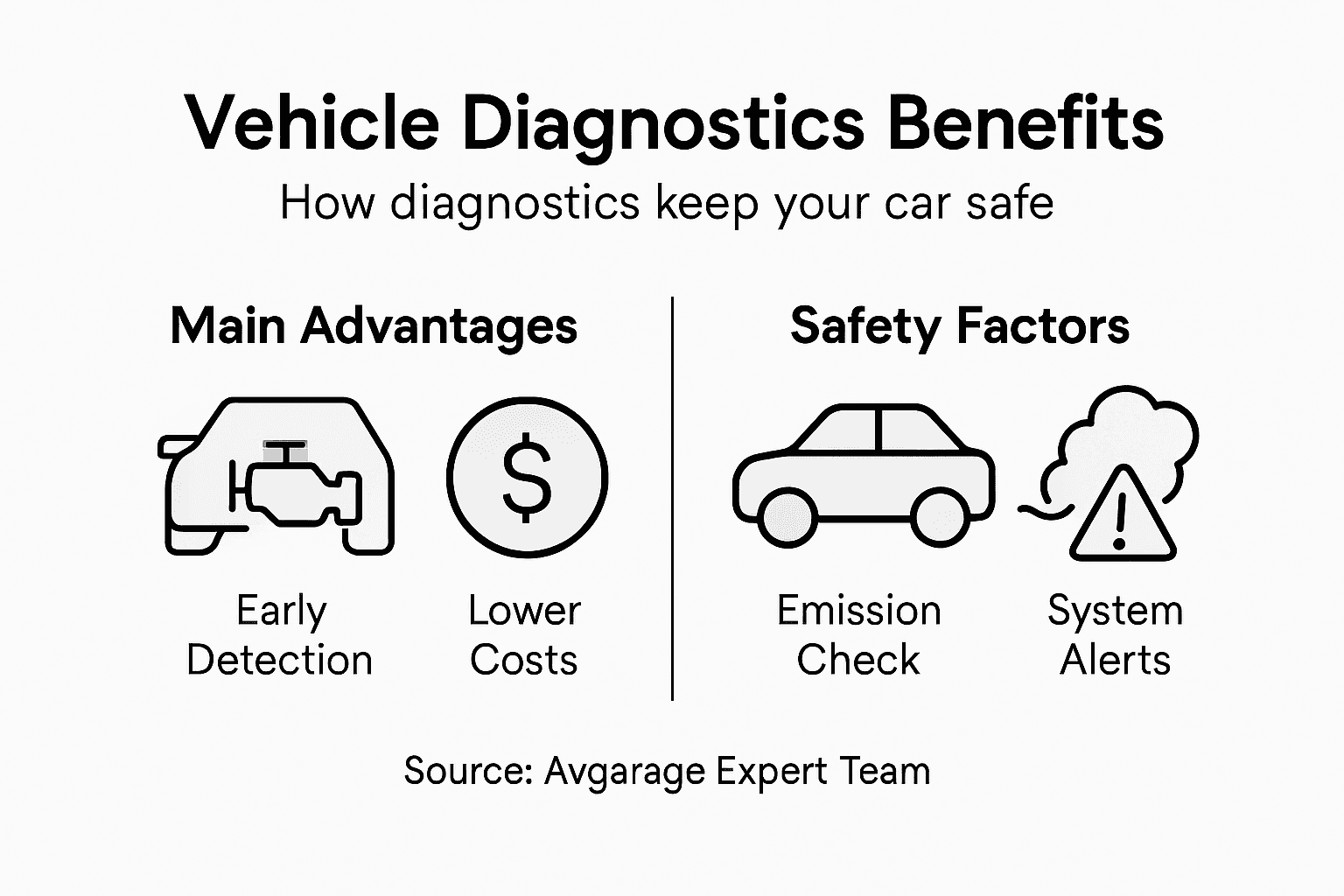
These advanced diagnostic approaches transform vehicle maintenance from a reactive to a preventative strategy. By providing real-time insights into vehicle systems, car owners can address potential problems before they escalate, ultimately saving money, enhancing safety, and extending the overall lifespan of their vehicle.
Pro tip: Schedule regular diagnostic checks every six months to catch potential issues early and maintain your vehicle’s peak performance.
Costs, Misconceptions, and When to Book
Understanding the landscape of vehicle diagnostic services requires dispelling common myths and recognising the true value of regular vehicle health checks. Vehicle inspection requirements vary depending on vehicle age, type, and local regulations, making it crucial for car owners to stay informed about their specific diagnostic needs.
Common misconceptions about vehicle diagnostics include:
- Only older vehicles require diagnostic testing
- Diagnostic tests are unnecessarily expensive
- New cars do not need regular system checks
- Warning lights are the only indicator of vehicle problems
- Diagnostics are time-consuming and disruptive
- Home mechanics can fully replace professional diagnostic services
- All diagnostic services are identical
Cost Considerations for diagnostic testing typically range between £50 and £150, depending on the complexity of the vehicle and the depth of analysis required. While this might seem like an additional expense, early detection of potential issues can save hundreds or even thousands of pounds in future repair costs. Professional diagnostic services provide a comprehensive assessment that goes far beyond simple visual inspections.
The following table summarises key cost factors and misconceptions related to vehicle diagnostics:
| Consideration | Reality | Common Misconception |
|---|---|---|
| Costs | £50–£150 per session | Always too costly |
| Test Frequency | Every 12,000 miles or yearly | Only for old cars |
| Warning Lights | Often late indicators | Only sign of issues |
The optimal timing for booking a diagnostic test depends on several factors, including vehicle age, mileage, manufacturer recommendations, and any observed performance changes. Most automotive experts recommend scheduling a comprehensive diagnostic check annually or every 12,000 miles, whichever occurs first. Additionally, immediate diagnostic testing is advisable when experiencing unusual vehicle behaviour, warning light activations, or performance irregularities.
Pro tip: Maintain a detailed service history and set calendar reminders for your next diagnostic check to ensure consistent vehicle maintenance.
Keep Your Vehicle Running Safely with Expert Diagnostics from Avgarage
Modern vehicle diagnostics reveal the complex electronic health of your car, pinpointing issues before they become costly or dangerous. If you want to avoid unexpected breakdowns and ensure your vehicle performs reliably, understanding the benefits of comprehensive diagnostic testing is crucial. At Avgarage, our certified mechanics use advanced diagnostic tools to accurately scan your vehicle’s systems, analyse error codes, and provide precise maintenance solutions tailored to your needs.

Don’t wait for warning lights or unusual symptoms to appear. Take control of your vehicle’s safety and efficiency today by booking a full diagnostic check with Avgarage. Benefit from our over 10 years of experience, high-quality parts, and transparent service right here in Corby. Visit Avgarage to schedule your appointment now and keep your car in peak condition. Learn more about our comprehensive automotive services that go beyond diagnostics to give you peace of mind on every journey.
Frequently Asked Questions
What is vehicle diagnostics?
Vehicle diagnostics refers to the technological processes used to monitor and understand a vehicle’s electronic systems, allowing for the identification of potential issues before they escalate into serious problems.
How does a diagnostic test work?
A diagnostic test involves connecting a specialised diagnostic tool to the vehicle’s onboard computer system, scanning various electronic systems, retrieving error codes, and analysing real-time data for performance evaluation.
What types of diagnostic systems are available today?
Modern diagnostic systems include OBD-II for standard fault detection, Unified Diagnostic Services (UDS) for complex electronic systems, and Diagnostics over Internet Protocol (DoIP) for advanced vehicle communication.
Why are vehicle diagnostics important for car owners?
Vehicle diagnostics help identify mechanical issues early, prevent unexpected breakdowns, enhance vehicle performance, and ensure safety by monitoring critical systems, ultimately saving money on repairs.