

Many drivers in Corby find themselves concerned by early tyre wear or unpredictable handling, yet overlook how much wheel alignment influences both safety and performance. Proper alignment means more than getting tyres straight—it involves adjusting the wheels to precise manufacturer specifications so they are perfectly perpendicular and parallel. By clarifying the key concepts behind alignment and dispelling common myths, this guide helps you make informed choices to protect your vehicle and maximise its lifespan.
Table of Contents
- Tyre Alignment Defined And Common Misconceptions
- Key Components: Camber, Toe, And Caster Angles
- Types Of Tyre Alignment Services Explained
- How Misalignment Affects Safety And Tyre Wear
- Signs You Need Alignment And Cost Implications
Key Takeaways
| Point | Details |
|---|---|
| Understanding Tyre Alignment | Tyre alignment is a critical procedure aimed at optimising vehicle wheel positioning, impacting safety and performance beyond just tyre adjustment. |
| Regular Checks Required | It is advisable to have wheel alignment checked every 10,000-12,000 miles or after new tyre installation, rather than only when problems arise. |
| Impact on Vehicle Health | Misalignment can lead to uneven tyre wear and compromise vehicle safety, making it essential to monitor alignment regularly. |
| Cost Implications | Investing in alignment services can prevent more costly repairs later, with typical costs ranging from £30 to £150 depending on service type. |
Tyre Alignment Defined and Common Misconceptions
Tyre alignment is a precise automotive maintenance procedure designed to optimise your vehicle’s wheel positioning and performance. Unlike common misconceptions, it involves much more than simply adjusting tyres.
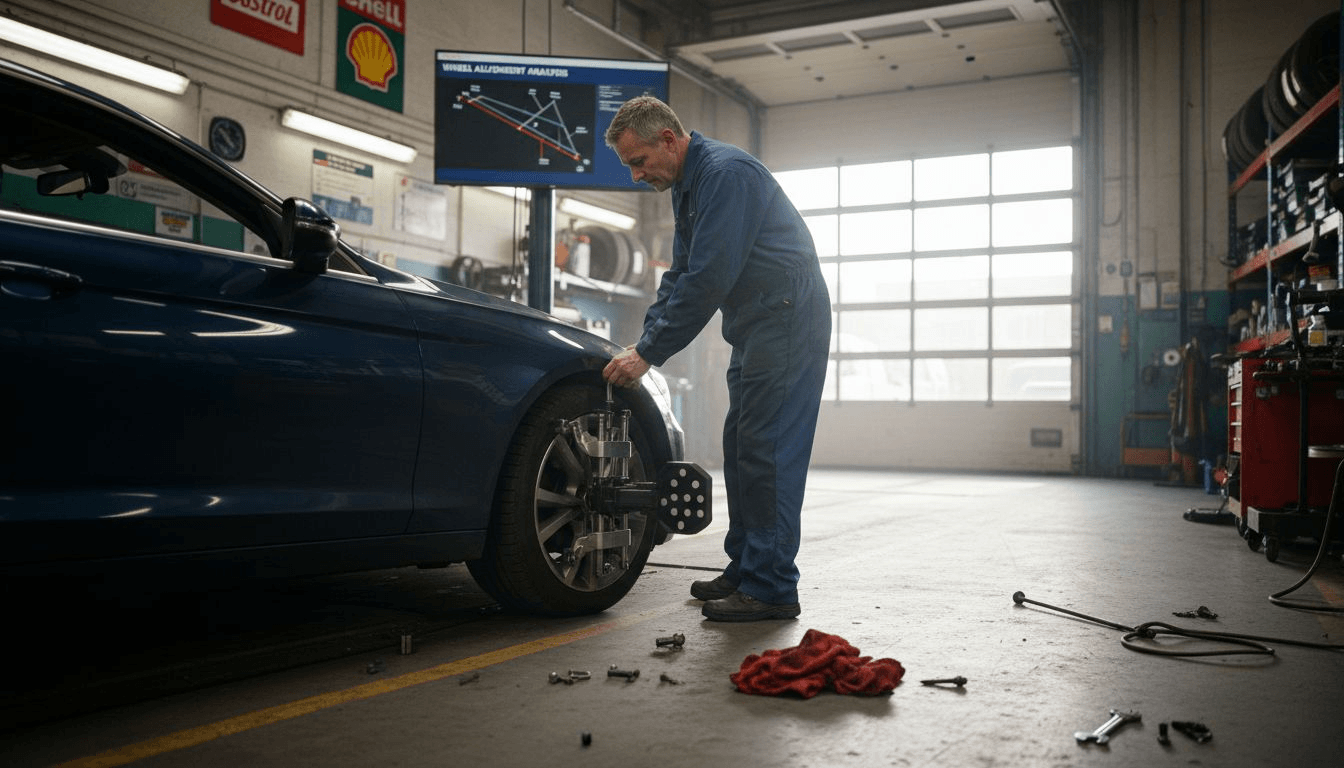
Wheel alignment fundamentally means adjusting the vehicle’s wheel angles to match manufacturer’s exact specifications. This process ensures that wheels are perpendicular to the ground and parallel to each other, which is crucial for several reasons:
- Maximising vehicle safety
- Improving overall vehicle handling
- Preventing uneven and premature tyre wear
- Enhancing fuel efficiency
- Maintaining optimal suspension performance
Many car owners mistakenly believe that wheel alignment is only necessary when they experience steering problems or notice significant tyre wear. However, regular alignment checks are recommended every 10,000-12,000 miles or after installing new tyres.
Common Misconceptions about Tyre Alignment:
- Alignment is only needed when there are obvious problems
- New cars do not require alignment checks
- Alignment is the same as tyre balancing
- Alignment only affects tyres
In reality, proper wheel alignment impacts your entire vehicle’s performance, affecting steering precision, suspension health, and overall stability. Ignoring alignment can lead to costly repairs and compromise your driving safety.

Pro tip: Have your wheel alignment professionally checked at least twice per year or immediately after encountering significant road impacts like striking kerbs or driving through severe potholes.
Key Components: Camber, Toe, and Caster Angles
Wheel alignment involves three critical geometric angles that determine your vehicle’s handling, stability, and tyre performance. Understanding these precise measurements is essential for maintaining optimal vehicle dynamics.
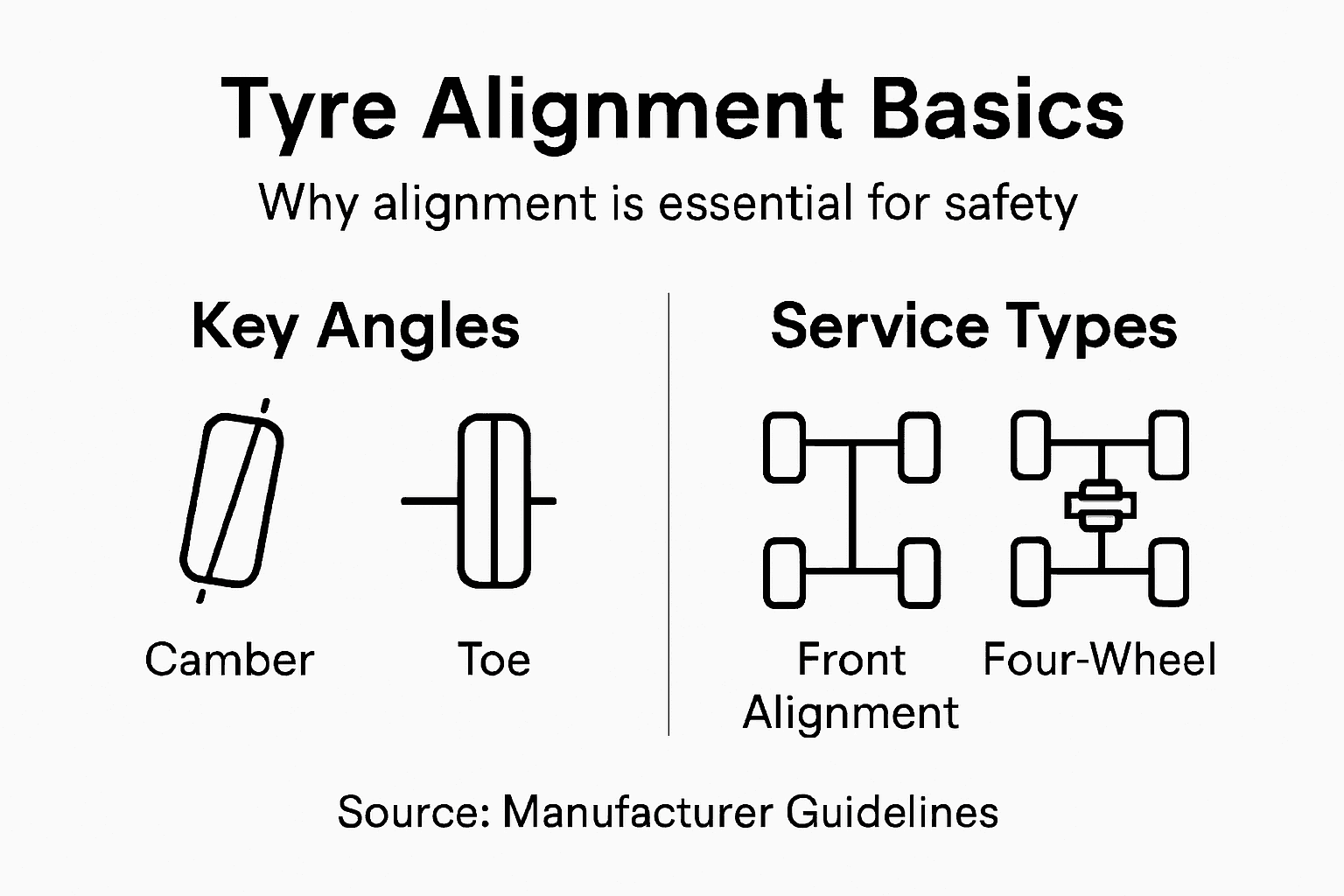
Camber Angle is the vertical tilt of the wheel when viewed from the front of the vehicle. This angle significantly influences:
- Cornering grip and stability
- Overall tyre wear patterns
- Vehicle handling characteristics
- Weight distribution across the tyre contact patch
A toe angle represents how tyres point relative to the vehicle’s centreline when viewed from above. There are two primary types:
- Toe-in: Wheels point slightly inward at the front
- Toe-out: Wheels point slightly outward at the front
Caster Angle, the most complex of the three, refers to the steering axis’s forward or backward tilt when viewed from the side. This geometric configuration directly impacts:
- Steering wheel returnability
- Vehicle straight-line stability
- Overall steering feel and responsiveness
Precise adjustment of these three angles ensures your vehicle maintains optimal contact with the road, minimising uneven tyre wear and maximising safety and performance.
Pro tip: Request a comprehensive alignment check that measures all three angles simultaneously, as each component significantly influences your vehicle’s overall handling and tyre longevity.
The following table highlights the differences between three essential wheel alignment angles and their impact on vehicle performance:
| Alignment Angle | Adjustment Direction | Main Impact on Handling |
|---|---|---|
| Camber | Vertical tilt | Cornering stability |
| Toe | Horizontal angle | Straight-line tracking |
| Caster | Steering axis tilt | Steering responsiveness |
Types of Tyre Alignment Services Explained
Tyre alignment services are precision automotive maintenance procedures designed to ensure your vehicle’s wheels are correctly positioned and functioning optimally. Alignment techniques vary depending on vehicle specifications and specific mechanical requirements.
Motor vehicle alignment services typically fall into three primary categories:
-
Two-Wheel (Front-End) Alignment
- Focuses exclusively on front wheel positioning
- Most suitable for older vehicles with solid rear axles
- Less comprehensive than full alignment services
-
Thrust Angle Alignment
- Adjusts rear wheel positioning relative to the vehicle’s centreline
- Crucial for vehicles experiencing diagonal tracking issues
- Helps correct potential steering wheel misalignment
-
Four-Wheel Alignment
- Comprehensive service adjusting all four wheels simultaneously
- Provides most precise handling and tyre wear prevention
- Recommended for modern vehicles with independent suspension systems
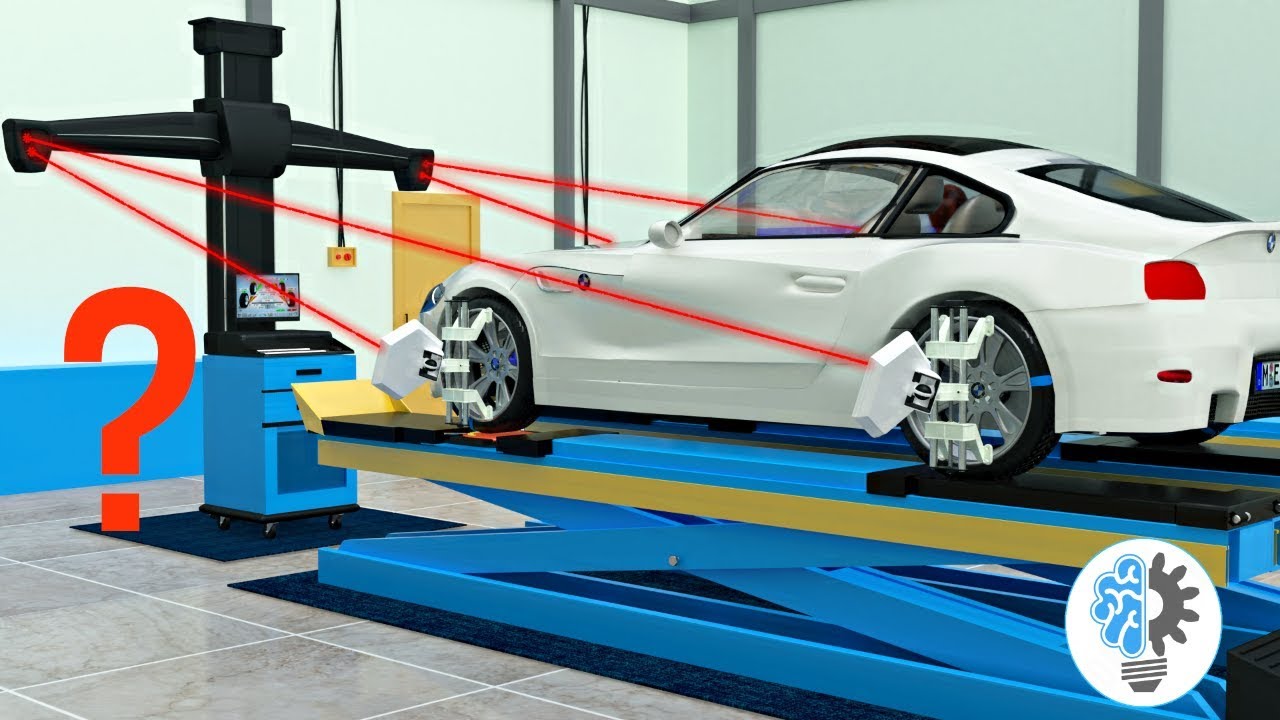
Professional alignment requires specialised equipment and expertly trained technicians to achieve precise geometric measurements.
Each alignment type serves different vehicle requirements, with advanced equipment measuring suspension components to guarantee optimal performance and safety.
Pro tip: Always request a comprehensive four-wheel alignment for modern vehicles, as this provides the most thorough assessment of your vehicle’s wheel positioning and suspension geometry.
Here is a summary of common alignment service types and the ideal vehicle applications for each:
| Service Type | Vehicles Best Suited | Coverage Level |
|---|---|---|
| Two-wheel alignment | Older, solid rear axle | Front wheels only |
| Thrust angle | Diagonal tracking issue | Rear and front, partial |
| Four-wheel | Modern, independent suspension | All wheels, comprehensive |
How Misalignment Affects Safety and Tyre Wear
Tyre misalignment is far more than a minor mechanical issue – it’s a critical safety concern that can dramatically impact your vehicle’s performance and your personal safety on the road. Uneven tyre wear patterns represent the most immediate and visible consequence of poor wheel alignment.
The primary safety risks associated with misalignment include:
- Reduced vehicle stability during cornering
- Increased stopping distances
- Compromised handling in emergency situations
- Higher risk of unexpected vehicle drift
- Unpredictable steering response
Misalignment creates multiple types of destructive tyre wear, each signalling different underlying mechanical problems:
- Feathering wear: Tyres develop uneven texture across the tread
- Camber wear: Excessive inner or outer edge degradation
- Heel/toe wear: Diagonal wearing pattern across tyre surface
Misalignment stresses suspension components and can lead to exponentially increasing repair costs if left unchecked.
Advanced diagnostic techniques can detect subtle alignment issues before they become serious safety risks, helping prevent potential accidents and expensive repairs.
Pro tip: Schedule professional wheel alignment immediately if you notice uneven tyre wear, steering wheel vibration, or your vehicle pulling to one side during normal driving.
Signs You Need Alignment and Cost Implications
Wheel alignment issues often manifest through subtle yet critical warning signs that drivers should never ignore. Recognising early alignment symptoms can prevent costly vehicle damage and ensure your safety on the road.
Key indicators that your vehicle requires immediate wheel alignment include:
- Uneven or rapid tyre wear
- Vehicle pulling to one side during straight driving
- Steering wheel vibration or unusual wobbling
- Off-centre steering wheel when driving straight
- Reduced fuel efficiency
- Squealing tyres during cornering
The financial implications of wheel misalignment can be significant. Typical alignment service costs range between:
- Basic two-wheel alignment: £30 – £50
- Comprehensive four-wheel alignment: £50 – £120
- Advanced diagnostic alignment: £80 – £150
Proactive alignment maintenance can save hundreds of pounds in potential tyre replacement and suspension repair costs.
Wheel alignment expenses might seem unnecessary, but they represent a crucial investment in your vehicle’s longevity and performance. Regular checks can prevent exponentially more expensive repairs down the line.
Pro tip: Request a detailed alignment report after service, which documents precise measurements and highlights any potential future mechanical concerns.
Ensure Your Tyres and Wheels Are Perfectly Aligned for Safer Driving
Understanding the critical role of wheel alignment in vehicle safety and tyre longevity highlights the importance of professional maintenance. Misalignment can cause uneven tyre wear, reduce fuel efficiency, and impair handling—issues that affect your comfort and safety on every journey. At Avgarage, our expert technicians use precise equipment to check and adjust camber, toe, and caster angles so your vehicle drives smoothly and reliably. We specialise in comprehensive wheel alignment services tailored for modern vehicles to prevent costly repairs and improve your driving experience.
Take control of your vehicle’s performance today by booking a wheel alignment check with our certified mechanics who bring over 10 years of experience. Visit Avgarage now to schedule your appointment online and benefit from transparent service that keeps you safe on the roads around Corby. Don’t wait until you notice tyre wear or steering issues—act now to protect your investment and your safety.
Frequently Asked Questions
What is tyre alignment?
Tyre alignment is a maintenance procedure that adjusts the angles of your vehicle’s wheels to match the manufacturer’s specifications. This process improves handling, prevents uneven tyre wear, and optimises vehicle safety.
How often should I have my tyre alignment checked?
It is recommended to have your tyre alignment checked every 10,000-12,000 miles or whenever you install new tyres. Additionally, you should have it inspected after significant road impacts, such as hitting a pothole.
What are the signs that I need a tyre alignment?
Signs that you may need a tyre alignment include uneven or rapid tyre wear, your vehicle pulling to one side, steering wheel vibration, an off-centre steering wheel, reduced fuel efficiency, or squealing tyres during cornering.
How can misalignment affect my vehicle?
Tyre misalignment can lead to reduced vehicle stability, increased stopping distances, compromised handling in emergencies, and rapid tyre wear. Ignoring misalignment can result in costly repairs and safety risks.