


Unexpected repairs can leave Corby car owners with a hefty bill and plenty of frustration. Understanding the ins and outs of your car warranty coverage can mean the difference between confidence and costly surprises when something goes wrong. By grasping which parts and repairs are covered, you can make smarter decisions, protect your budget, and ensure your vehicle receives reliable service without worrying about hidden expenses.
Table of Contents
- What Is a Car Warranty for Repairs?
- Types of Warranties in UK Car Repairs
- How Car Warranties Function During Repairs
- Legal Rights and Warranty Responsibilities
- Costs, Exclusions, and Common Pitfalls
Key Takeaways
| Point | Details |
|---|---|
| Understanding Coverage | Car warranties protect against unexpected repair costs but do not cover routine maintenance or wear-and-tear items. |
| Types of Warranties | In the UK, major warranty types include Manufacturer, Extended, Retailer, and Third-Party warranties, varying in coverage and duration. |
| Warranty Claims Process | The claims process involves problem identification, documentation, verification, and repair execution, with manufacturers increasingly using digital technologies for efficiency. |
| Legal Rights and Obligations | Vehicle owners have legal rights under the Consumer Rights Act 2015 for quality repairs and remedy for defects, ensuring protection against unfair warranty practices. |
What Is a Car Warranty for Repairs?
A car warranty is a crucial protection mechanism designed to safeguard vehicle owners from unexpected repair expenses. These agreements, typically offered by manufacturers or dealerships, cover specific repair costs for a predetermined period after vehicle purchase.
Typically, car warranties encompass several important categories of coverage:
- Bumper-to-bumper warranty: Covers most vehicle components
- Powertrain warranty: Protects critical engine and transmission systems
- Corrosion warranty: Addresses rust and structural deterioration
- Emissions warranty: Ensures pollution control system functionality
Manufacturers generally provide factory warranties that come standard with new vehicles. These warranties usually range from three to five years or cover approximately 36,000 to 60,000 miles, depending on the specific manufacturer’s terms. The primary objective is to protect consumers from manufacturing defects and unexpected mechanical failures.
However, it’s essential to understand that warranties do not cover routine maintenance or standard wear-and-tear items. Components like brake pads, tyres, and filters are typically excluded from warranty protection. Vehicle owners must carefully review their specific warranty documentation to comprehend precisely what is and isn’t included.
Pro tip: Always request a detailed written explanation of your warranty coverage and keep all documentation in an easily accessible location.
Types of Warranties in UK Car Repairs
In the United Kingdom, car warranties represent a critical protection mechanism for vehicle owners, offering comprehensive coverage against unexpected mechanical failures. Warranty options vary significantly across different manufacturers and service providers, each designed to address specific automotive repair needs.
The primary types of warranties available in the UK automotive market include:
- Manufacturer Warranty: Standard protection provided by vehicle manufacturers
- Extended Warranty: Additional coverage purchased after original warranty expires
- Retailer Warranty: Supplemental protection offered by car dealerships
- Third-Party Warranty: Independent insurance-style protection from non-manufacturer sources
Manufacturer warranties typically provide the most comprehensive initial coverage, usually lasting three to seven years with specific mileage limitations. These warranties predominantly cover mechanical and electrical system failures, protecting consumers from substantial repair expenses for critical vehicle components like engines, transmission systems, and complex electronic modules.
To help clarify the main UK car warranty options, see this comparative overview:
| Warranty Type | Coverage Length | Who Provides It | Typical Scope |
|---|---|---|---|
| Manufacturer | 3–7 years, mileage set | Vehicle manufacturers | Most systems and faults |
| Extended | Custom, often yearly | Independent providers | Mechanical, electrical |
| Retailer | Variable, short-term | Car dealerships | Selected faults only |
| Third-Party | Chosen duration | Insurance companies | Limited or broad faults |
Statutory rights under the Consumer Rights Act 2015 further enhance warranty protections, providing additional legal safeguards for vehicle owners. This legislation ensures that consumers receive repair or replacement services if manufacturing defects emerge within a reasonable timeframe after purchase.
Pro tip: Always carefully read warranty documentation, noting specific exclusions and understanding the precise scope of your vehicle’s protection.
How Car Warranties Function During Repairs
Car warranties operate through a sophisticated process designed to protect vehicle owners from unexpected mechanical failures. Warranty claims management involves a structured approach that ensures comprehensive and fair repair coverage for consumers.
The typical warranty claim process involves several critical steps:
- Initial Problem Identification: Vehicle owner or mechanic detects a potential warranty-covered issue
- Documentation: Comprehensive recording of the mechanical problem, including diagnostic details
- Verification: Manufacturer reviews claim against warranty terms and conditions
- Approval: Determination of whether repair costs will be covered
- Repair Execution: Authorised repair centre performs necessary work
When a mechanical issue arises, the vehicle owner must first contact the manufacturer or warranty provider with detailed information about the problem. Technical experts will then assess whether the issue falls within the warranty’s scope, examining factors such as the vehicle’s age, mileage, and specific component failure.

Modern warranty systems increasingly incorporate digital technologies to streamline the claims process. This means faster approvals, more transparent communication, and quicker repair scheduling. Manufacturers use these systems to track recurring issues, improve vehicle design, and maintain customer satisfaction.
Pro tip: Keep detailed maintenance records and photograph any mechanical issues to strengthen your warranty claim documentation.
Legal Rights and Warranty Responsibilities
In the United Kingdom, vehicle warranties are underpinned by robust consumer protection mechanisms that safeguard automotive consumers. Consumer protection laws establish clear guidelines for manufacturers’ obligations and customers’ entitlements during repair processes.
Key legal rights for vehicle owners include:
- Right to Quality Repairs: Manufacturers must perform work with reasonable skill and care
- Replacement or Refund: Consumers can request replacements if initial repairs are inadequate
- Protection Against Unfair Conditions: Warranty providers cannot impose unreasonable servicing restrictions
- Extended Coverage: Legal frameworks support prolonged warranty protections
- Third-Party Service Allowance: Using independent mechanics does not automatically void warranty
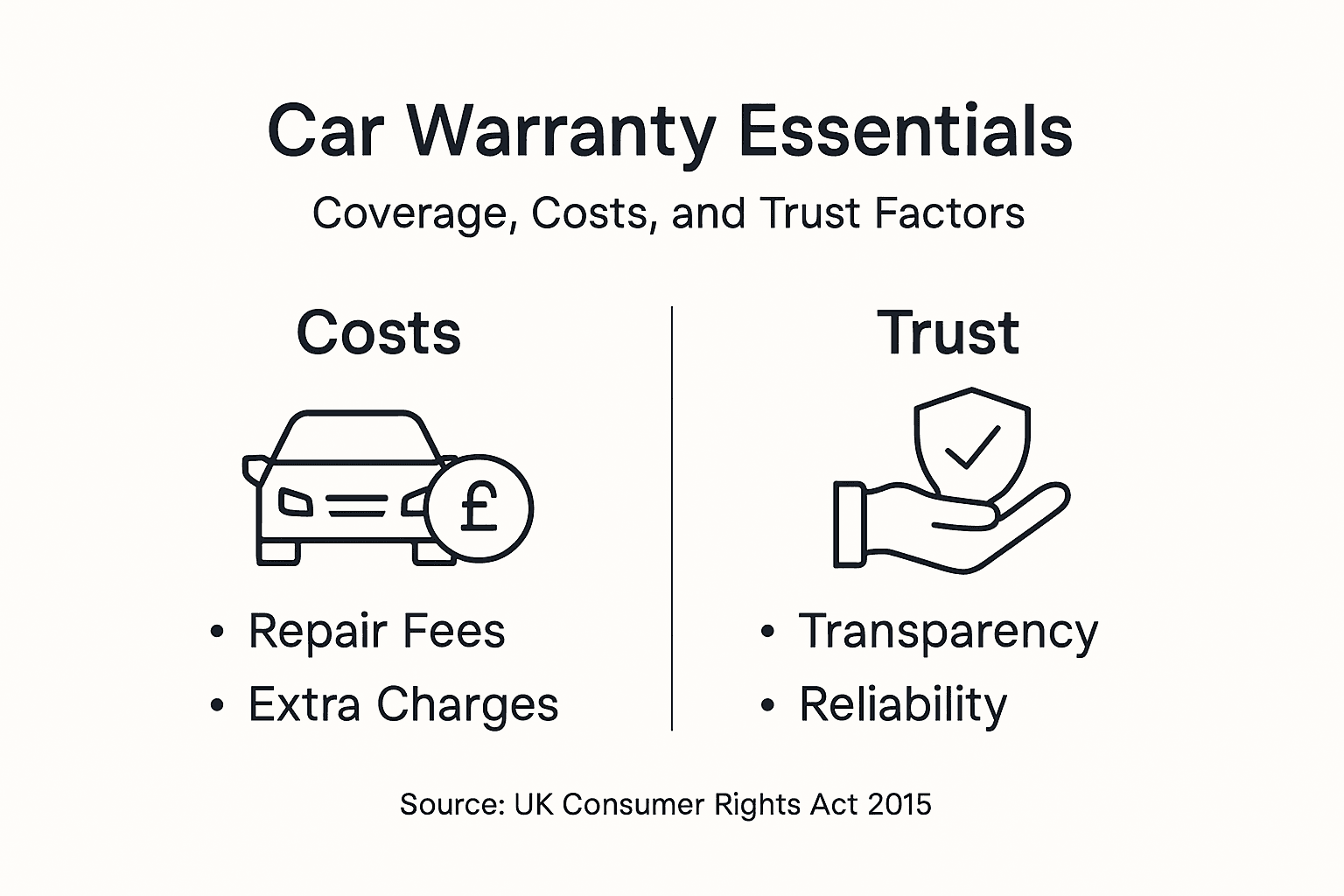
The Consumer Rights Act 2015 provides a comprehensive framework that mandates manufacturers remedy mechanical or electrical failures within the warranty period. This legislation ensures that vehicle owners receive fair treatment, protecting them from arbitrary warranty denials or substandard repair work.
Manufacturers must demonstrate transparency in their warranty terms, clearly communicating exclusions, limitations, and consumer rights. They are legally obligated to resolve defects promptly, either through repair, replacement, or appropriate financial compensation.
Pro tip: Always retain detailed service records and request written documentation for every repair to strengthen your legal position.
Costs, Exclusions, and Common Pitfalls
Understanding the financial landscape of car warranties requires careful examination of potential expenses and hidden complexities. Warranty costs vary significantly depending on vehicle type, age, and coverage scope.
Typical warranty exclusions include:
- Consumable Components: Brake pads, tyres, batteries
- Wear and Tear Items: Clutches, filters, windscreen wipers
- Damage from Misuse: Off-road driving, racing, neglectful maintenance
- Cosmetic Damages: Paint chips, interior upholstery wear
- Environmental Damages: Rust from environmental exposure
Extended warranties often come with additional costs beyond standard manufacturer coverage. These supplemental protections can range from modest annual fees to substantial multi-year investments, making it crucial for consumers to carefully evaluate the potential value against their specific vehicle’s reliability and anticipated maintenance needs.
Here’s a summary of common exclusions and how they affect vehicle owners:
| Exclusion Category | Impact on Owners | Why Excluded |
|---|---|---|
| Consumable Components | Owners pay replacement costs | Frequent replacements |
| Wear and Tear Items | No coverage for wear | Usage-related wear |
| Cosmetic/Environmental | Repair at owner’s expense | Non-functional issue |
| Misuse-Derived Damages | Warranty voided if misused | Avoids abuse claims |
Common pitfalls in warranty management include failing to maintain comprehensive service records, misunderstanding coverage limitations, and neglecting routine maintenance schedules. These oversights can potentially void warranty protection, leaving vehicle owners unexpectedly responsible for expensive repair costs.
Pro tip: Create a dedicated folder for all vehicle maintenance documents and take photographs of repair receipts to build a robust documentation trail.
Protect Your Vehicle and Budget with Trusted Warranty Repairs at Avgarage
Navigating the complexities of car warranties can be challenging. The article highlights key struggles such as understanding warranty coverage, avoiding costly exclusions, and the importance of prompt, expert repairs under warranty terms. If you want peace of mind knowing your vehicle is cared for by certified mechanics with over 10 years of experience, Avgarage in Corby offers comprehensive vehicle maintenance and repair services that align perfectly with warranty requirements.
Don’t risk invalidating your warranty through improper repairs or poor documentation. Choose Avgarage for transparent service, OEM and high-quality aftermarket parts, and a straightforward process that protects your rights and investment. Book your service today to benefit from expert care and stay fully covered—visit Avgarage now for easy online booking and discover how our service packages and expert diagnostics keep your vehicle running smoothly under warranty conditions.
Frequently Asked Questions
What is a car warranty?
A car warranty is a protective agreement that covers specific repair costs for a vehicle after purchase, safeguarding owners from unexpected expenses.
What types of car warranties are there?
The primary types of car warranties include manufacturer warranties, extended warranties, retailer warranties, and third-party warranties, each offering different coverage durations and scopes.
How do car warranties function during repairs?
Car warranties cover repairs through a claim process that involves identifying the issue, documenting it, verifying the claim with the manufacturer, and then executing approved repairs at authorized centres.
What are common exclusions in car warranties?
Common exclusions in car warranties include consumable components like brake pads, wear and tear items, damage due to misuse, cosmetic damages, and environmental damage.