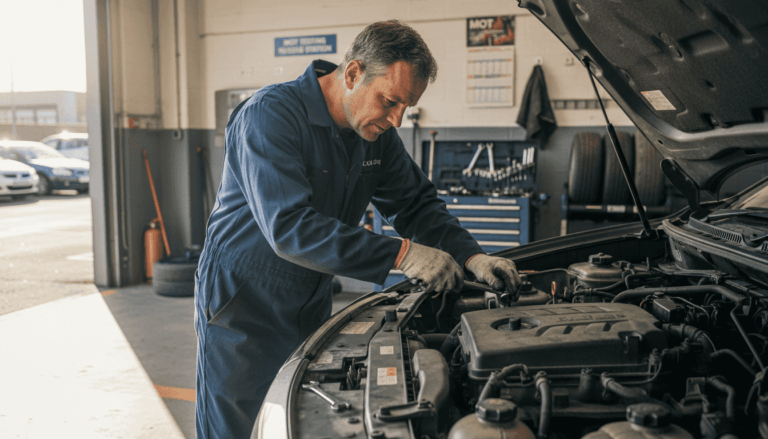



Looking for trustworthy vehicle care in Corby can feel challenging with so many options available. Maintaining your car’s safety and reliability matters more than ever, especially with complex modern systems demanding expert attention. This guide covers the essential roles of professional automotive service centres, explains different types available in the United Kingdom, and highlights the importance of qualified technicians and genuine parts to help you make informed decisions.
Table of Contents
- Definition And Essential Functions Explained
- Types Of Automotive Service Centres In The UK
- Core Services: Maintenance, Diagnostics And Repairs
- Technician Qualifications And Use Of Quality Parts
- Customer Experience: Transparency And Trust
- Legal Requirements And Industry Standards
Key Takeaways
| Point | Details |
|---|---|
| Automotive Service Centres are Essential | These specialised facilities are crucial for maintaining vehicle health and safety, offering a comprehensive range of diagnostic and maintenance services. |
| Types of Service Centres Vary | Vehicle owners can choose from independent garages, manufacturer-affiliated dealerships, and national service chains based on their needs and budget. |
| Technician Qualifications Matter | High-quality vehicle care relies on technicians possessing strong qualifications and using original equipment manufacturer parts. |
| Transparency Builds Trust | A transparent customer experience, characterised by clear communication and detailed service reports, fosters trust and loyalty among vehicle owners. |
Definition and Essential Functions Explained
Automotive service centres are specialised facilities dedicated to maintaining, repairing, and ensuring the optimal performance of vehicles. These professional workshops play a critical role in preserving vehicle health and safety through comprehensive diagnostic and maintenance services. Automotive workshops are essential facilities designed to address the complex mechanical and electronic systems in modern vehicles.
Modern automotive service centres offer a wide range of crucial functions that extend far beyond simple repairs. These specialist facilities provide comprehensive vehicle care through multiple strategic services:
- Routine maintenance and servicing
- Advanced diagnostic testing
- Complex mechanical repairs
- Electronic system diagnostics
- Preventative vehicle health checks
- Replacement of worn components
The complexity of contemporary vehicles demands highly skilled technicians who understand intricate mechanical and electronic systems. Automotive aftermarket services have become increasingly sophisticated, focusing not just on immediate repairs but on long-term vehicle sustainability and performance optimisation.
These professional centres are staffed by trained mechanics with extensive technical knowledge, utilising specialised diagnostic equipment to identify and resolve vehicle issues efficiently. They represent a critical infrastructure supporting vehicle owners in maintaining safe, reliable transportation.
Pro tip: Schedule regular vehicle health checks to prevent unexpected breakdowns and extend your vehicle’s operational lifespan.
Types of Automotive Service Centres in the UK
Automotive repair facilities in the United Kingdom represent a diverse ecosystem of service providers catering to various vehicle maintenance needs. These centres range from small independent workshops to large national networks, each playing a crucial role in maintaining vehicle safety and performance across the country.
The UK automotive service sector typically comprises several distinct types of service centres:
-
Independent Garages
- Locally owned businesses
- Service multiple vehicle makes and models
- Often more flexible pricing
- Personalised customer service
-
Manufacturer-Affiliated Dealerships
- Specialise in specific car brands
- Offer warranty-approved repairs
- Use brand-specific diagnostic equipment
- Typically higher labour rates
-
National Service Chains
- Standardised service protocols
- Multiple locations across the UK
- Consistent pricing and quality
- Comprehensive service offerings
Automotive technicians in these centres require extensive technical knowledge and customer service skills. Each type of service centre offers unique advantages, allowing vehicle owners to choose based on their specific requirements, budget, and preferred level of specialisation.
The complexity of modern vehicles demands highly trained professionals who can navigate intricate mechanical and electronic systems. Whether it’s a local independent garage or a manufacturer-authorised dealership, these centres collectively ensure the ongoing safety and reliability of vehicles on British roads.
Here’s a concise comparison of UK automotive service centre types to help you select the most appropriate provider:
| Service Centre Type | Strengths | Typical Costs | Best For |
|---|---|---|---|
| Independent Garage | Personalised support, flexible | Moderate to low | General maintenance, value seekers |
| Manufacturer Dealership | Brand expertise, warranty cover | Higher | New cars, warranty claims |
| National Service Chain | Consistent standards, broad coverage | Average | Routine services, convenience |
Pro tip: Research and compare different service centre types to find the most suitable option for your specific vehicle maintenance needs.
Core Services: Maintenance, Diagnostics and Repairs
Automotive service centres provide comprehensive vehicle care through three critical service domains: maintenance, diagnostics, and repairs. These interconnected services work together to ensure vehicles remain safe, efficient, and reliable throughout their operational lifecycle.

The core services encompass multiple essential functions:
Maintenance Services
- Routine fluid checks and replacements
- Tyre pressure and condition assessments
- Brake system inspections
- Scheduled component evaluations
- Lubrication and filter replacements
Diagnostic Services
- Electronic system scanning
- Computer-aided fault detection
- Performance analysis
- Predictive maintenance tracking
- Comprehensive vehicle health assessments
Repair Services
- Mechanical component replacement
- Electrical system repairs
- Structural damage restoration
- Engine and transmission work
- Warranty-related interventions
Vehicle maintenance technologies have evolved significantly, enabling technicians to identify and address potential issues before they become critical problems. Modern diagnostic tools provide unprecedented insight into a vehicle’s mechanical and electronic systems, allowing for precise, targeted interventions.
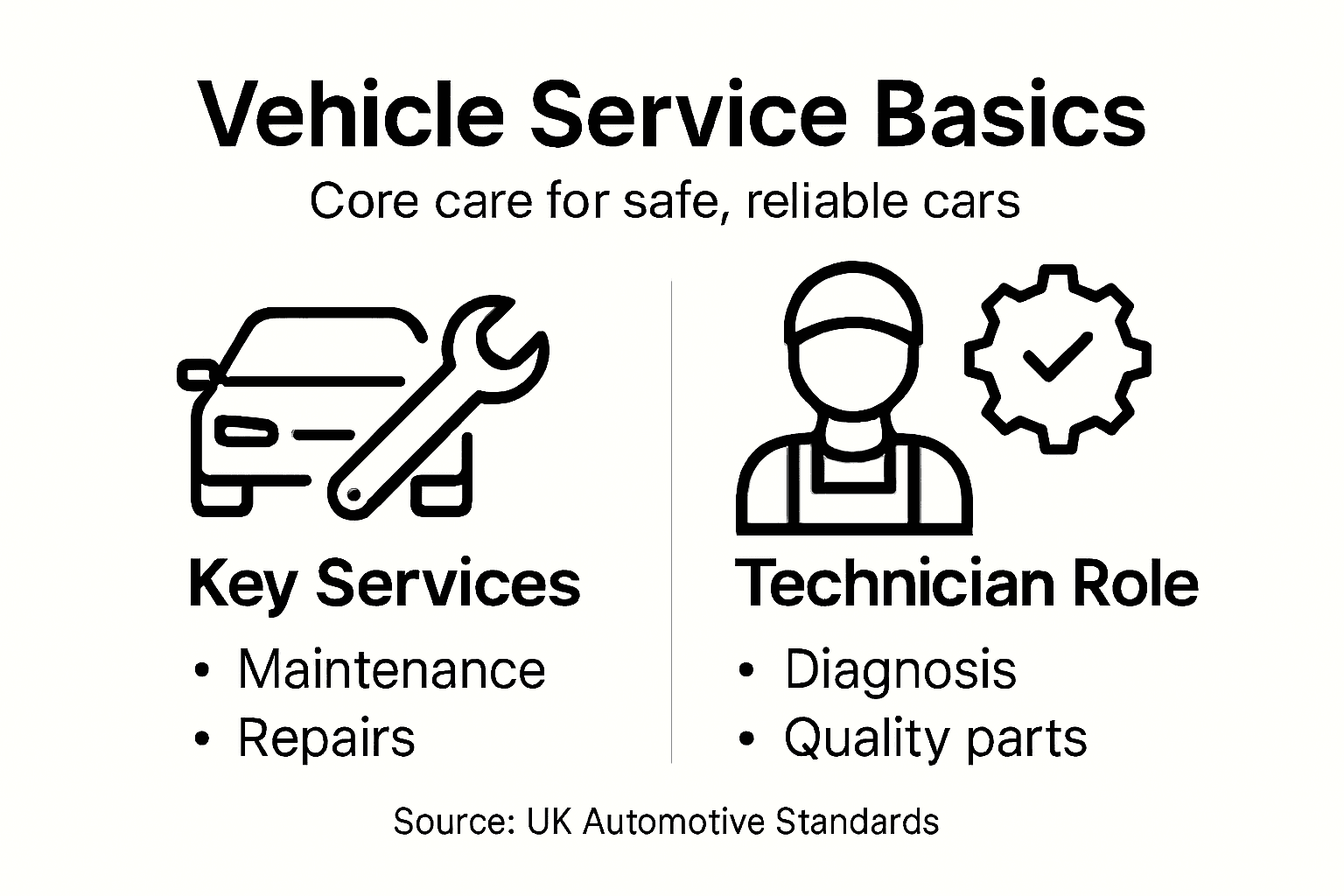
These core services represent a holistic approach to vehicle care, integrating preventative maintenance with advanced diagnostic capabilities and expert repair techniques. By addressing potential issues proactively, automotive service centres help vehicle owners maintain optimal performance, safety, and longevity.
Pro tip: Schedule regular diagnostic checks to catch potential issues early and prevent costly future repairs.
Technician Qualifications and Use of Quality Parts
Automotive technician qualifications represent a critical foundation for delivering exceptional vehicle maintenance and repair services. Professional automotive technicians must possess a comprehensive blend of technical expertise, practical skills, and industry-recognised certifications to ensure high-quality vehicle care.

Key qualifications and professional standards include:
Technical Qualifications
- City & Guilds Automotive Maintenance Certificates
- National Vocational Qualifications (NVQ)
- Advanced Automotive Engineering Diplomas
- Manufacturer-specific training programmes
- Continuous professional development credentials
Quality Parts Selection Criteria
- Original Equipment Manufacturer (OEM) specifications
- Durability and performance standards
- Compatibility with specific vehicle models
- Rigorous quality control testing
- Warranty and reliability assurances
Skilled technicians understand that using high-quality parts is as crucial as having the right technical knowledge.
Professional automotive technicians must demonstrate not only technical competence but also a commitment to ongoing learning. Modern vehicles feature increasingly complex electronic and mechanical systems, requiring continuous skill development and adaptation to emerging automotive technologies.
The selection of quality parts plays an equally critical role in maintaining vehicle performance and safety. Technicians must carefully evaluate components based on manufacturer specifications, ensuring optimal compatibility and long-term reliability for each unique vehicle.
For a quick reference, here are the key qualifications and parts standards that signal high-quality vehicle care:
| Qualification/Standard | Purpose | Benefit |
|---|---|---|
| City & Guilds Certificate | Validates technician competency | Assures professional service |
| OEM Parts Specification | Ensures parts match vehicle | Maintains safety and reliability |
| Continuous Training | Updates technician skills | Keeps up with new technologies |
Pro tip: Always request detailed information about a technician’s qualifications and the origin of replacement parts before authorising vehicle repairs.
Customer Experience: Transparency and Trust
Transparency in automotive service represents a fundamental cornerstone of building lasting customer relationships. Modern vehicle owners demand clear, honest communication about service processes, pricing, and potential repairs, expecting comprehensive insights into their vehicle’s condition and maintenance requirements.
Key elements of creating a transparent customer experience include:
Communication Principles
- Detailed, itemised service reports
- Clear explanation of recommended repairs
- Upfront pricing information
- Honest assessment of vehicle condition
- Digital documentation and service history
Trust-Building Strategies
- Proactive communication channels
- Consistent and reliable service delivery
- Transparent pricing mechanisms
- Comprehensive warranty explanations
- Customer feedback integration
Transparency reduces uncertainty and cultivates long-term customer loyalty through open, honest interactions.
Automotive customer experience strategies continue evolving, recognising that modern consumers seek more than just technical expertise. They want comprehensive, digitally-enabled service experiences that provide clear, accessible information about their vehicle’s maintenance and repair needs.
Successful automotive service centres understand that trust is built through consistent, transparent communication. By providing detailed explanations, fair pricing, and comprehensive service reports, they transform potentially stressful vehicle maintenance interactions into positive, confidence-building experiences.
Pro tip: Request a written, detailed service report that explains all recommended repairs, their estimated costs, and potential long-term implications.
Legal Requirements and Industry Standards
Automotive regulatory frameworks encompass a comprehensive system of national and international standards designed to ensure vehicle safety, environmental sustainability, and consumer protection. These complex regulations govern every aspect of automotive design, manufacturing, maintenance, and service delivery.
Critical legal and industry standards include:
Safety Regulations
- Vehicle structural integrity requirements
- Crash test performance standards
- Occupant protection specifications
- Electronic safety system guidelines
- Mandatory safety equipment standards
Compliance Categories
- Environmental emissions controls
- Data privacy and cybersecurity protocols
- Manufacturing quality assurance
- Technical performance benchmarks
- Consumer protection regulations
Legal compliance is not optional but a fundamental requirement for automotive service centres.
Automotive regulatory compliance involves intricate standards such as ISO 26262 for functional safety and ISO/SAE 21434 for cybersecurity. These international standards ensure that vehicles meet rigorous safety, technological, and operational criteria, protecting both manufacturers and consumers.
Technical standards continuously evolve, reflecting advancements in vehicle technology, safety requirements, and environmental considerations. Automotive service centres must remain adaptable, constantly updating their knowledge and practices to align with the latest regulatory developments.
Pro tip: Regularly review and update your understanding of current automotive regulatory standards to maintain compliance and professional excellence.
Keep Your Vehicle Safe and Reliable with Expert Care at Avgarage
The article highlights the crucial role automotive service centres play in maintaining vehicle safety, reliability and performance through expert diagnostics, regular maintenance and quality repairs. If you are looking to avoid unexpected breakdowns and ensure your vehicle receives professional care by certified mechanics using OEM or high-quality parts, Avgarage in Corby offers exactly the solutions you need. With over 10 years of experience, Avgarage provides comprehensive services including routine servicing, engine carbon cleaning, gearbox oil changes and more to keep your vehicle running smoothly.
Don’t wait until small issues become costly repairs. Book your next service online at Avgarage today and experience transparent pricing, trust-building communication and fast, dependable automotive care. Explore our comprehensive maintenance and repair services designed to match the complexity of modern vehicles and prolong their lifespan. Take control of your vehicle’s health with Avgarage now and drive with confidence on every journey.
Frequently Asked Questions
What are the main functions of automotive service centres?
Automotive service centres provide routine maintenance, advanced diagnostics, complex repairs, electronic system diagnostics, and preventative health checks to ensure optimal vehicle performance and safety.
How do I know if my vehicle needs a service?
Signs that your vehicle may need a service include unusual noises, warning lights on your dashboard, reduced performance, fluid leaks, or a change in fuel efficiency. Regular maintenance checks are also recommended to avoid unexpected issues.
What qualifications should I look for in an automotive technician?
Look for technicians with certifications such as City & Guilds Automotive Maintenance Certificates, NVQs, or manufacturer-specific training. Continuous professional development is also important to ensure they are up-to-date with the latest automotive technologies.
Why is transparency important in automotive services?
Transparency in automotive services builds trust between customers and service centres. Detailed service reports, upfront pricing, and clear communication about repairs help customers understand the maintenance process and avoid unexpected costs.