



Struggling with unexplained warning lights or drops in engine performance can quickly leave Corby drivers feeling uncertain. The truth is, modern vehicles rely on advanced electronic systems to monitor and report faults, yet even the most sophisticated onboard diagnostics need expert interpretation. Discover how certified technicians in Corby use these digital tools alongside hands-on expertise to pinpoint issues efficiently, helping you keep your vehicle running safely and smoothly.
Table of Contents
- Defining Vehicle Diagnostics And Misconceptions
- Types Of Vehicle Diagnostic Systems
- How Diagnostic Tools And Processes Work
- Real-World Importance For Car Owners
- Cost Factors, Risks And Common Mistakes
Key Takeaways
| Point | Details |
|---|---|
| Understanding Vehicle Diagnostics | Vehicle diagnostics utilise advanced electronic systems to identify mechanical issues with precision, moving beyond traditional repair methods. |
| Types of Diagnostic Tools | Various diagnostic tools, including handheld scan tools and PC-based systems, cater to different users, from DIY owners to professional technicians. |
| Importance for Car Owners | Regular vehicle diagnostics enhance safety, optimise performance, and prevent costly repairs, making them essential for responsible car ownership. |
| Cost and Risk Management | Investing in diagnostic tools and training is crucial, as failing to maintain updated systems can lead to significant financial and safety risks. |
Defining Vehicle Diagnostics and Misconceptions
Vehicle diagnostics represent a sophisticated system of identifying potential mechanical issues and performance challenges in modern automobiles. Unlike traditional repair methods relying solely on mechanical inspection, modern diagnostic techniques leverage advanced electronic technologies to pinpoint problems with remarkable precision.
The core of vehicle diagnostics involves electronically scanning and interpreting data from a vehicle’s onboard computer systems. These systems continuously monitor various mechanical and electrical components, tracking everything from engine performance to emission levels. Key diagnostic components include:
- Electronic Control Units (ECUs)
- Onboard Diagnostic (OBD) ports
- Sensor networks throughout the vehicle
- Digital error code systems
Historically, automotive troubleshooting depended entirely on a mechanic’s experience and sensory observations. Modern diagnostic technologies have transformed this process, enabling more accurate and efficient problem detection. These systems can instantly log potential issues, providing detailed insights that were previously impossible to capture.
Common misconceptions about vehicle diagnostics often centre around their complexity and perceived limitations. Many car owners believe diagnostic systems can identify every potential problem, which isn’t always accurate. While incredibly advanced, these systems have specific parameters and cannot always detect nuanced mechanical issues requiring hands-on professional assessment.
Diagnostic Technology Evolution:
- Manual mechanical inspection
- Introduction of basic warning lights
- First-generation OBD systems
- Current advanced digital diagnostic networks
Electronic diagnostics provide a window into your vehicle’s health, but they are not infallible magical solutions.
Pro tip: Always combine electronic diagnostic results with professional mechanical expertise for the most comprehensive vehicle assessment.
Types of Vehicle Diagnostic Systems
Vehicle diagnostic systems have dramatically evolved from basic mechanical checks to sophisticated electronic monitoring tools. Modern diagnostic technologies now encompass multiple sophisticated systems designed to provide comprehensive insights into vehicle performance and potential mechanical issues.

Three primary categories of vehicle diagnostic systems exist, each offering unique capabilities and levels of complexity:
Here’s a comparison of common vehicle diagnostic tools and their advantages:
| Tool Type | Main Advantage | Typical User |
|---|---|---|
| Handheld Scan Tool | Quick fault code detection | Mechanics, DIY owners |
| PC/Laptop-Based Tools | Detailed system analysis | Professional technicians |
| Mobile App + Adapter | Convenient on-the-go checks | Everyday car owners |
- Handheld Scan Tools: Portable devices powered directly by the vehicle’s OBD port
- PC/Laptop-Based Tools: Advanced systems requiring computer connections for detailed analysis
- Mobile Device Applications: Smartphone-compatible diagnostic solutions using external adapters
These diagnostic systems utilise standardised communication protocols like CAN bus technology, enabling technicians and car owners to access detailed vehicle information rapidly. Diagnostic devices can read, interpret, and sometimes clear error codes, providing crucial insights into a vehicle’s operational status.
The evolution of diagnostic systems reflects increasing automotive complexity. Modern vehicles incorporate intricate electronic networks that require sophisticated diagnostic approaches. These systems can monitor everything from engine performance and emissions to transmission efficiency and electrical system integrity.
Key Diagnostic Communication Protocols:
- Controller Area Network (CAN)
- ISO 15031-5 standard
- SAE J1979 diagnostic services
- OBD-II universal protocols
Electronic diagnostics transform complex mechanical mysteries into readable, actionable data.
Pro tip: Invest in a compatible diagnostic tool that matches your vehicle’s specific communication protocol for most accurate results.
How Diagnostic Tools and Processes Work
Diagnostic communication protocols enable complex interactions between vehicle systems and diagnostic tools, creating a sophisticated digital conversation that reveals a vehicle’s operational health. Modern diagnostic processes transform raw electronic data into actionable insights about mechanical performance and potential issues.
The diagnostic workflow typically involves several critical stages:
- Data Collection: Capturing information from electronic control units (ECUs)
- Code Interpretation: Reading and decoding error signals
- System Analysis: Evaluating sensor data and performance metrics
- Problem Identification: Pinpointing specific mechanical or electrical challenges
At the core of these processes are sophisticated communication protocols that allow diagnostic tools to send specific service requests to a vehicle’s onboard computer. Diagnostic technologies utilise standardised methods like Service Identifier (SID) requests, through which technicians can retrieve comprehensive system information, including live sensor values, emission data, and fault codes.
Modern diagnostic processes are far more than simple error code readers. They represent a complex ecosystem of electronic communication, involving multiple layers of data exchange between vehicle subsystems, sensors, and external diagnostic equipment. Technicians must not only understand the technological interface but also interpret the nuanced information these systems provide.
Diagnostic Communication Stages:
- Establish connection via OBD-II port
- Send diagnostic service request
- Receive and decode ECU response
- Analyse and interpret system data
- Recommend potential repairs or further investigation
Effective diagnostics blend technological precision with human expertise.
Pro tip: Always update your diagnostic tool’s software to ensure compatibility with the latest vehicle communication protocols.
Real-World Importance for Car Owners
Automotive diagnostics are far more than technical jargon—they represent a critical lifeline for maintaining vehicle safety, performance, and financial well-being. Modern vehicles are sophisticated machines where electronic systems continuously monitor and manage complex mechanical interactions, making diagnostic insights essential for responsible car ownership.
The real-world benefits of comprehensive vehicle diagnostics extend across multiple dimensions of automotive care:
- Safety Assurance: Identifying potential mechanical failures before they become critical
- Cost Management: Preventing expensive repairs through early problem detection
- Performance Optimisation: Maintaining optimal engine efficiency and fuel economy
- Compliance: Ensuring vehicles meet emissions and regulatory standards
Vehicle diagnostic systems provide car owners with unprecedented transparency into their vehicle’s health. Dashboard warning lights, error codes, and sensor data offer critical early warnings about potential mechanical issues, enabling proactive maintenance and potentially avoiding catastrophic system failures.
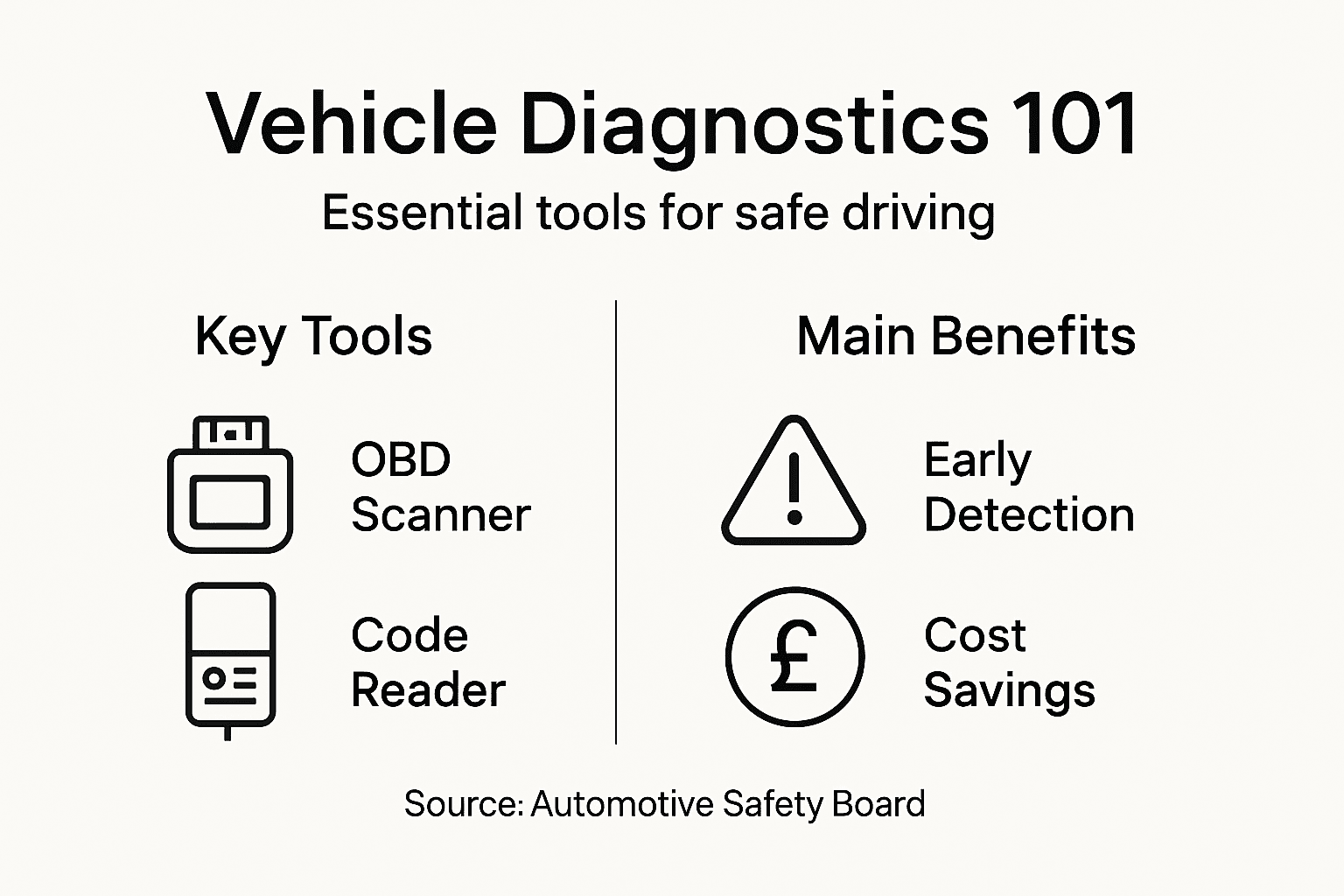
Beyond immediate mechanical insights, diagnostic technologies empower car owners with knowledge. Understanding the precise nature of vehicle problems allows for more informed decision-making about repairs, maintenance schedules, and potential vehicle investments. This technological approach transforms automotive maintenance from a reactive to a strategic process.
Key Benefits of Regular Diagnostic Checks:
- Early detection of mechanical issues
- Reduced long-term repair costs
- Enhanced vehicle performance
- Improved fuel efficiency
- Extended vehicle lifespan
Knowledge is power—especially when it comes to understanding your vehicle’s health.
Pro tip: Schedule regular diagnostic checks, ideally every six months or as recommended by your vehicle manufacturer, to stay ahead of potential mechanical issues.
Cost Factors, Risks and Common Mistakes
Vehicle diagnostics systems involve complex financial considerations that extend far beyond initial implementation costs. Car owners and automotive service providers must navigate a nuanced landscape of technological investments, potential risks, and strategic maintenance planning.
Key cost factors and potential financial implications include:
- Hardware Investment: Initial diagnostic tool purchases
- Software Licensing: Recurring costs for updated diagnostic platforms
- Training Expenses: Staff education on advanced diagnostic technologies
- Maintenance Overheads: Regular system updates and calibration
Automotive fault diagnosis presents significant challenges in managing multilingual data and interpreting complex diagnostic information. Common mistakes that can dramatically increase long-term costs include:
- Misinterpreting diagnostic fault codes
- Ignoring manufacturer-specific diagnostic procedures
- Failing to update diagnostic software regularly
- Neglecting comprehensive data analysis
- Overlooking subtle system anomalies
The risks associated with ineffective diagnostic practices extend beyond immediate financial implications. Potential consequences include compromised vehicle safety, reduced performance, and increased likelihood of catastrophic mechanical failures. Sophisticated diagnostic approaches require a holistic understanding of technological systems, human expertise, and strategic maintenance protocols.
To help owners maximise value, here’s a summary of typical cost factors and risks in vehicle diagnostics:
| Category | Example Cost/Risk | Consequence if Overlooked |
|---|---|---|
| Software Licensing | Annual renewal fee | Incompatible diagnostics |
| Training Investment | Staff certification courses | Incorrect fault analysis |
| Security Vulnerabilities | Unprotected data transfer | Potential data breaches |
| Maintenance Overheads | Tool updates and calibration | Inaccurate system readings |
Primary Risk Categories:
- Security vulnerabilities
- Data processing inaccuracies
- Incomplete diagnostic interpretations
- Technological interoperability challenges
Diagnostic effectiveness depends on the perfect balance between technological capability and human expertise.
Pro tip: Invest in continuous staff training and maintain up-to-date diagnostic software to minimise long-term financial risks and ensure accurate vehicle assessments.
Ensure Your Vehicle’s Health with Expert Diagnostics at Avgarage
Modern vehicle diagnostics reveal vital information about engine performance and safety, but interpreting fault codes and sensor data can be challenging without professional expertise. Common risks like misdiagnosed issues or outdated software can lead to costly repairs or compromised safety. At Avgarage, we understand the importance of combining advanced diagnostic tools with over 10 years of certified mechanical experience to provide precise assessments and reliable maintenance.

Take control of your vehicle’s health today by booking a comprehensive diagnostic check with our expert technicians. Whether you need routine servicing, gearbox oil changes, or engine carbon cleaning, our team uses OEM parts and industry-approved methods to keep your car running smoothly and safely. Visit Avgarage now to schedule your appointment and protect your investment with trusted automotive solutions.
Frequently Asked Questions
What are vehicle diagnostics?
Vehicle diagnostics involve the use of advanced electronic technologies to identify potential mechanical issues and performance challenges in automobiles, relying on data from the vehicle’s onboard computer systems.
How do vehicle diagnostic tools work?
Vehicle diagnostic tools operate by connecting to the vehicle’s onboard diagnostic (OBD) port to collect data from electronic control units (ECUs), interpret error codes, and provide insights into mechanical performance and potential issues.
What are the main types of vehicle diagnostic systems?
The primary types of vehicle diagnostic systems include handheld scan tools for quick fault detection, PC or laptop-based tools for detailed analysis, and mobile apps paired with adapters for convenient on-the-go diagnostics.
Why are regular diagnostic checks important for car owners?
Regular diagnostic checks are crucial for early detection of mechanical issues, cost management, improving vehicle performance, ensuring compliance with emissions standards, and ultimately extending the vehicle’s lifespan.